
Last Updated on May 29, 2026 by Masha Eretnova
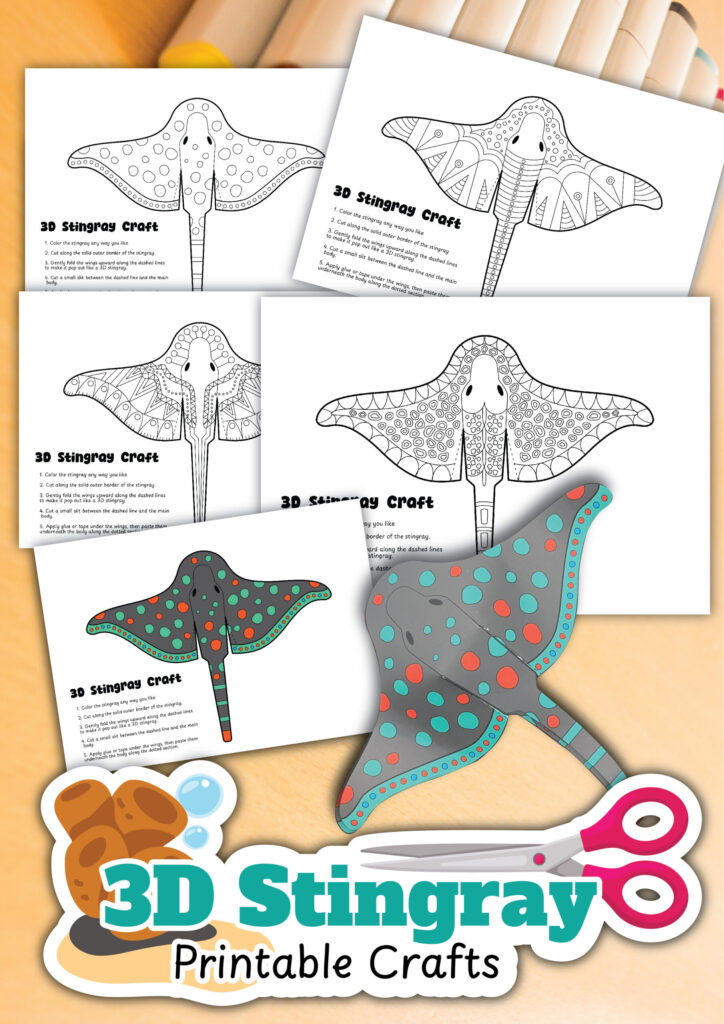
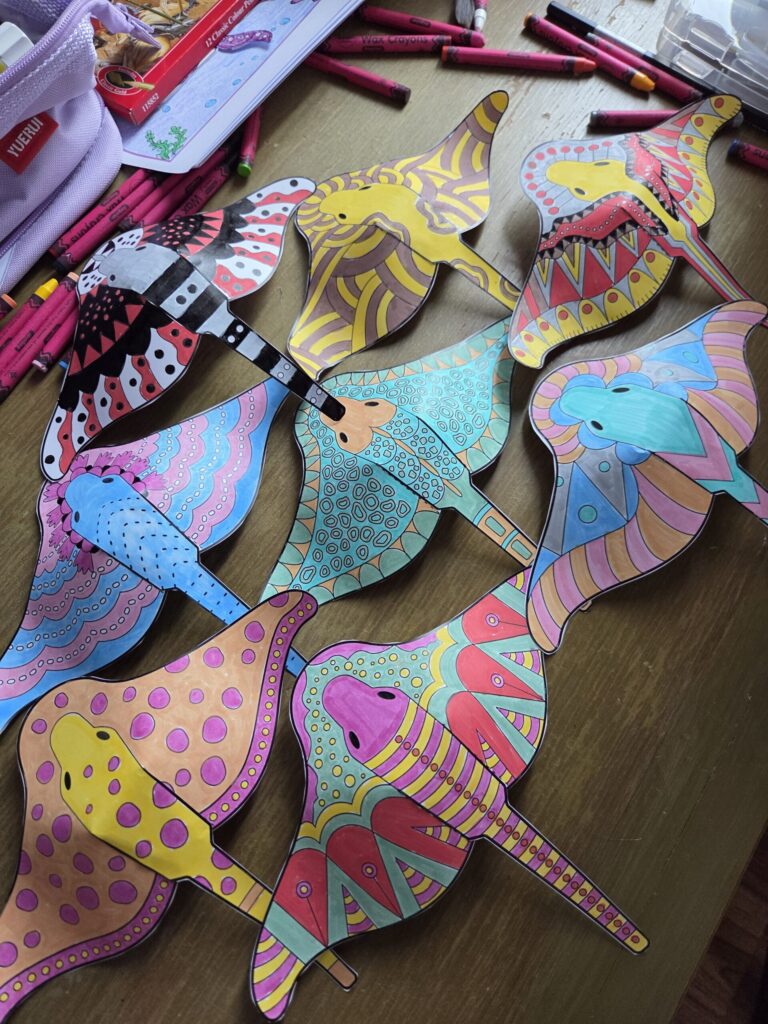
Eight different designs, one seriously cool craft — this 3D stingray is the under the sea summer activity kids will really enjoy.
Most paper crafts are flat. This one isn’t. This 3D stingray craft for kids uses a simple folding trick to make the wings pop upward so the finished stingray actually looks like it’s gliding through the water.
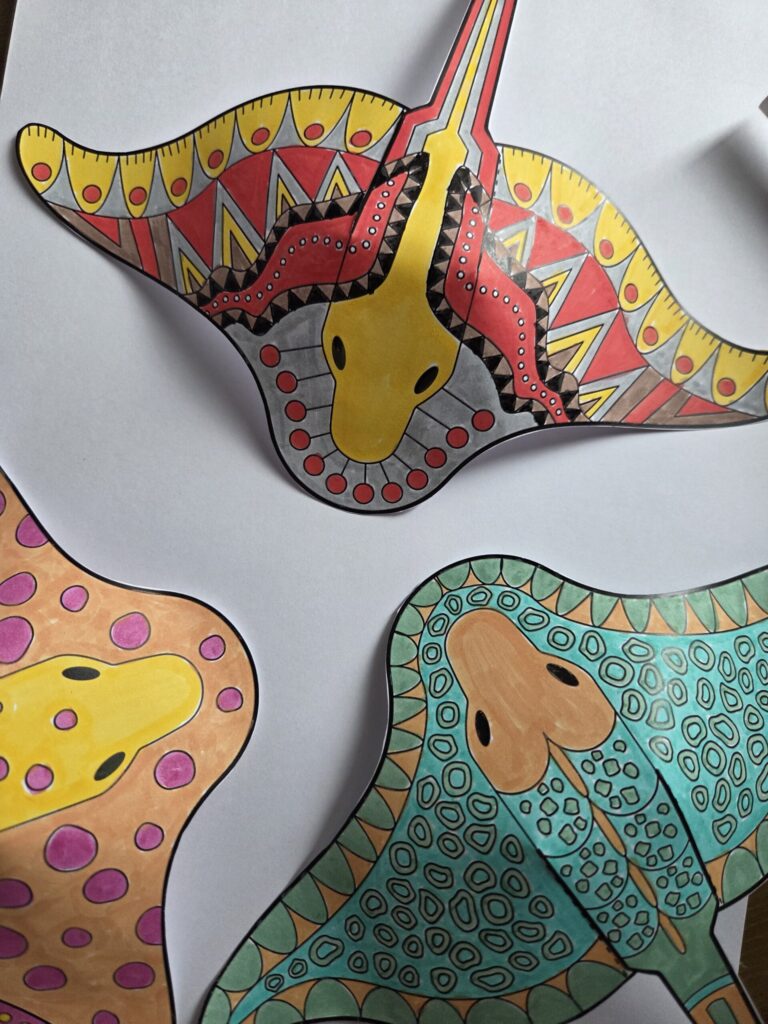
The free printable includes 8 different stingray designs, each with its own unique pattern to color — spots, scales, geometric shapes, waves, mandalas, and more. Download it below (just enter your email), grab some crayons, and let’s make some rays.
Supplies Needed
Barely any, honestly! Craft is great for all ages, parents can help with a bit of cutting and gluing. Younger kids can use it as coloring pages, too.
- Printable (download right below)
- Crayons, markers or colored pencils for coloring
- Child-safe scissors
- glue stick
Optional extras:
- Blue or green cardstock as a background to mount the finished stingray on
- String or thread to hang the stingray from the ceiling for a hanging mobile effect
- Metallic markers or glitter gel pens to make the patterns really pop — some of the more intricate designs (the mandala, the wave pattern) look incredible with a little shimmer
- Watercolor paint for a more painterly coloring effect on the larger, simpler-patterned designs
Step-by-Step Instructions
Step 1: Pick your design
Open the PDF and choose which of the 8 stingray designs you want to make. Each one has a different pattern: simple spots (great for younger kids), intricate scales, geometric shapes, flowing waves, mandala-style patterns, and more. Older kids and teens tend to gravitate toward the more detailed designs; younger kids love the classic spotted version.
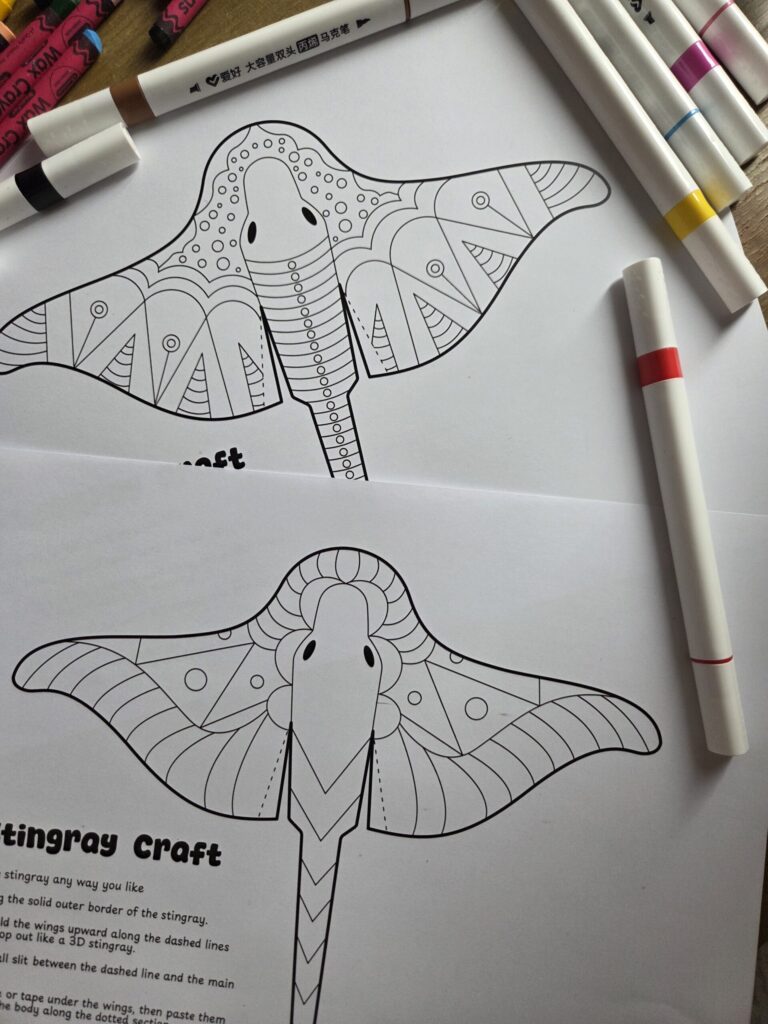
2. Color the stingray. Each has a unique pattern and it can be a good practice of matching colors.
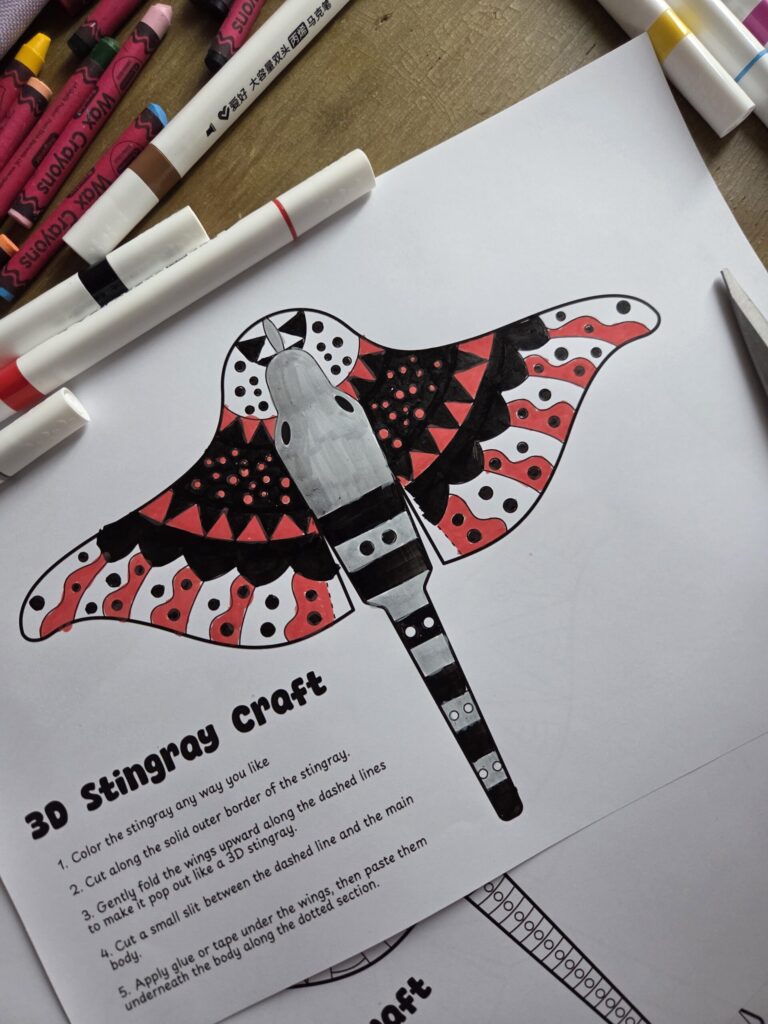
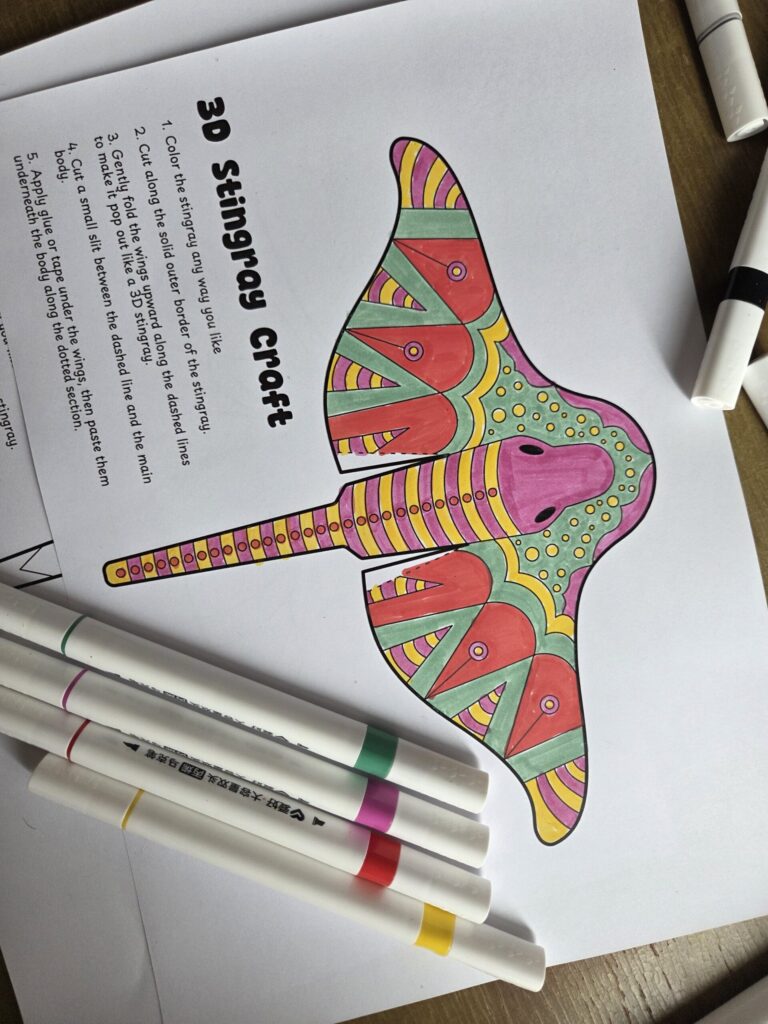
Your kids can even color the Stingrays digitally (even in Canva you can do it!)
Before any cutting, color the entire stingray using crayons, markers, or colored pencils. The patterns are designed so you can either match colors symmetrically across both wings (great color-matching practice for young kids) or go completely freestyle. There’s no wrong way to do it.
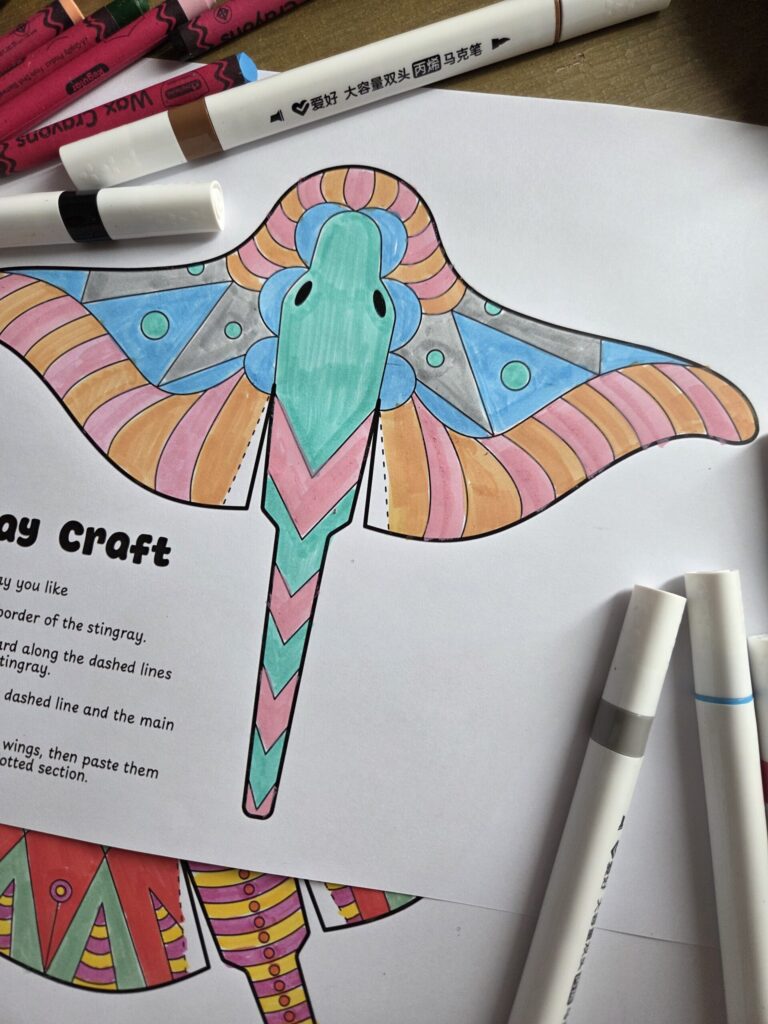
3. Find the dotted line near the body of the stingray. Following those lines gently fold the wings up.
- Dolphin / Ocean Habitat Color by Number
- Ocean Animals Directed Drawings
- Ocean Animals Paper Crafts
- Ocean Resin Art on Wood
- Build a Jellyfish Paper Craft
- Under The Sea Activity Mats For Kids
- Paper Fish Craft
- Cut-and-Glue Octopus Paper Craft
4. There is a small triangular slit bettween wings and body. Cut it out.
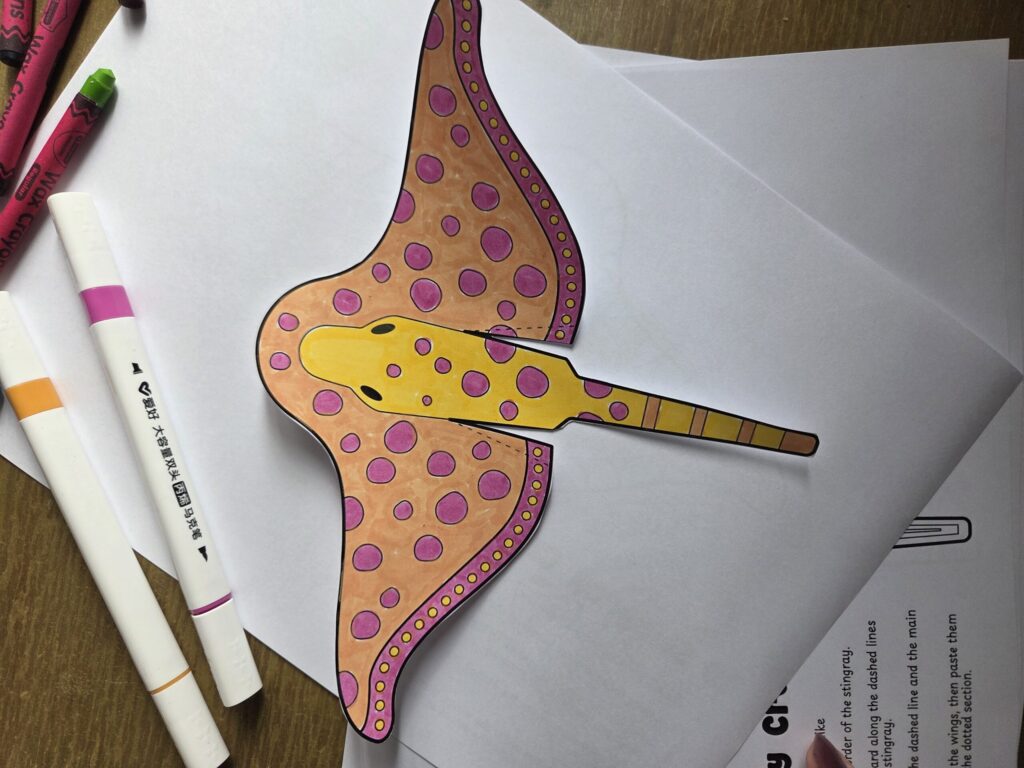
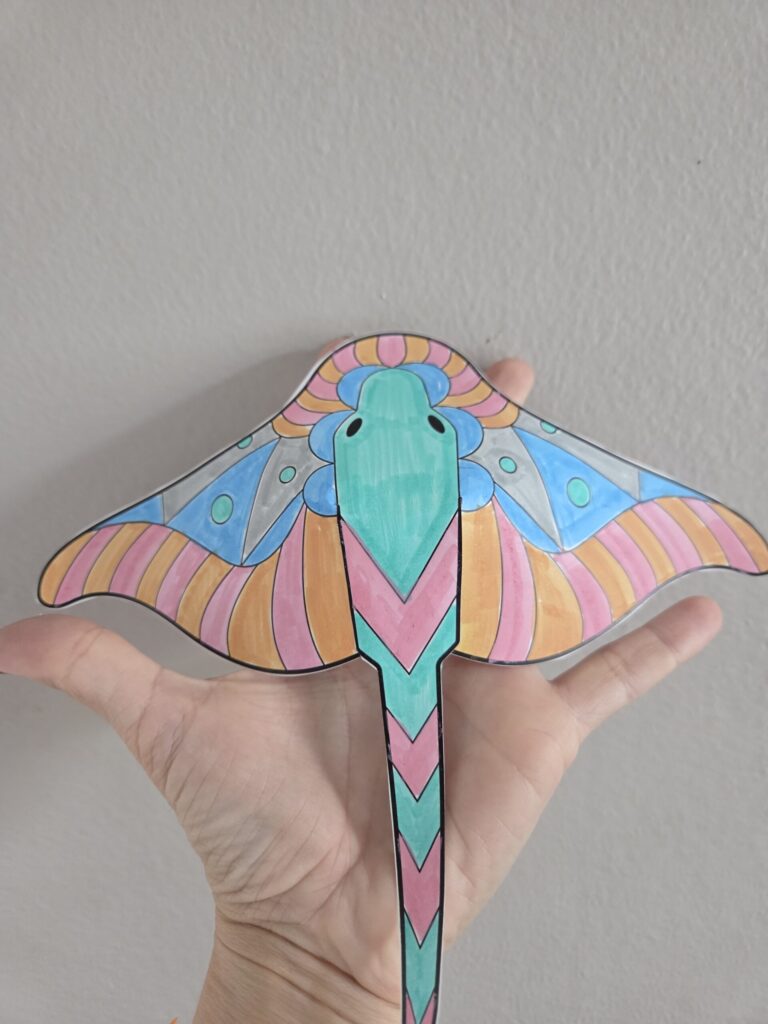
5. Now apply the glue to the blank part of the wings, beyon the dotted line. Then glue these portions of the wings only under the body. Press these tabs firmly under the body and hold for a few seconds until the glue sets. Once it’s dry, the wings will hold their upward angle and your 3D stingray is complete.
Done!
Get the Free Printable
Ready to make some rays? Download all 8 3D Stingray Craft designs completely free — just enter your email below for instant access.
👉 [Enter your email to download the free 3D Stingray printable PDF]
Tips for the Best Results
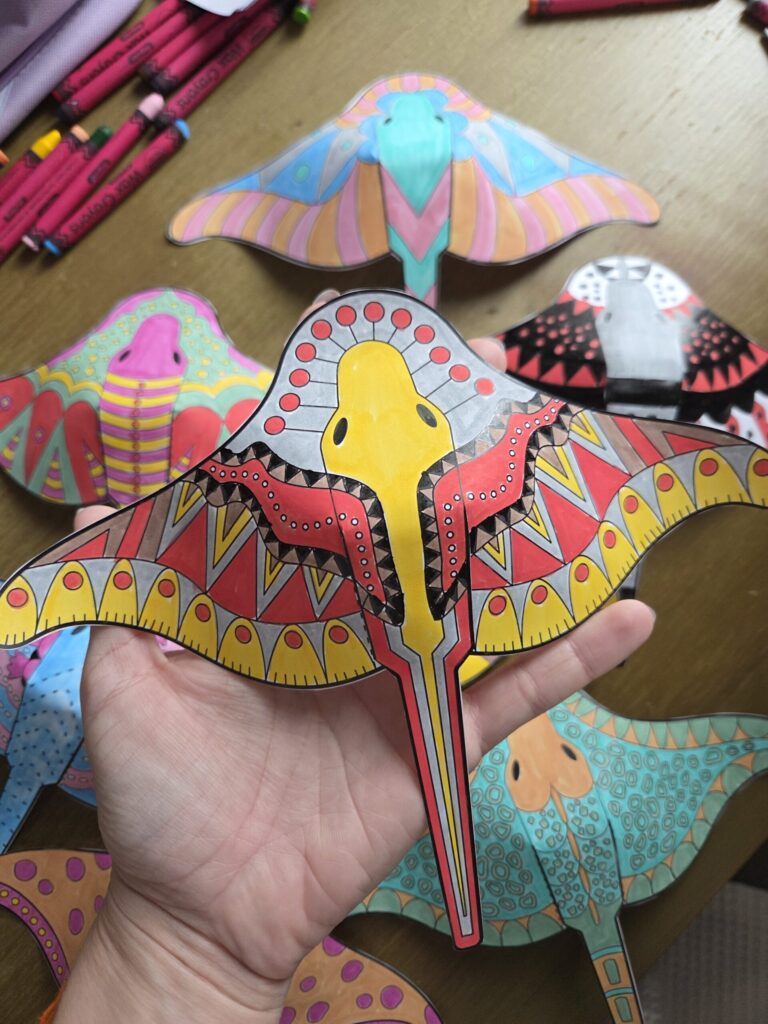
Color symmetrically for the wow factor. Each design is perfectly mirrored across the body, which means matching colors on both wings looks especially striking. It’s also a great opportunity for young kids to practice matching and symmetry without even realizing it’s a learning activity.
Use heavier paper if you can. The designs work on regular printer paper, but printing on cardstock (67–110lb) gives the wings more structure and makes the 3D effect much more pronounced. If you have a printer that handles cardstock, it’s worth it.
Do multiple designs in one sitting. With 8 templates to choose from, siblings can each pick their favorite and work simultaneously — no fighting over who gets which one. Or challenge kids to complete the full collection over a few afternoons.
Hang them for a stunning display. Use a needle and thread to pierce the top of the body and hang the stingray from a length of fishing line or thin string. A group of 3–4 hanging at different heights against a blue wall or from a curtain rod makes a beautiful under the sea display that kids will be proud to show off.
Works for all ages. Younger children (3–5) can color the simpler spotted designs and do the gluing with help, while older kids and teens can tackle the intricate mandala and geometric patterns independently. The folding steps may need adult assistance for children under 5.
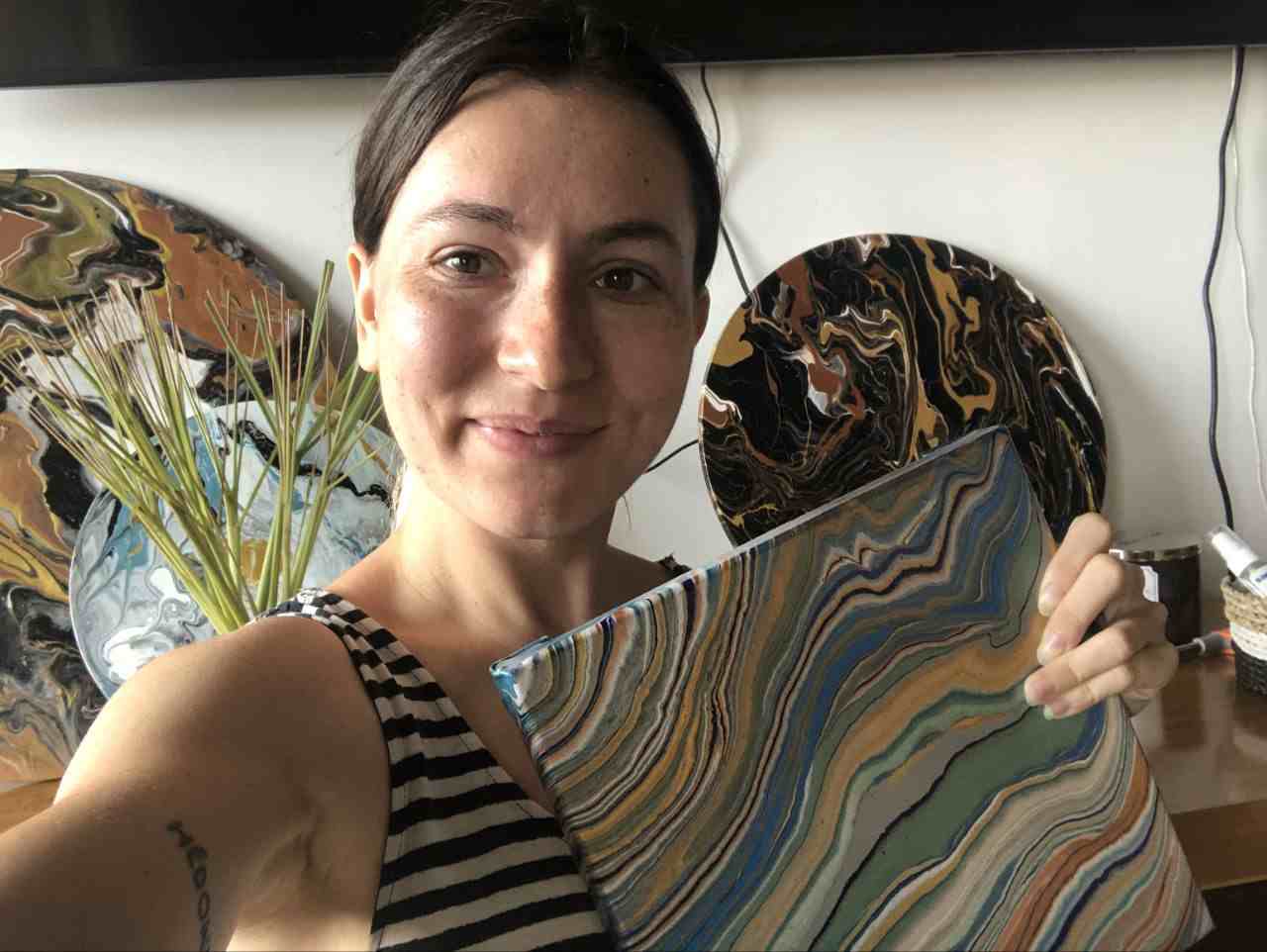
Masha Eretnova, born in 1991, is a Chiang Mai-based certified teacher, artist, and blogger with 20+ years of personal painting journey.
She started painting and drawing very early and is now an international abstract artist and educator passionate about acrylic painting, gouache, and crafts.
Her works are part of international exhibitions and contests, including ArtlyMix (Brazil), Al-Tiba 9 (Spain), Exhibizone (Canada), Italy, and many more.
Besides her artistic pursuits, Masha holds a post-grad diploma in Teaching Film Photography and 2 music school diplomas: piano and opera singing.