Last Updated on May 29, 2026 by Masha Eretnova
If your kids have never made a junk journal before, this is the perfect place to start, and a camping trip is the perfect place to do it.
A camping junk journal combines a simple craft with outdoor exploration, and the result is something kids actually want to hold onto. No screens, no batteries, no setup beyond a printer and a few basic supplies.
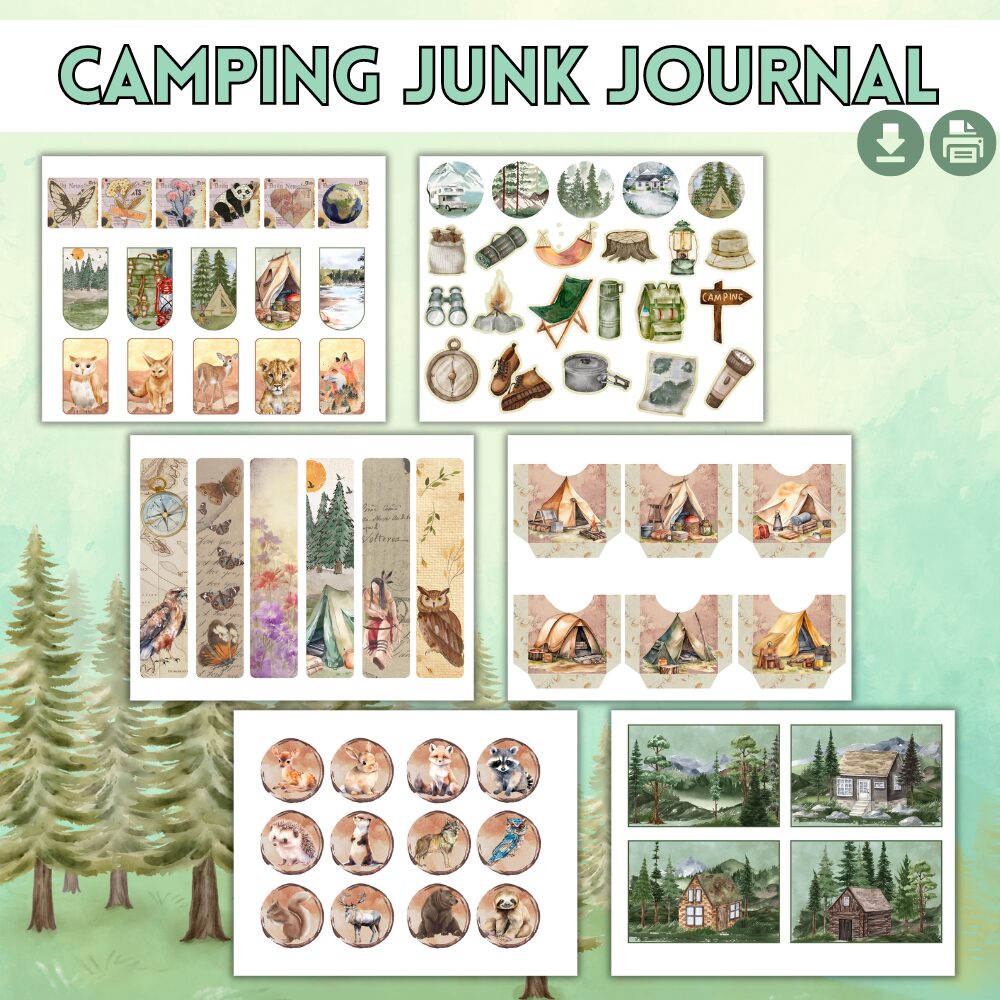
This free printable camping junk journal pack gives you everything you need to get started. You can print the pages before you leave and have a screen-free activity for kids ready.
What Is a Junk Journal?
A junk journal is a handmade book put together from printed or collected paper — layered, folded, torn, decorated, and assembled however you (or your kids) want.
Unlike a regular diary or sketchbook, a junk journal has no rules. Pages can be collaged, drawn on, written in, stamped, taped, or left blank. The “junk” part refers to the mix of materials that go into it: printed pages, magazine scraps, stickers, ticket stubs, pressed leaves, whatever, honestly.
For kids, junk journals are compelling because they cannot do it wrong. There is no correct way to fill a page. It is a place to paste in a feather found on a trail, sketch a frog they spotted near the creek, or just scribble the highlights of the day in their own words.
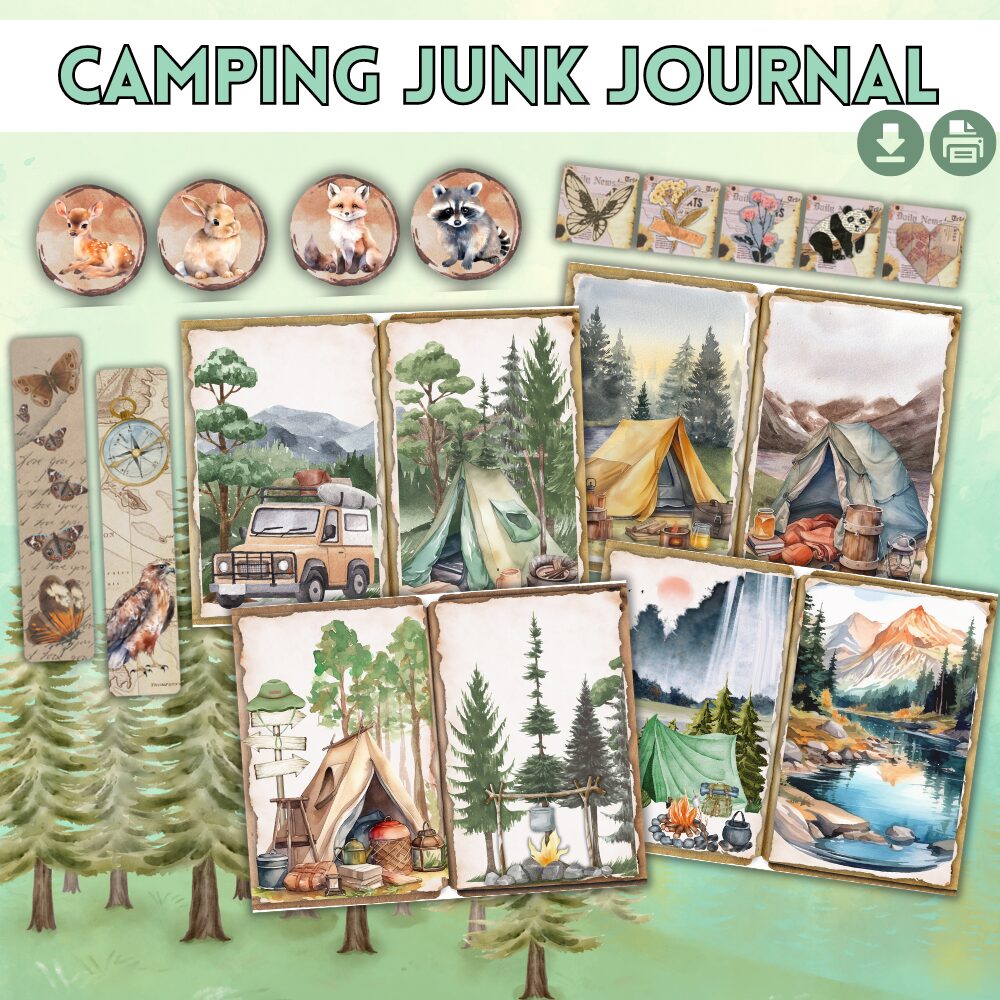
The pages in this printable set feature camping landscapes and wildlife that kids can use as a natural backdrop for whatever they collect.
What’s in This Camping Junk Journal Printable
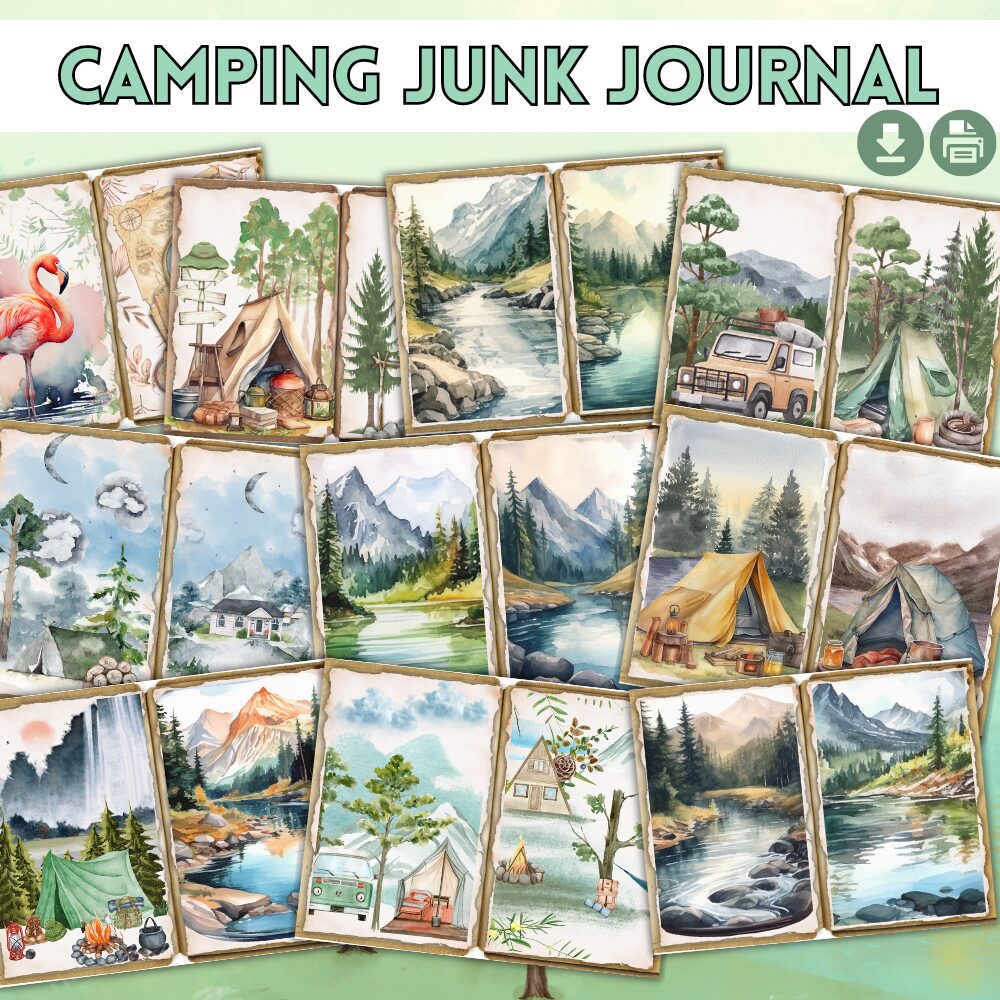
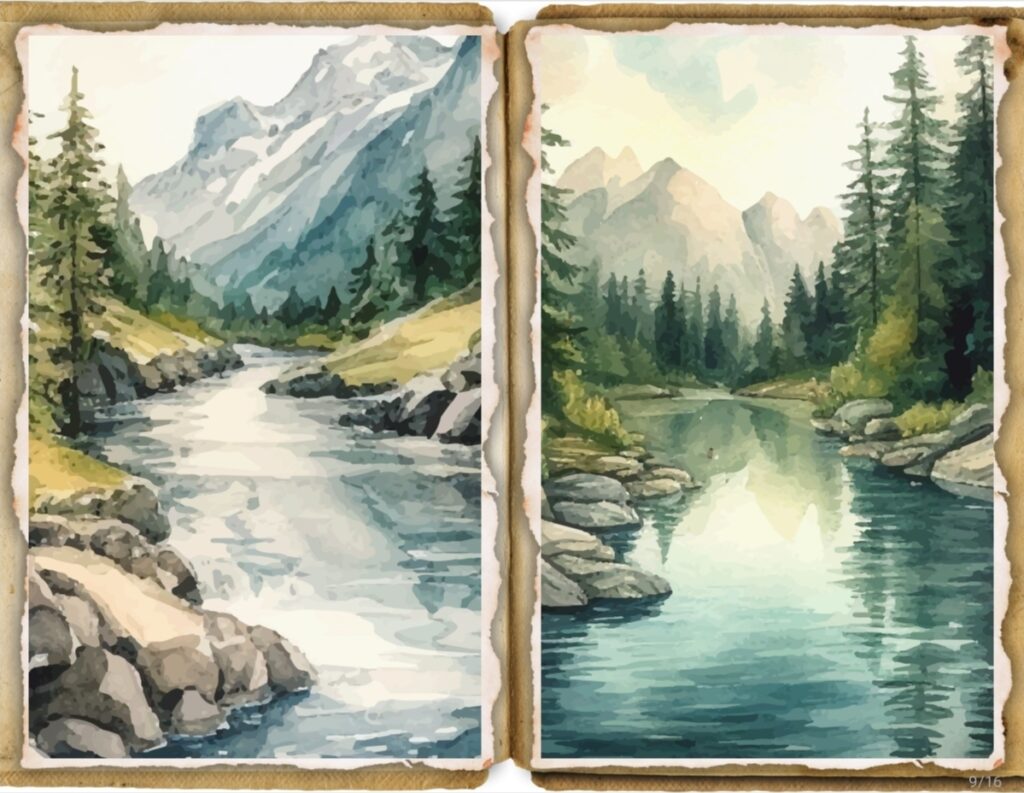
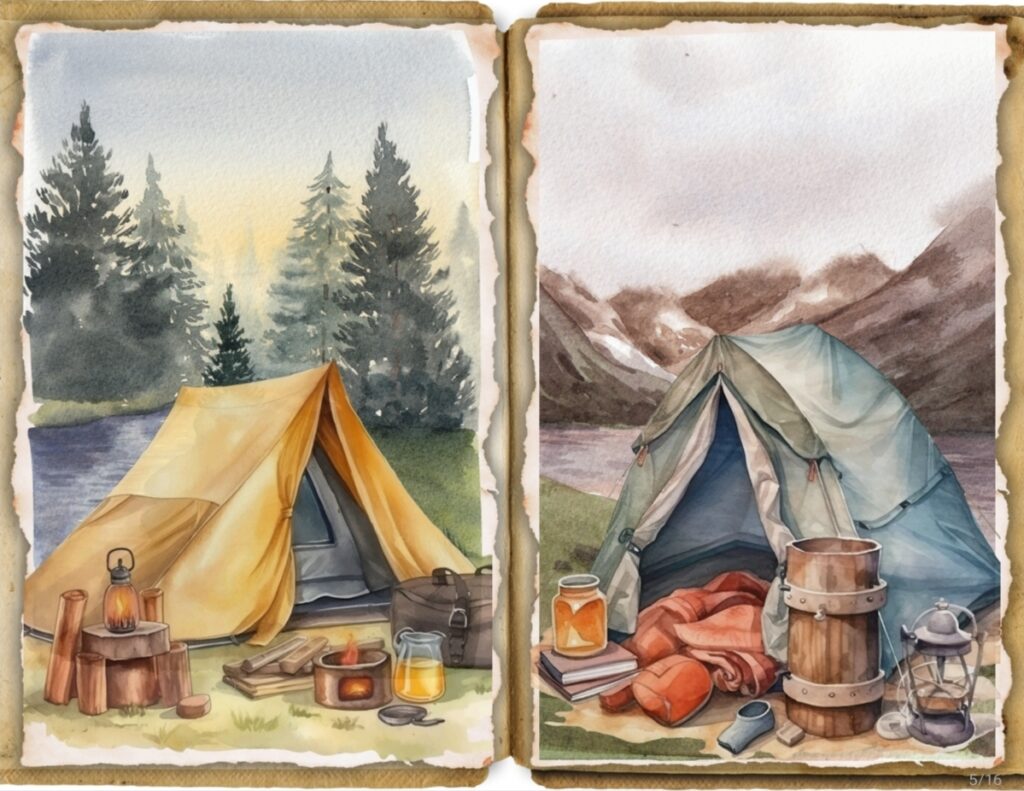
The set is a collection of 16 printable pages designed with camping scenes and nature imagery — forest landscapes, animals, outdoor backdrops, and decorative elements.
Each page works as a background layer that kids can write and collage directly onto, or cut apart and reassemble into their own layout.
The pages print on standard 8.5 x 11 paper and work with color or black-and-white printing. Color gives the landscapes and animals more visual impact for younger children. Black and white is a great option for kids who want to color the pages themselves or if older kids want to write something down.
Once printed, the pages fold into journal signatures (small folded booklets), stack together, and bind with a simple stitch, binder clip, or piece of twine.
Supplies You’ll Need
The basics are minimal, and most of this is likely already in your home:
- Printed junk journal pages (the free printable — sign up to grab your copy)
- Scissors
- A stapler or hole punch and twine or ribbon to bind the pages
- Glue stick or tape — washi tape works especially well for layering
- Pencils, pens, or markers for writing and drawing
- Optional: watercolor pencils for coloring the nature scenes
- Optional: stickers, stamps, or washi tape strips for decoration
- A small zip bag or pencil pouch to keep supplies contained at camp
For collecting: a small paper bag or envelope tucked inside the journal works as a pocket for pressed leaves, seed pods, or small flat finds from the trail.
Print the pages before the trip and pre-fold them into signatures so the journal is ready to assemble on day one. If your kids are old enough, folding and stitching the pages together at the campsite picnic table is itself a good opening activity.
How to Make the Camping Junk Journal
Step 1 — Print and Prep the Pages
Print the full set at home before you leave. Trim any pages you want to use at a smaller size — half-sheet inserts make good pocket pages or collage layers inside the journal. Fold each group of two to four pages together along the center to form a signature. Two or three signatures stacked together make a solid journal for a weekend trip.
Step 2 — Bind the Pages
The simplest binding for young children is a staple through the center fold of each signature. For a sturdier result, use a hole punch to make two or three holes along the spine and lace through with twine, yarn, or a shoelace. Tie it off and trim the ends. For a looser, more flexible journal, a binder clip along the left edge keeps everything together with no sewing or stapling at all.
For a cover, fold a piece of cardstock around the outside of the signatures before binding. Kids can decorate it at the campsite with markers, stickers, or anything they find on the ground.
Step 3 — Fill It at Camp
Once the journal is assembled, the campsite becomes the source material.
Write. Jot down what happened each day — what trail you hiked, what you ate for dinner, what the weather was like, who spotted the most wildlife. Even a few sentences per day builds something worth reading later.
Draw. Sketch a bird on a branch, the view from a clearing, or the shape of the tent against the trees. The camping landscape pages in the printable give kids a ready-made background that makes even a quick sketch feel like part of a real composition.
Collect and paste. Press a wildflower between two pages overnight and glue it in the next morning. Tape in a trail map, a candy wrapper from s’mores night, or a small flat leaf. Write a caption where a photo would go and slip the printed photo in when you get home.
Leave blank pages. Blank space is not wasted — it is room for something not yet found.
Tips for Different Ages
Preschool and kindergarten: Keep it simple. Hand them one or two pages, a glue stick, and a small pile of stickers. Let them paste in any order they choose. The process matters far more than the result at this age — twenty minutes at a picnic table with paper and glue is genuinely productive, screen-free time outdoors.
Early elementary: This age group handles the full journal assembly with a little help on the binding step. One sentence per day is a reasonable goal, even if spelling isn’t polished yet. The landscape and animal pages in the printable give them visual prompts when they’re not sure what to draw or write about.
Older kids and tweens: Give them the full creative brief — a journal to fill however they want, with the camping trip as the subject. They can layer pages, tear edges for a worn look, add watercolor washes over the printed backgrounds, and write longer entries. Junk journaling has a real following among older kids who are drawn to paper crafts precisely because there is no single right way to make one.
For a fuller outdoor day, pair the journal with the camping scavenger hunt printable — kids can paste their completed hunt sheets directly into the journal as a record of what they found.
The camping activity pages — mazes, word search, color by number, and riddles — also fold neatly into the journal once finished, so the whole trip ends up between two covers.
What to Do With the Journal After the Trip
The journal does not have to close at the campsite. Back home, kids can add photos printed from the trip, finish coloring any landscape pages they left blank, or write a final entry about their favorite moment of the week. It makes a natural show-and-tell piece when school starts back, and a genuine record of a summer that did not happen on a screen.
For more paper crafts and hands-on outdoor activities to bring on your next trip, the camping crafts for kids roundup has a full list of ideas that need nothing more than simple supplies and a picnic table.
Grab the Free Printable
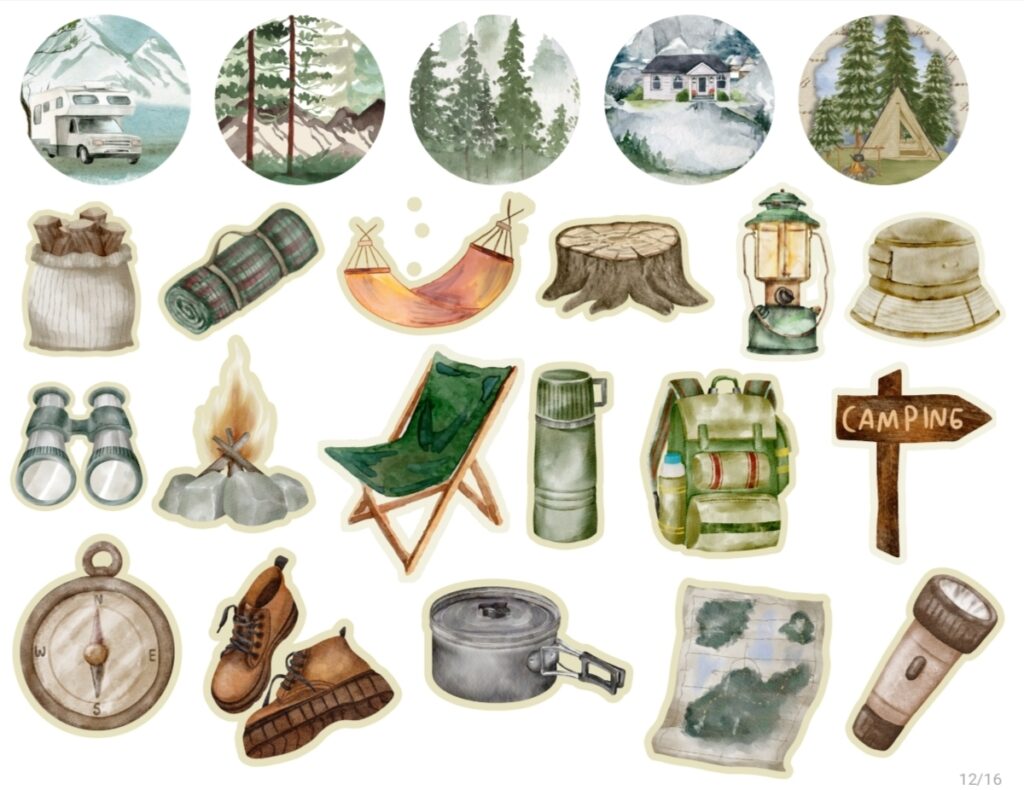
The full camping junk journal printable — landscape pages, animal backdrops, and decorative inserts — is available as a free PDF download. Enter your email below and it arrives straight in your inbox. Print as many copies as you need, for as many trips as you take.

Masha Eretnova, born in 1991, is a Chiang Mai-based certified teacher, artist, and blogger with 20+ years of personal painting journey.
She started painting and drawing very early and is now an international abstract artist and educator passionate about acrylic painting, gouache, and crafts.
Her works are part of international exhibitions and contests, including ArtlyMix (Brazil), Al-Tiba 9 (Spain), Exhibizone (Canada), Italy, and many more.
Besides her artistic pursuits, Masha holds a post-grad diploma in Teaching Film Photography and 2 music school diplomas: piano and opera singing.