
Last Updated on September 10, 2026 by Masha Eretnova
Fall calls for pumpkin activities for kids, and this pumpkin patch counting activity is a favorite for the season and for Halloween.
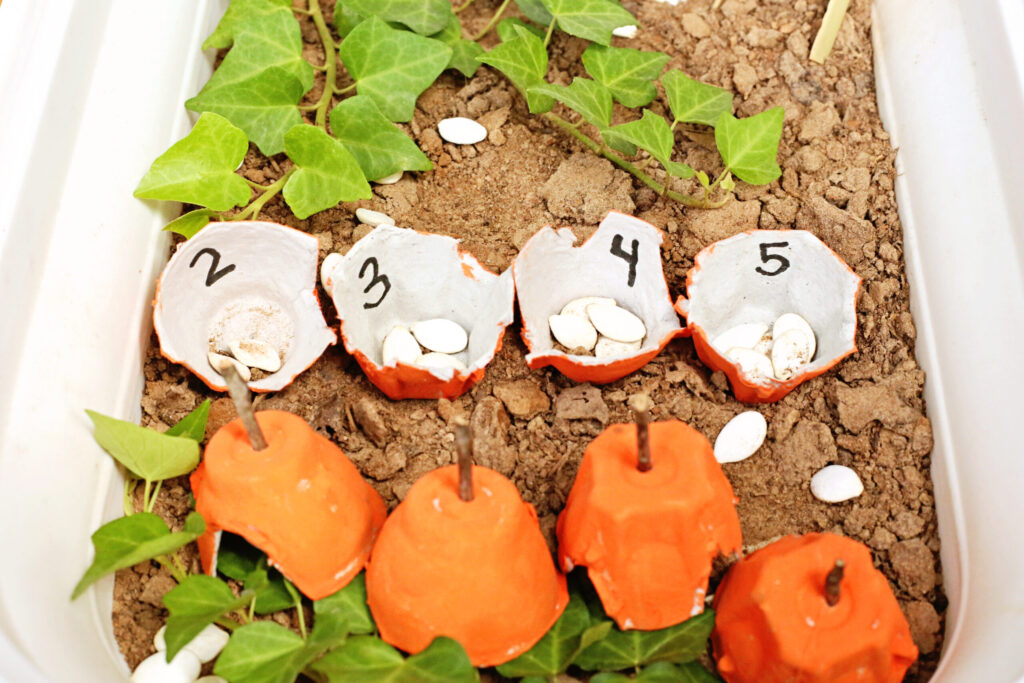
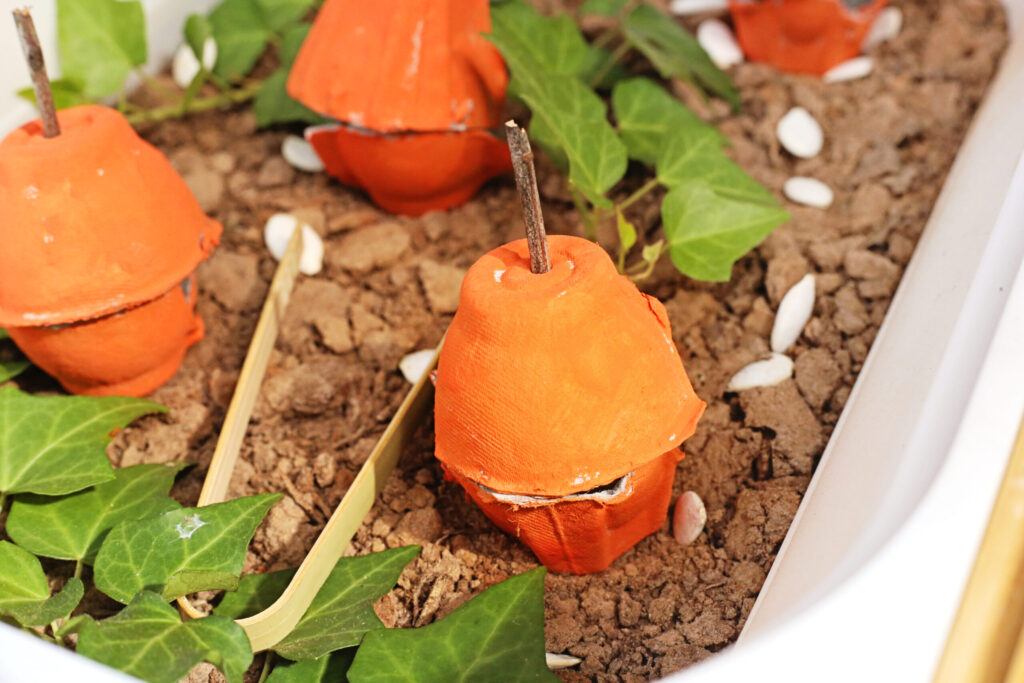
Painted egg carton cups become tiny pumpkins, each one hiding a number inside, and kids dig them out of a sensory bin filled with dirt and vines to match every number with the right count of pumpkin seeds. Set it up for a fall sensory bin, a math center, or a quiet afternoon at home.
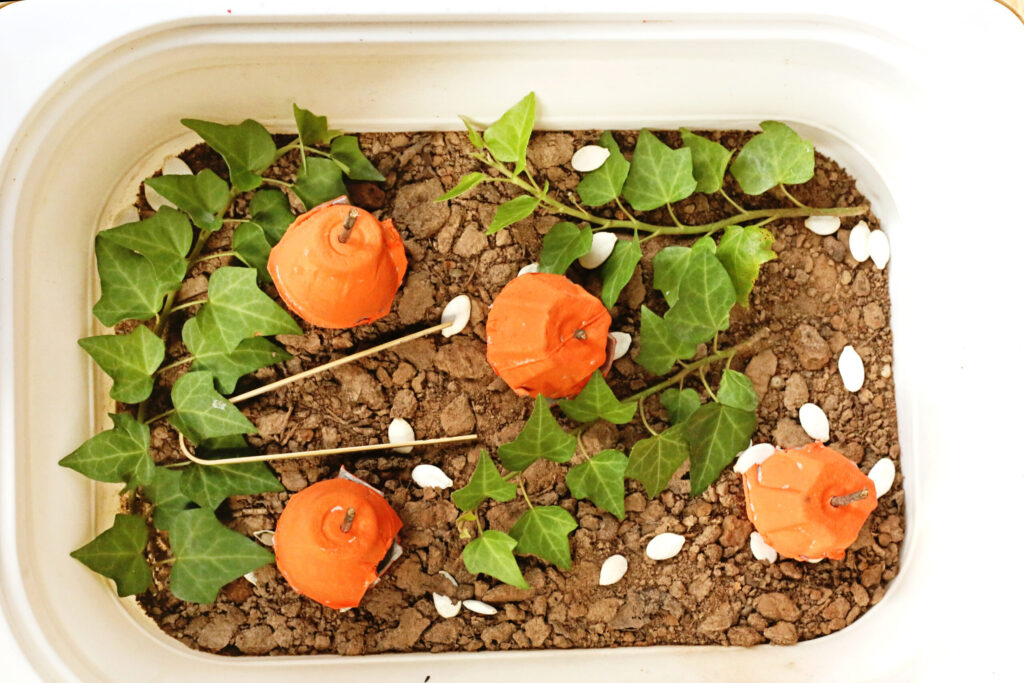
This activity works well for ages 2 through 8, with older kids handling higher numbers and more pumpkins.
Plan on about 20 minutes to paint and prep the pumpkins, plus another 15 to 20 minutes for the counting game itself.
Table of Contents
Pumpkin Patch Counting Activity Supplies
Before you start painting egg cartons, gather these ten simple supplies — most of them likely already sit in your craft bin or kitchen drawer:
- Sensory bin or shallow container. A plastic storage tub or a large baking dish works fine if you don’t have a dedicated sensory bin.
- Dirt, potting soil, or a dirt-like sensory filler. Dried coffee grounds, black beans, or brown rice make a mess-free substitute for real dirt.
- Artificial vines or green leaves. Check the dollar store or reuse leftover greenery from an old fall wreath. These vines are more expensive on Amazon and sold in big volume which we don’t need.
- Empty egg carton cups. Save these from your own cartons for a few weeks, or ask a friend to save theirs too.
- Orange paint. Acrylic or tempera paint both dry hard enough for repeated handling.
- Paintbrushes. Foam brushes cover the curved cups faster than bristle brushes.
- Black marker. A permanent marker keeps the numbers from smudging once little hands start digging.
- Pumpkin seeds. Raw pepitas from the grocery store work, or swap in dried beans if seeds aren’t on hand.
- Small scoop or tweezers. Kitchen tongs or a melon baller make good stand-ins for tweezers.
- Small twigs for pumpkin stems. Broken pretzel sticks or pipe cleaner pieces work when twigs aren’t available outside.
Before You Start
You can paint the egg carton cups a day ahead so they dry completely and don’t smear during the activity.
Cut your egg cartons into individual cups first, then set them on a paper plate or drying rack while the orange paint sets.
Write the numbers inside the cups before you glue or nest the pairs together, since the inside gets harder to reach afterward.
Lay out a towel or tray under the sensory bin to catch spilled dirt or filler and keep cleanup quick.
Count out the correct number of seeds per pumpkin ahead of time if you plan to run this activity with a group, so nobody runs short mid-game.
Make the Pumpkins
Start by building the pumpkins themselves. Follow the steps below to paint and number a small stash of egg carton pumpkins:
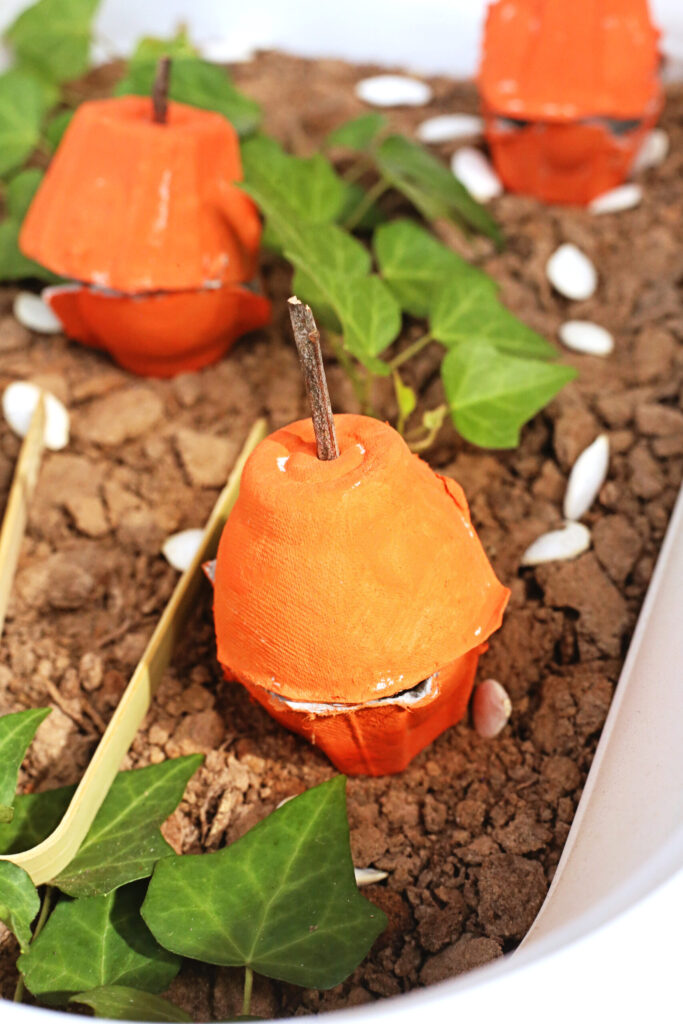
- Paint two empty egg carton cups orange and allow them to dry completely.
- Place the two cups together to form a round pumpkin shape.
- Write a number on the inside of one cup.
- Insert a small stick into the top of the pumpkin to create the stem.
- Repeat to make several pumpkins, using a different number inside each one.
Prepare The Pumpkin Patch
Once your pumpkins are ready, follow the steps below to set up the sensory bin and start the counting game with your child:
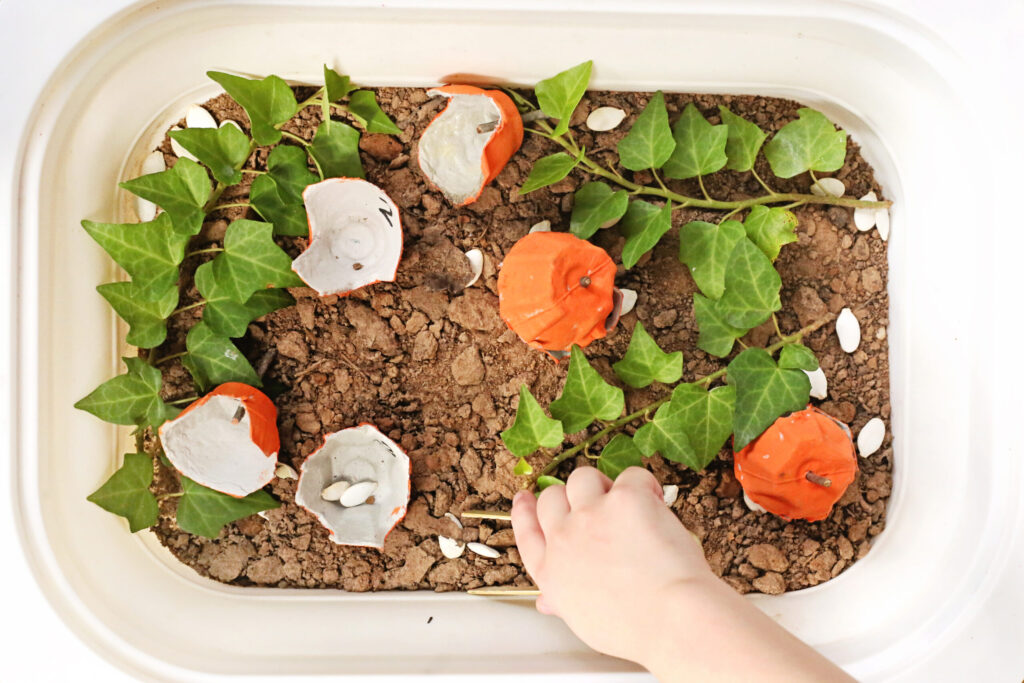
Fill a sensory bin with dirt or another dirt-like sensory material. Arrange vines and leaves throughout the bin to create a little pumpkin patch.
Place the pumpkin cups throughout the sensory bin.
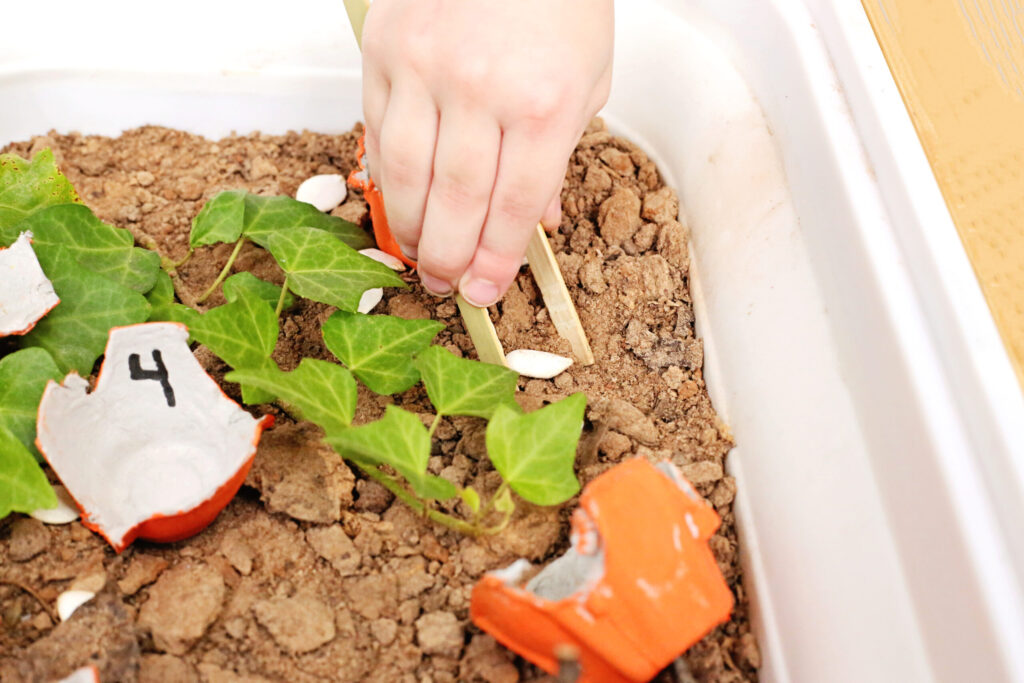
Harvest the pumpkins. Have the child open the pumpkin to discover the number hidden inside.
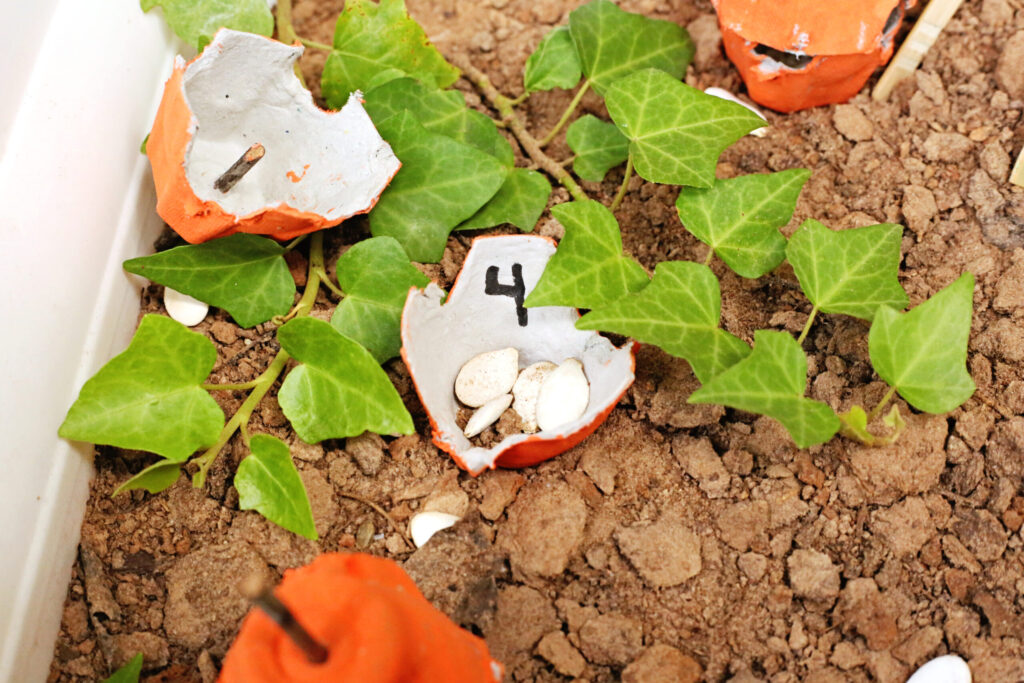
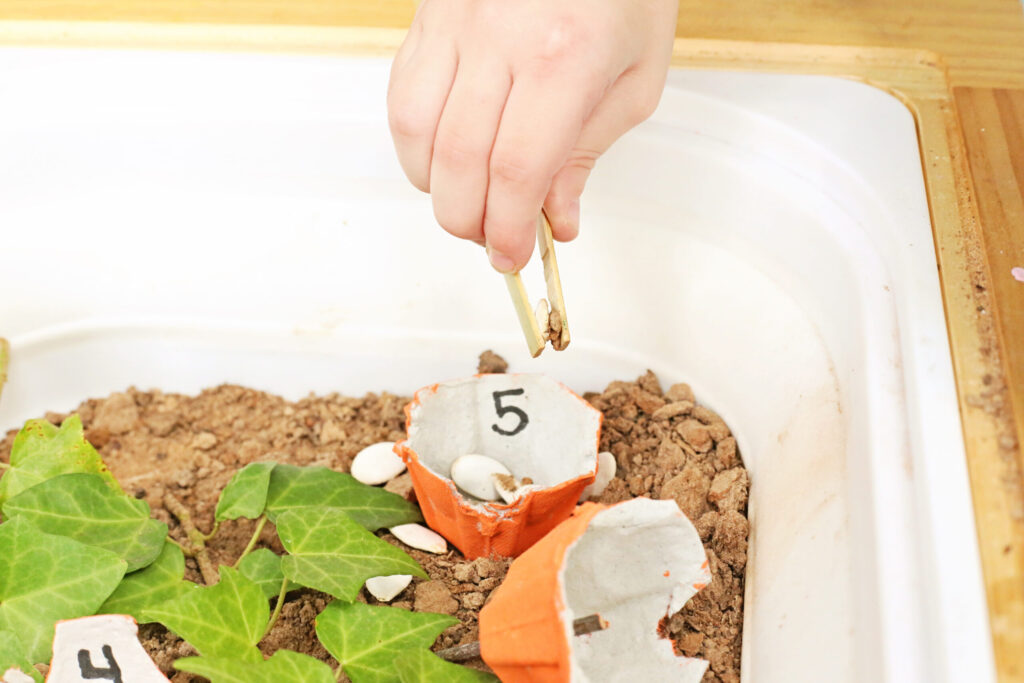
Count the seeds. Children identify the number and count out the corresponding number of pumpkin seeds. For example, if they find a 4, they add four pumpkin seeds to the pumpkin.
Repeat the activity. Continue “harvesting” pumpkins, identifying numbers, and matching each number with the correct quantity of seeds. For an added challenge, have children put the pumpkins in numerical order after they have completed them.
Benefits
- Number Recognition: Helps children identify and name written numbers.
- Counting Skills: Provides hands-on practice counting quantities.
- Fine Motor Skills: Picking up and placing small pumpkin seeds strengthens finger and hand muscles.
- Sensory Exploration: Dirt, vines, and natural materials provide an engaging tactile experience.
- Cognitive Development: Children connect a written numeral with its corresponding quantity.
- Seasonal Learning: Brings fall and pumpkin-themed fun into an early math activity.
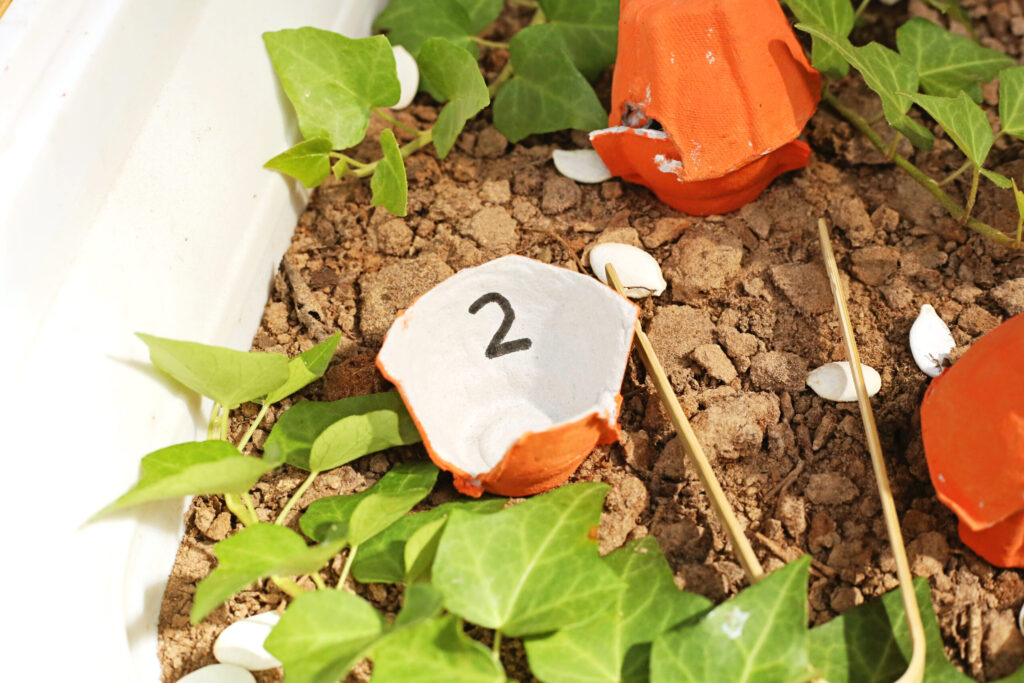
Store the pumpkins in a bag and pull this activity back out again next October!
Age Adaptations
Ages 2 to 3: Stick to numbers 1 through 3 and skip the numerical ordering challenge. Help little hands scoop with a large spoon instead of tweezers, and expect an adult to handle most of the pumpkin assembly.
Ages 4 to 5: Numbers 1 through 10 work well at this age. Let kids use child-safe tweezers for the seeds and try the sorting challenge with support.
Ages 6 to 8: Push the range up to 15 or 20, mix in simple addition by having kids combine the seed counts from two pumpkins, and let them handle the full ordering challenge independently.
Classroom groups: Prepare one bin per small group of 3 to 4 children so everyone gets a turn to dig within a reasonable wait time. Number the pumpkins by group so the sets don’t mix if bins get bumped together.
Common Problems and Fixes
The paint chips or flakes off the egg cups: Let each coat dry fully before handling, and add a second thin coat rather than one thick layer.
The marker numbers smear before they dry: Write the numbers on cups that already dried from painting, and let the ink sit for a minute before nesting the cups together.
The pumpkin stems fall out during play: Add a small dab of glue where the stick meets the seam, and let it set before adding the pumpkin to the bin.
Kids lose track of which pumpkin they already opened: Set a small empty container next to the bin for “harvested” pumpkins so the patch and the finished pile stay separate.
The sensory filler ends up everywhere: Work over a towel, tray, or an old sheet, and keep the bin on a low table so kids aren’t reaching over the edge.
Seeds go missing or end up eaten: Swap in dried beans or pom-poms for any child who still puts small objects in their mouth.
Pumpkin Patch Activity Variations
Swap pumpkin seeds for mini erasers, buttons, or pom-poms if seeds aren’t available or safe for younger kids.
Paint the cups as apples, acorns, or gourds instead of pumpkins for a different fall theme.
Write simple addition problems inside the cups instead of single numbers for an older-kid math challenge.
Use letters instead of numbers and hide small objects that start with each letter for an alphabet version of the same game.
Freeze small toy pumpkins or seeds in ice cubes and let kids “harvest” them with a dropper of warm water for a sensory twist.
FAQ
What age is this pumpkin patch counting activity best for?
It works well from about age 2 through 8, with the number range and tools adjusted for younger or older kids.
How long does the whole activity take?
Plan on 20 minutes to paint and prep the pumpkins ahead of time, then another 15 to 20 minutes for the counting game itself.
Can I make the pumpkins without egg cartons?
Yes, small plastic eggs, walnut shells, or paper mache pumpkins from the craft store all work as a stand-in.
Is this activity messy?
It can be, since dirt or filler spreads during digging. A towel underneath and a low table keep most of the mess contained.
What if I don’t have real dirt on hand?
Dried coffee grounds, black beans, brown rice, or shredded paper all make good indoor substitutes.
Can this activity work for a classroom?
Yes, set up one bin per small group of 3 to 4 kids so everyone gets a turn within a short wait.
How do I store the pumpkins for next year?
Place them in a labeled bag or box once they dry out fully after use, and store them with your other seasonal craft supplies.
Can I reuse the same pumpkins for a different lesson?
Yes, wipe them out and write new numbers, letters, or simple math problems inside for a fresh round.
What if my child eats or mouths small pieces?
Swap the seeds for larger sensory-safe items like pom-poms or foam shapes, and supervise closely during play.
Does this activity need any special skills to set up?
No, painting and cutting egg cartons only takes basic scissors and paint, and an adult can prep everything ahead of time.

Masha Eretnova, born in 1991, is a Chiang Mai-based certified teacher, artist, and blogger with 20+ years of personal painting journey.
She started painting and drawing very early and is now an international abstract artist and educator passionate about acrylic painting, gouache, and crafts.
Her works are part of international exhibitions and contests, including ArtlyMix (Brazil), Al-Tiba 9 (Spain), Exhibizone (Canada), Italy, and many more.
Besides her artistic pursuits, Masha holds a post-grad diploma in Teaching Film Photography and 2 music school diplomas: piano and opera singing.