
Last Updated on May 29, 2026 by Masha Eretnova
What if the craft decided itself?
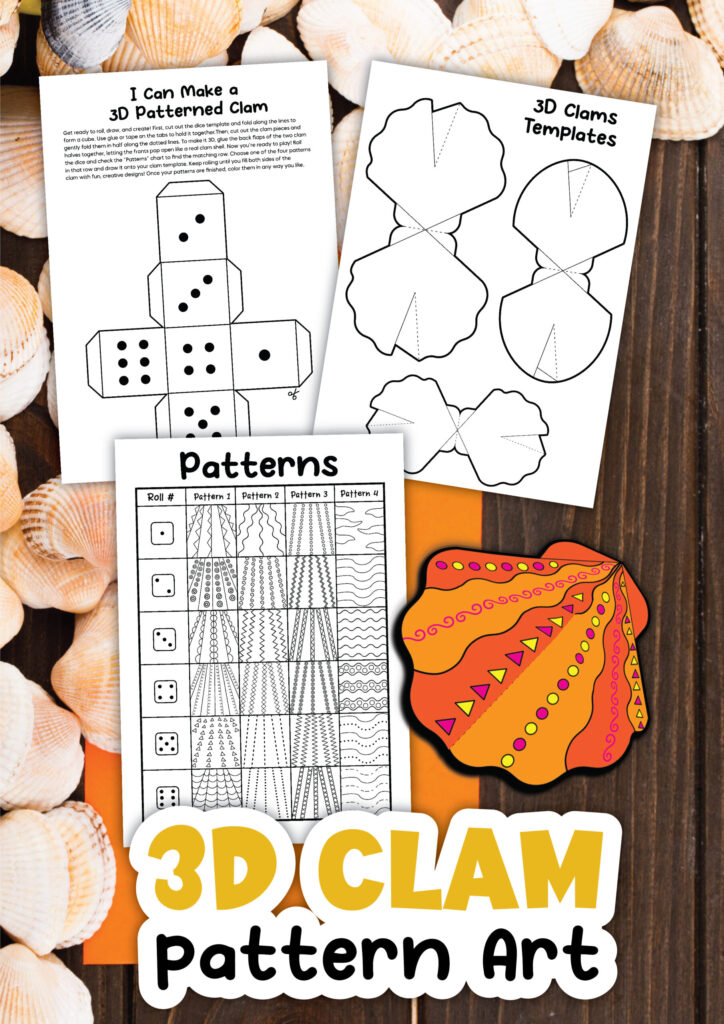
That’s the idea behind this 3D clam craft for kids — and it’s what makes it genuinely different from every other cut-and-glue activity out there. Instead of following a fixed design, kids roll a dice to find out which pattern goes on their clam shell next. Waves, zigzags, spirals, circles, scales, dots — each roll reveals something new, and no two finished clams ever look the same.
It’s part craft, part game, entirely screen-free, and the kind of activity that kids want to do more than once. Download the free printable below (enter your email for instant access) and let’s get rolling.
Why the Dice Changes Everything
Most craft activities have a clear endpoint: follow the instructions, produce the result, you’re done.
This one doesn’t work like that.
The dice introduces just enough randomness to make each session feel like its own little adventure.
Kids don’t know what pattern is coming next, which means they stay genuinely invested all the way through, not just during the exciting cutting-and-folding stage, but right until the very last section of shell is filled in.
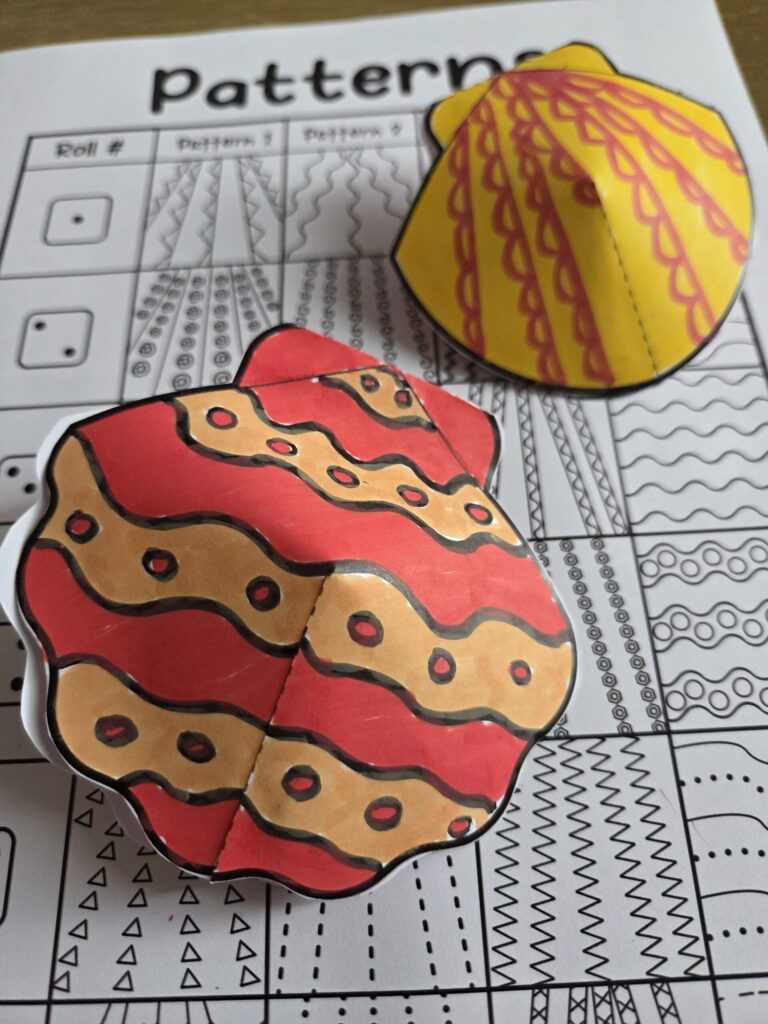
It also means the activity is naturally repeatable. Print a second clam template and the whole experience is fresh again, because the dice will land differently. For kids who loved the first one, that’s a very good thing.
There’s also something quietly brilliant about how it removes decision paralysis. Young children can find a blank creative template overwhelming, where do I start? what do I draw?, but here, the dice makes that choice for them.
What’s in the Printable
The free PDF includes everything needed for the full activity.
There’s an instruction page that walks through the whole process clearly, a printable dice template that kids cut out and fold into a real working cube (which is a fun little craft in itself before the main event even starts), a page of 3D clam shell templates with fold and glue guides, and the Patterns chart — a grid showing six dice rolls matched to four different pattern options each, giving 24 possible designs in total.
What You’ll Need
- printer + printed PDF,
- scissors,
- a glue stick or tape, and
- crayons or markers for coloring once the patterns are drawn in.
- A pencil is useful for sketching the patterns lightly before committing with a marker. Older kids and confident drawers might go straight in with a fine-tip black pen, which gives a really striking finished result before the coloring stage.
If you want to make this a group activity — a classroom, a playdate, a party — each child needs their own printed clam template, but everyone can share one dice (the printed one from the PDF, or a regular household dice works perfectly too).
How to Make the 3D Clam: Step by Step
Start with the dice.
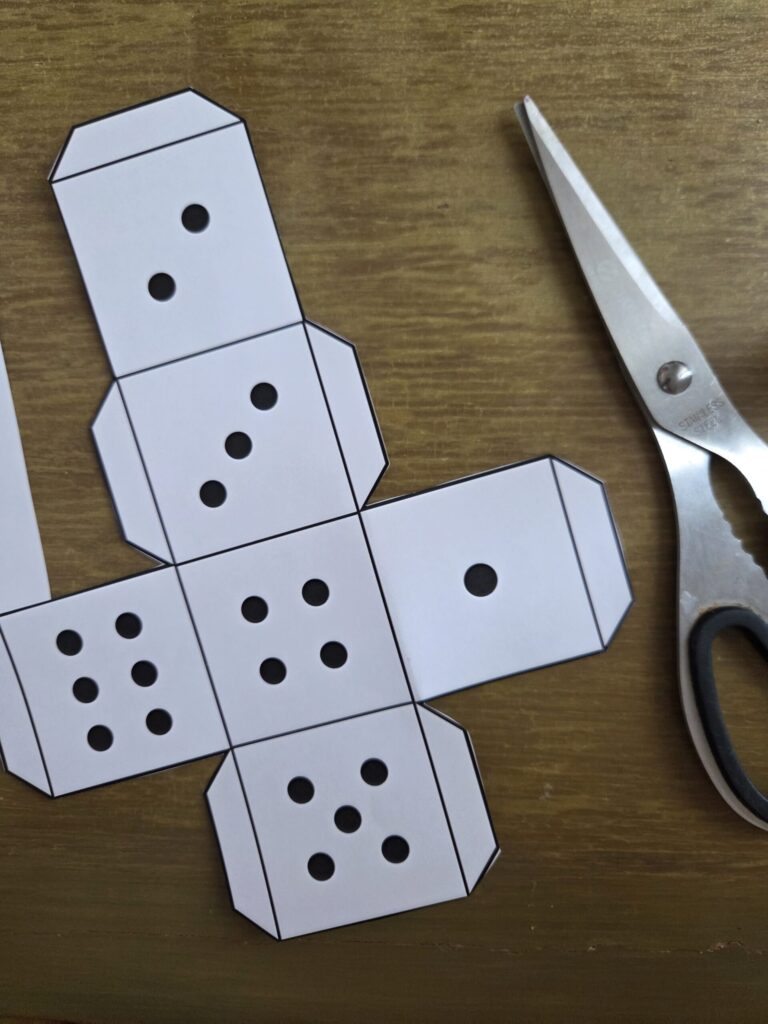
Cut out the template along the solid lines, fold along all the internal lines, and use glue or tape on the tabs to hold the cube together.
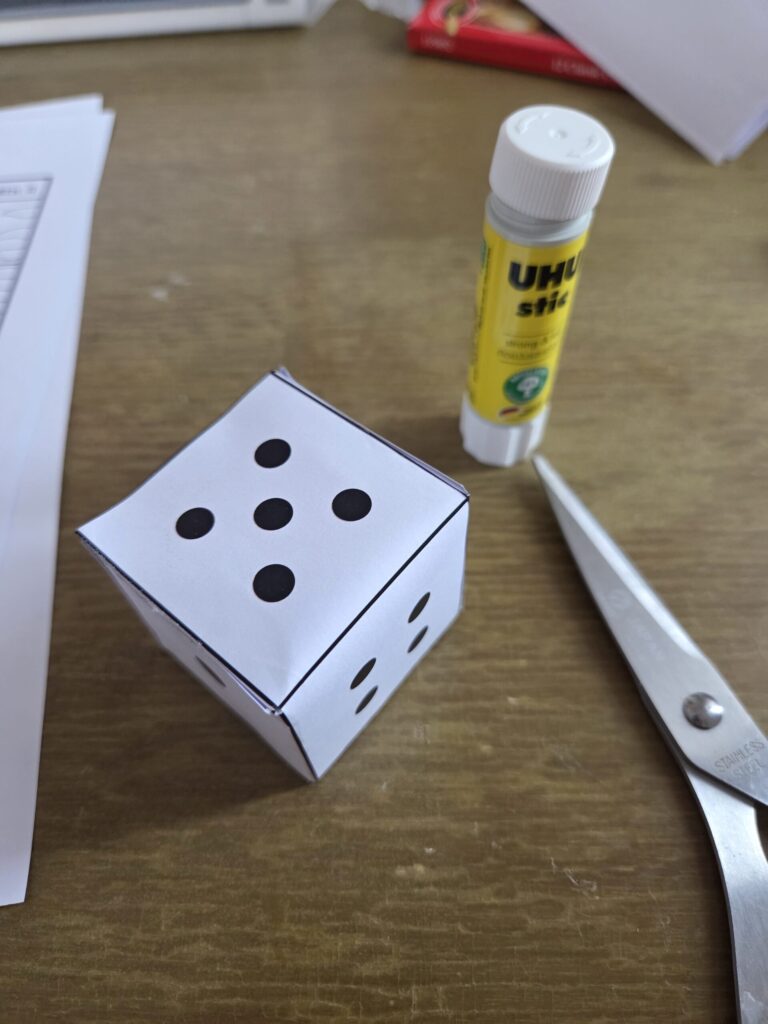
Kids who have never folded a paper cube before will find this genuinely satisfying — it’s a small engineering win before the main craft even begins.
- Dolphin / Ocean Habitat Color by Number
- Ocean Animals Directed Drawings
- Ocean Animals Paper Crafts
- Ocean Resin Art on Wood
- 3D Ocean Animals Crafts
- Build a Jellyfish Paper Craft
- Build a Seahorse Paper Craft + Printable
- Under The Sea Activity Mats For Kids
- Paper Fish Craft
- Cut-and-Glue Octopus Paper Craft
Next, cut out the clam shell pieces and fold each one gently in half along the dotted centre line.
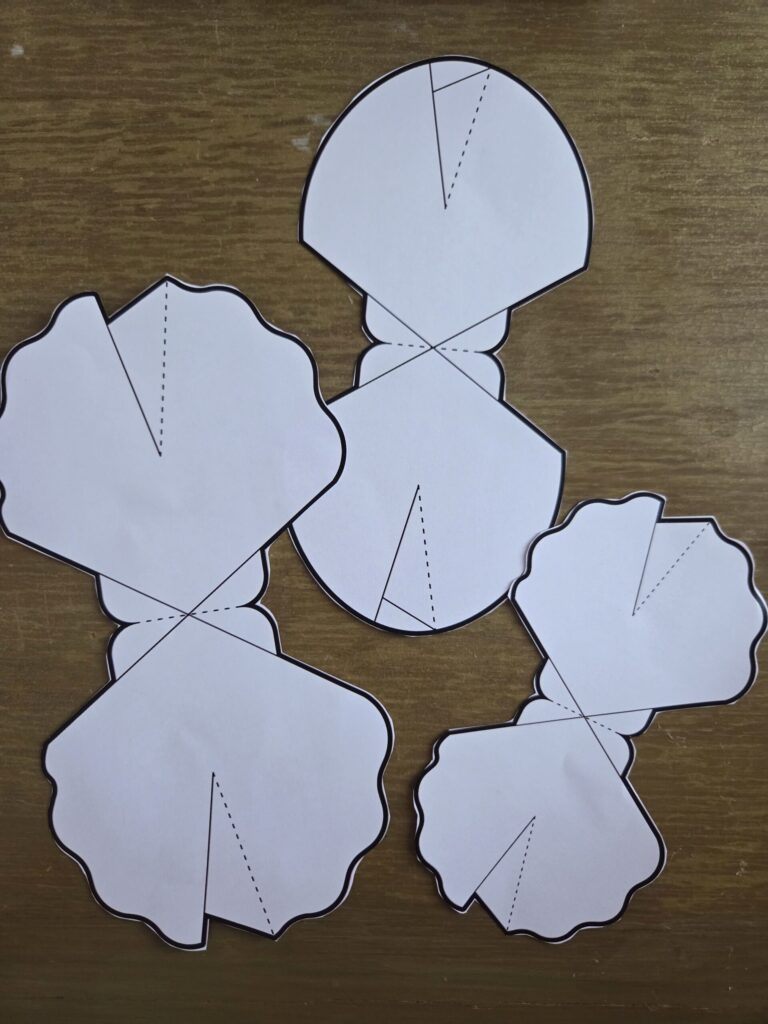
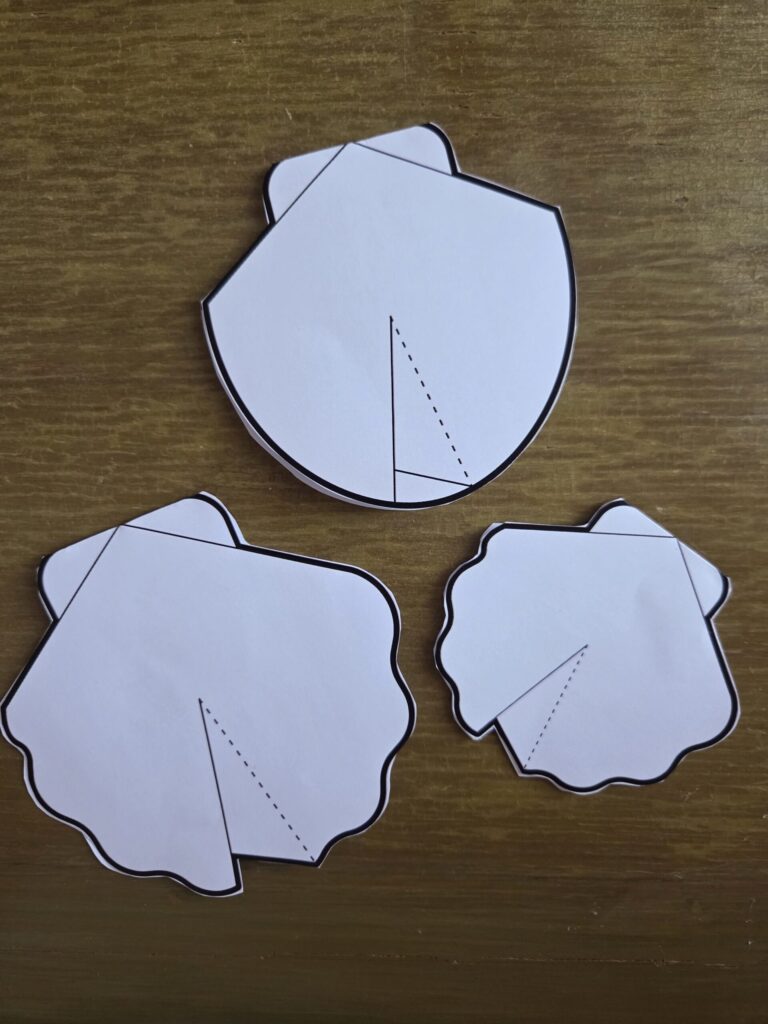
The fold is what creates the 3D effect: when you glue the back flaps of the two halves together, the fronts naturally bow open, giving the clam that classic cupped shell shape. It looks impressively three-dimensional for something made from a flat piece of paper. I do recommend doing it after the coloring though for younger kids.
Now for the pattern game.
Roll the dice, find the matching row on the Patterns chart, and choose any one of the four designs shown.
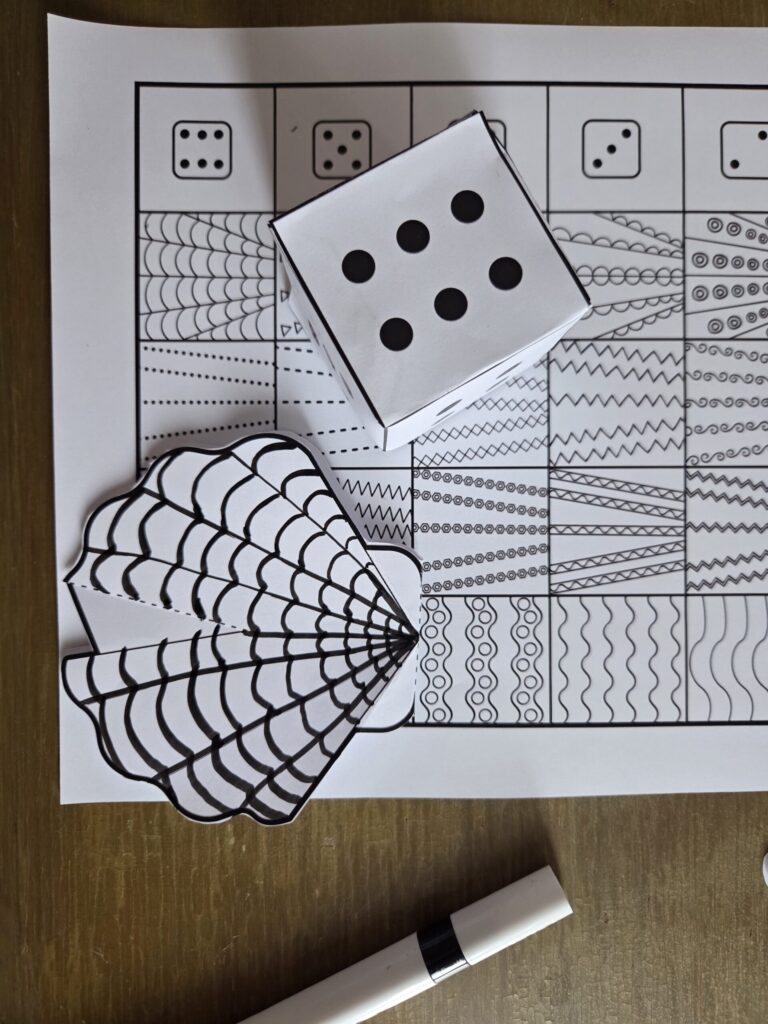
Draw that pattern into one section of the clam template — filling the space with the repeating mark, whether that’s concentric circles, wavy lines, triangles, or crosshatching.
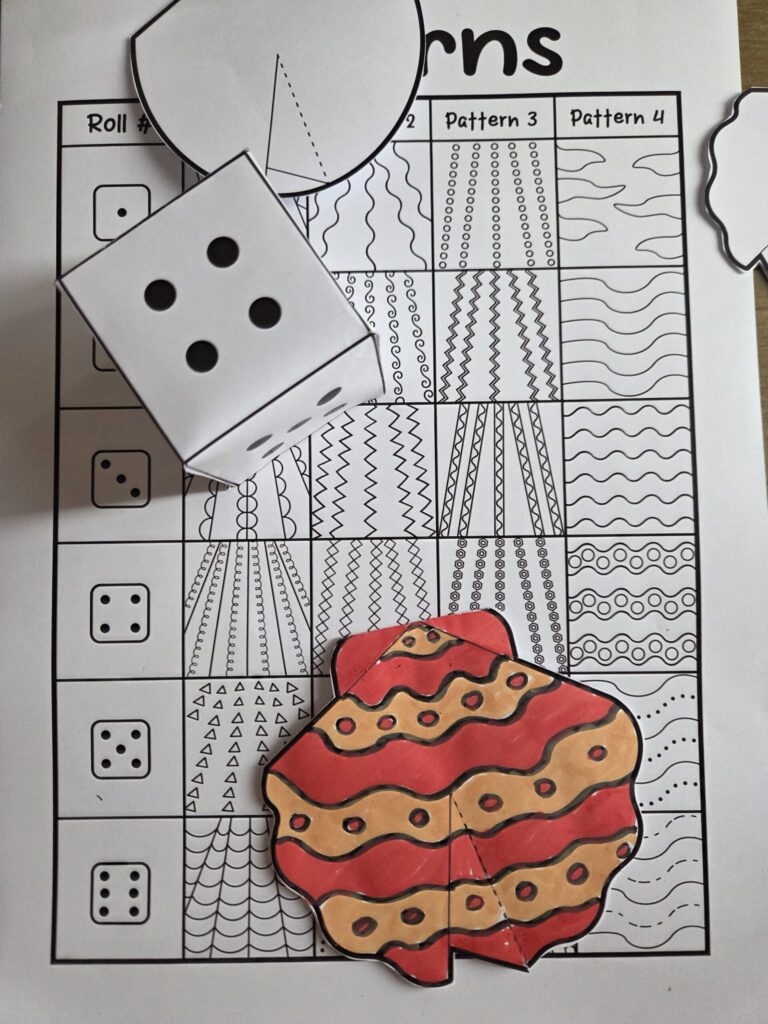
Roll again for the next section. Keep going until both sides of the clam are completely filled with drawn patterns. Then color everything in however feels right — bold and bright, soft watercolor-style, realistic ocean colors, or something completely invented.
A Few Tips Worth Knowing
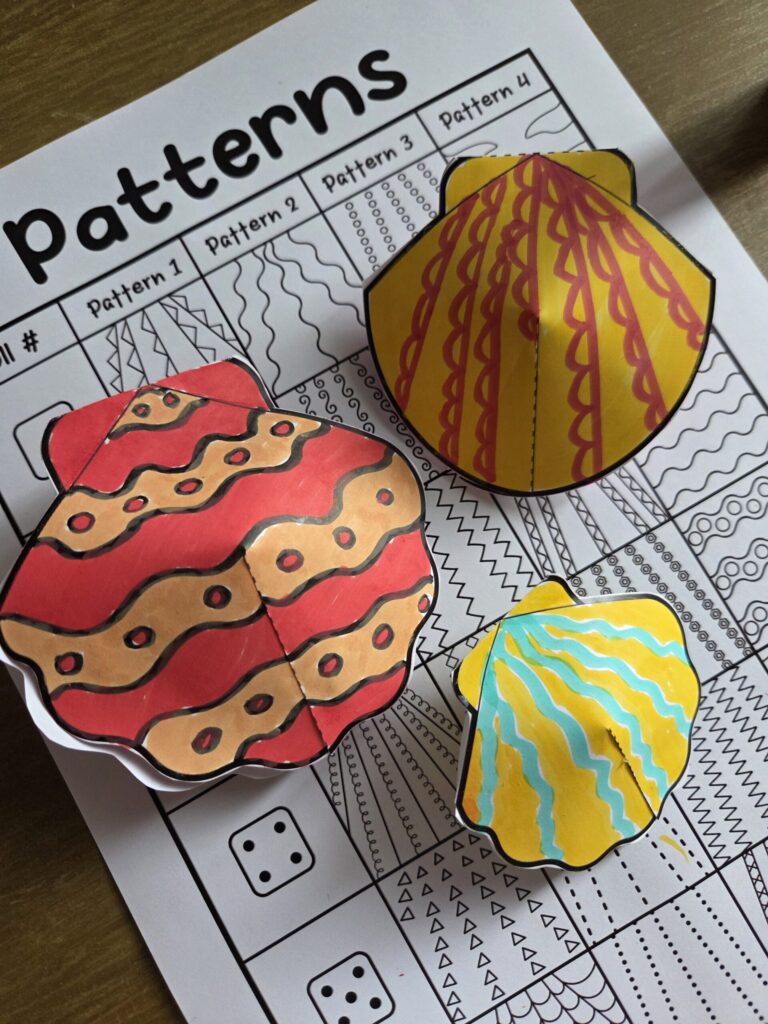
The clam shell folds work best when the paper is scored gently along the dotted line before folding — a dull pencil or the back of a butter knife run along the line first makes the fold crisp and clean.
For younger kids, parents can do the folding and assembly while children focus on the dice rolling and pattern drawing, which is usually the part they find most exciting anyway.
The patterns on the chart range from simple (horizontal waves, dots) to more intricate (overlapping circles, crosshatched lines), so you can quietly steer younger children toward the simpler options while older kids tackle the detailed ones. The dice doesn’t know the difference — it’s just a suggestion.
Get the Free Printable
Ready to roll? Download the full 3D Clam Pattern Art printable — dice template, clam shells, and patterns chart all included — completely free.
👉 [Enter your email to download the free printable]
Masha Eretnova, born in 1991, is a Chiang Mai-based certified teacher, artist, and blogger with 20+ years of personal painting journey.
She started painting and drawing very early and is now an international abstract artist and educator passionate about acrylic painting, gouache, and crafts.
Her works are part of international exhibitions and contests, including ArtlyMix (Brazil), Al-Tiba 9 (Spain), Exhibizone (Canada), Italy, and many more.
Besides her artistic pursuits, Masha holds a post-grad diploma in Teaching Film Photography and 2 music school diplomas: piano and opera singing.