Last Updated on May 29, 2026 by Masha Eretnova
Need a woodland animals craft for kids that skips the screen, the Cricut, and the trip to the craft store? This free printable set turns ten paper templates into 3D animals kids build, hold, and play with. It fits a summer afternoon at home, a rainy-day quiet time, or a preschool animals unit.
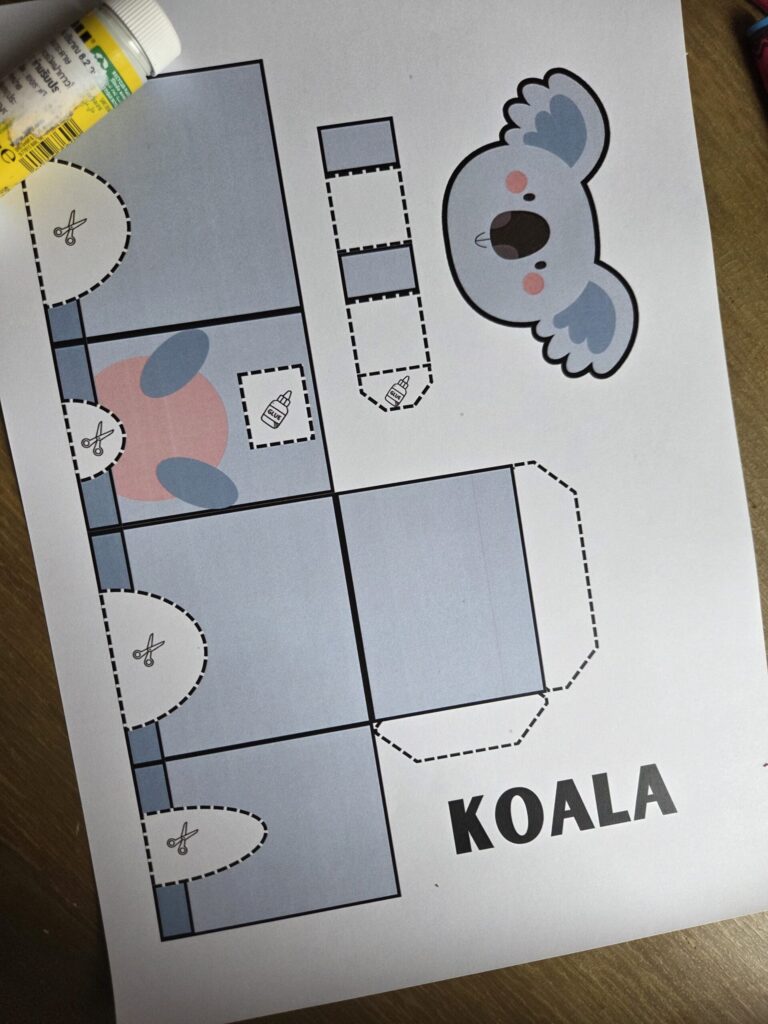
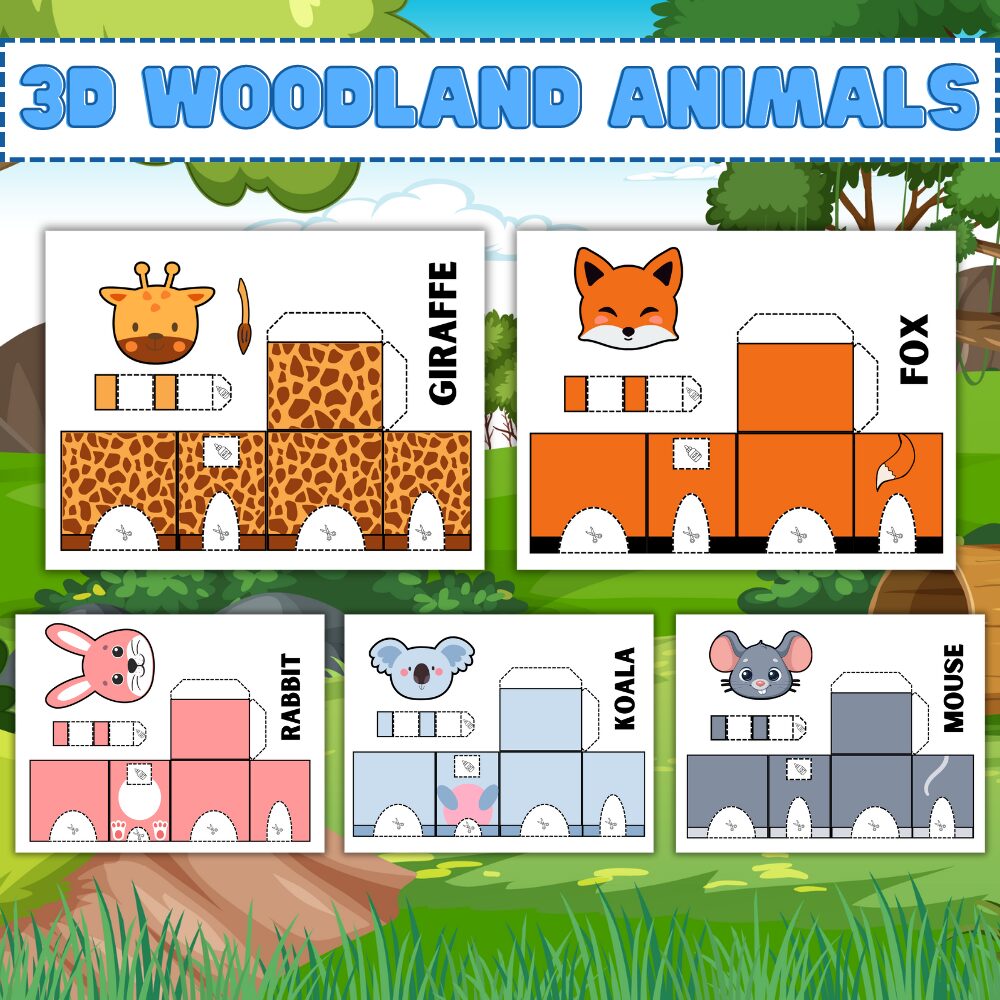
Each page holds one animal: a body net that folds into a box, a separate head, and tabs marked with tiny glue and scissor icons. Kids cut, fold, glue, and stand up their own paper critter in about fifteen minutes.
What Makes This Set Different
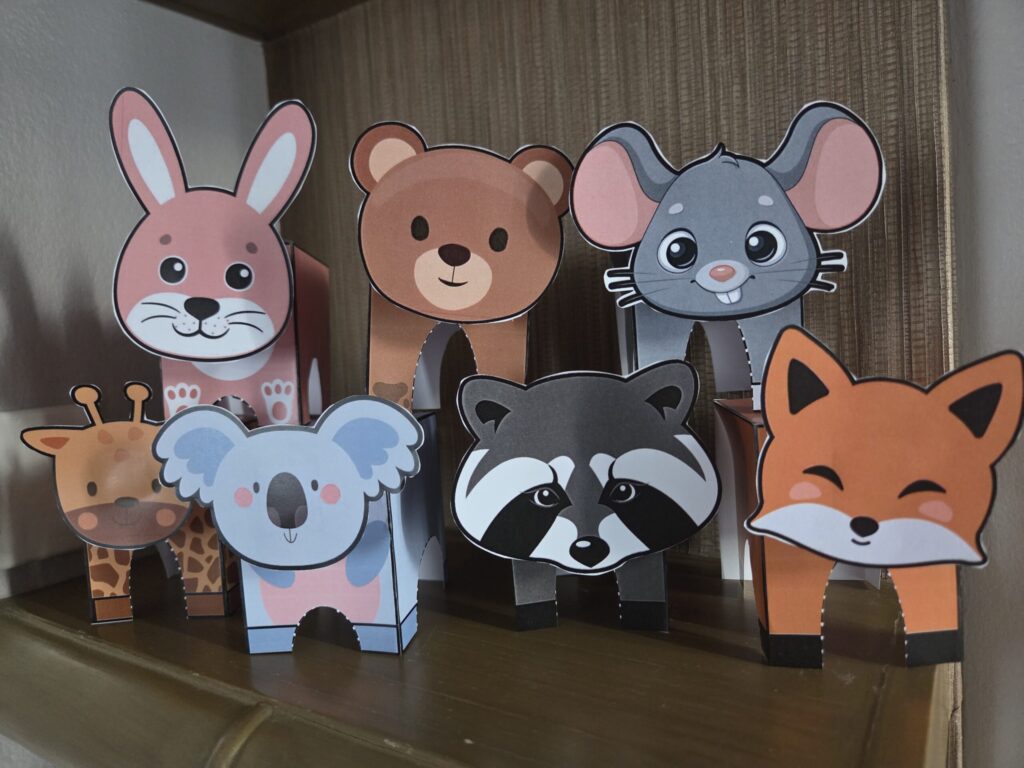
Most paper animal printables online stay flat or need a cutting machine. This set uses simple box bodies with character faces, so every animal has volume and stands on its own legs. The finished pieces become toys kids line up, sort, and play with.
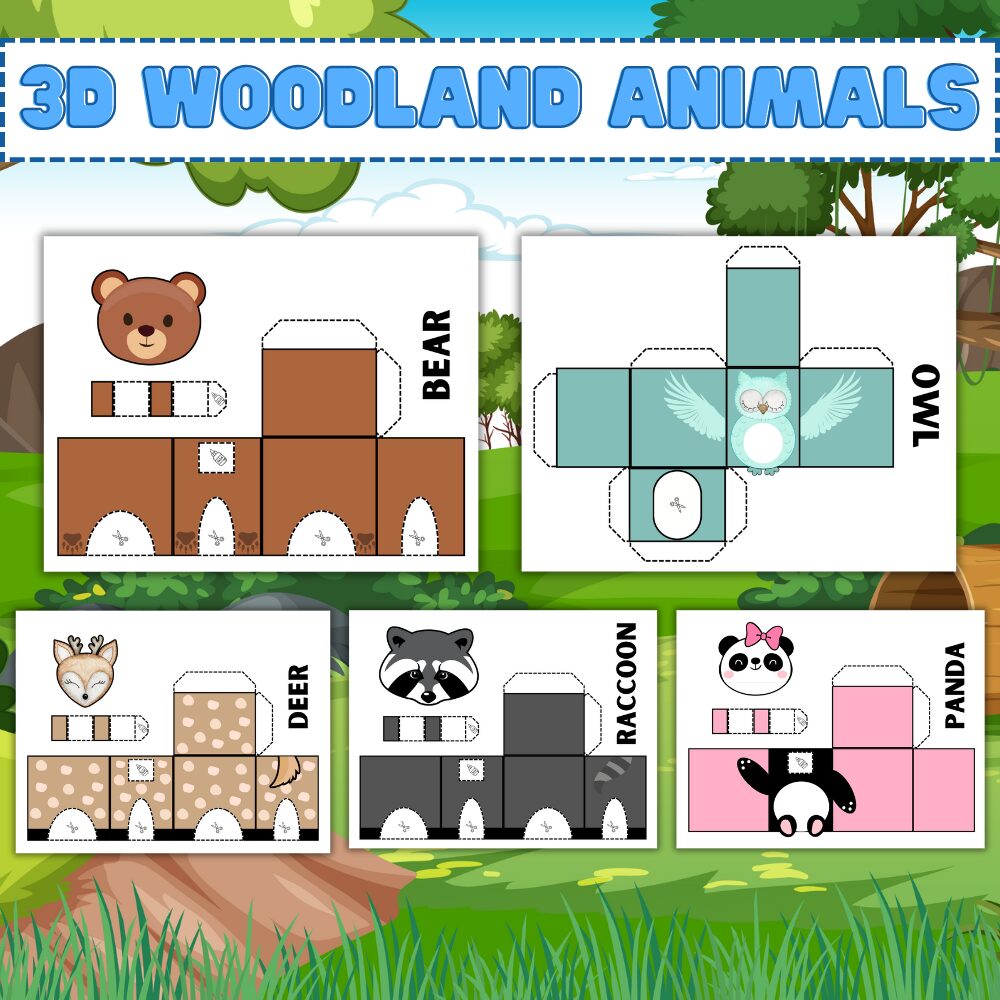
The pack includes ten animals: bear, deer, fox, owl, rabbit, raccoon, mouse, koala, panda, and giraffe. The last three live in other habitats, which makes a built-in teaching moment about where animals actually live.
Supplies You Need
- Free printable PDF (linked below)
- White cardstock or heavy paper (65 lb or higher)
- Color printer
- Sharp scissors for adults, kid-safe scissors for children
- Glue stick or white school glue
- Optional: bone folder or butter knife for crisp folds
- Optional: markers or crayons for extra detail
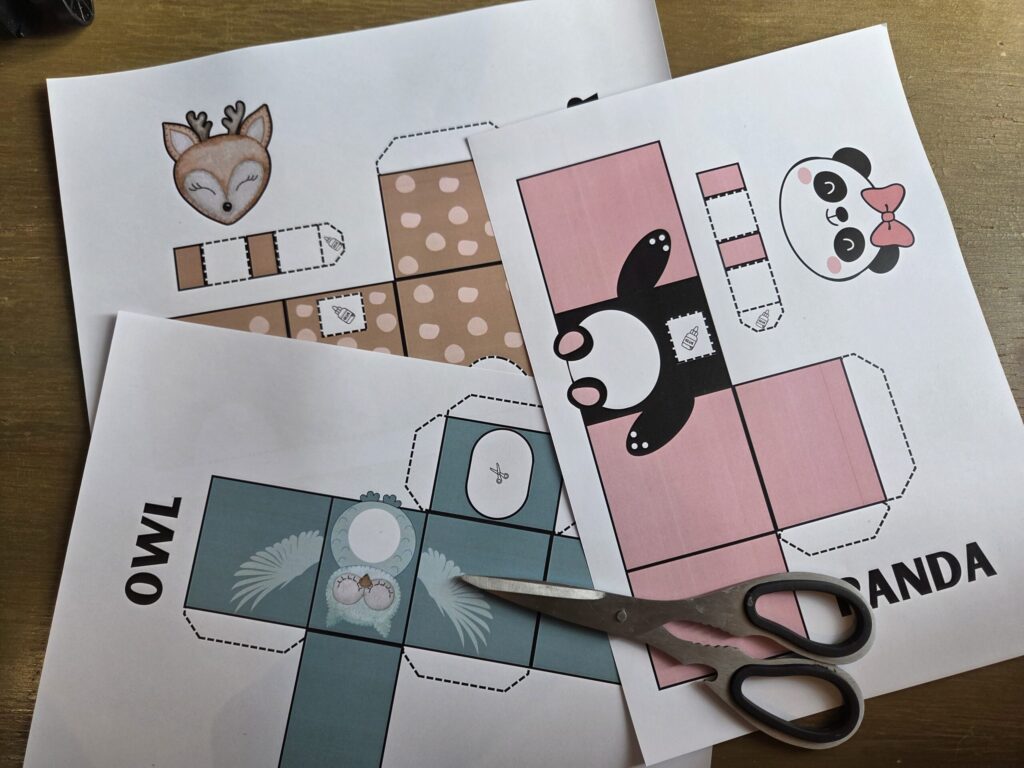
Cardstock matters here. Regular printer paper folds limp and the animals slump. If you only have thin paper, glue the printed page to a cereal box panel before cutting.
More craft ideas with animals:
- Woodland Directed Drawings: 10 Free Printable Pages
- Woodland Animals Finger Puppets Craft For Kids
- Learn Numbers & Counting to 10 With Animals Craft
- How to Draw Wild Animals for Kids: 9 Free Printable Directed Drawing Pages
- Free Habitats Color by Number Printables for Kids
How to Make a 3D Paper Woodland Animal
Step 1: Print the Pages
Print each animal template on cardstock at 100% scale. Skip “fit to page,” since it shrinks the glue tabs. Print one page per animal you plan to build.
Step 2: Cut Along the Solid Lines
An adult handles the inner oval cuts (the leg openings, if the template has them). Kids cut the outer body edges and the head shape. Dashed lines are folds, not cuts.
Step 3: Score and Fold
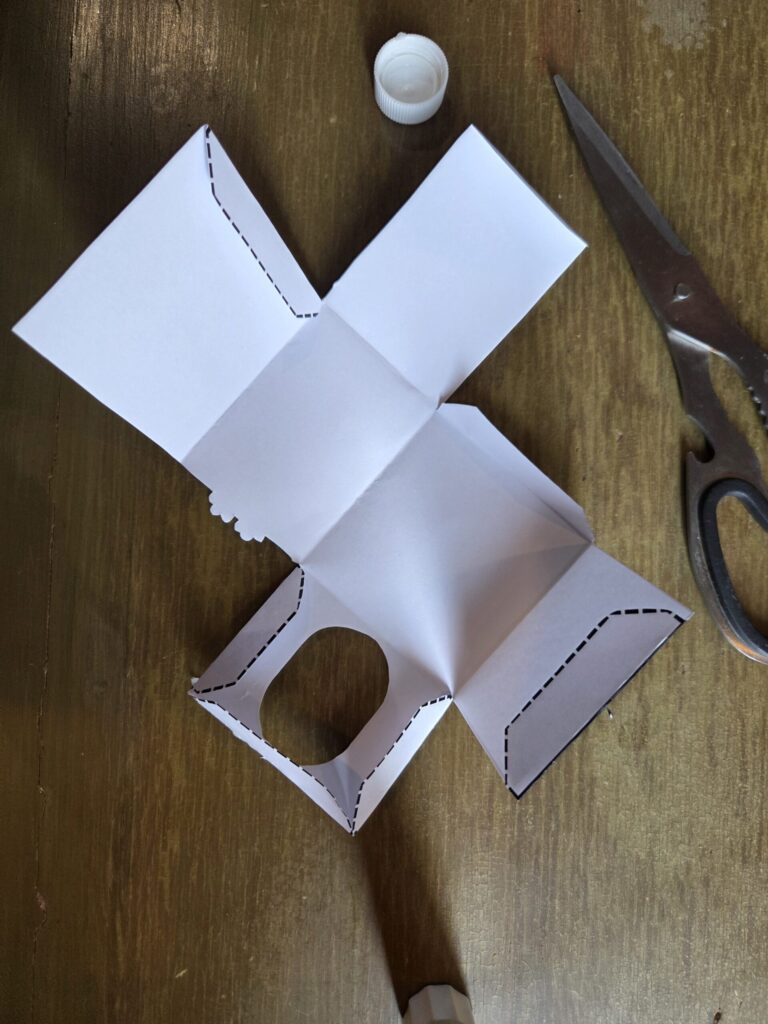
Run a bone folder or the back of a butter knife along every dashed line. Fold each panel so the printed colors face outward. The body forms a rectangular box with four legs reaching down.
Step 4: Glue the Tabs
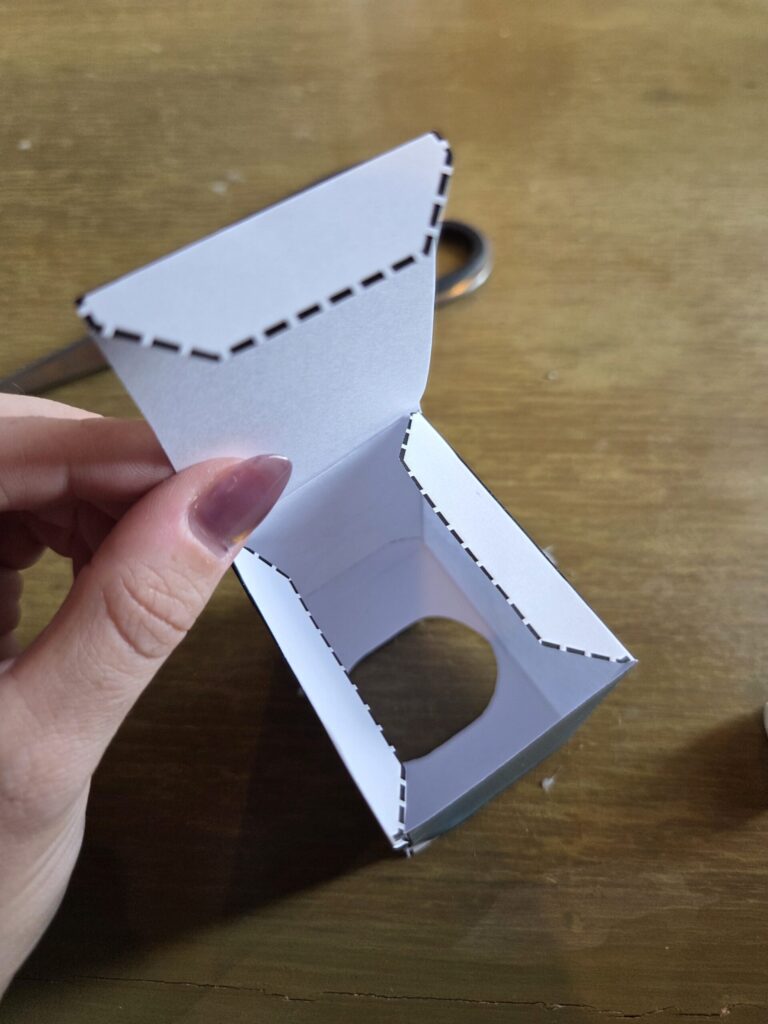
Find the small glue-bottle icons. Spread a thin layer of glue on each tabbed flap, press the matching panel down, and hold for ten seconds. Close the side seam first, then top, then bottom.
Basically all white parts with dotted lines are for gluing except when they have a scissors label
Step 5: Attach the Head
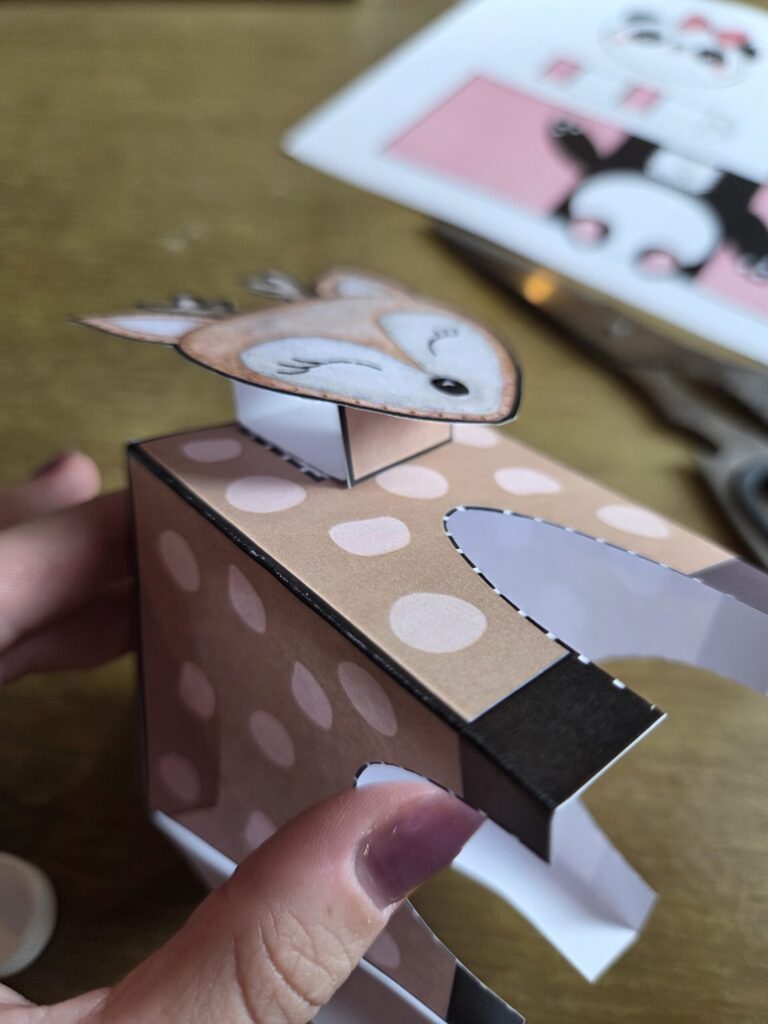
Glue the flat animal face to the front panel. Deer, fox, raccoon, giraffe, and mouse include a separate cut out piece for the front panel.
Step 6: Let Dry
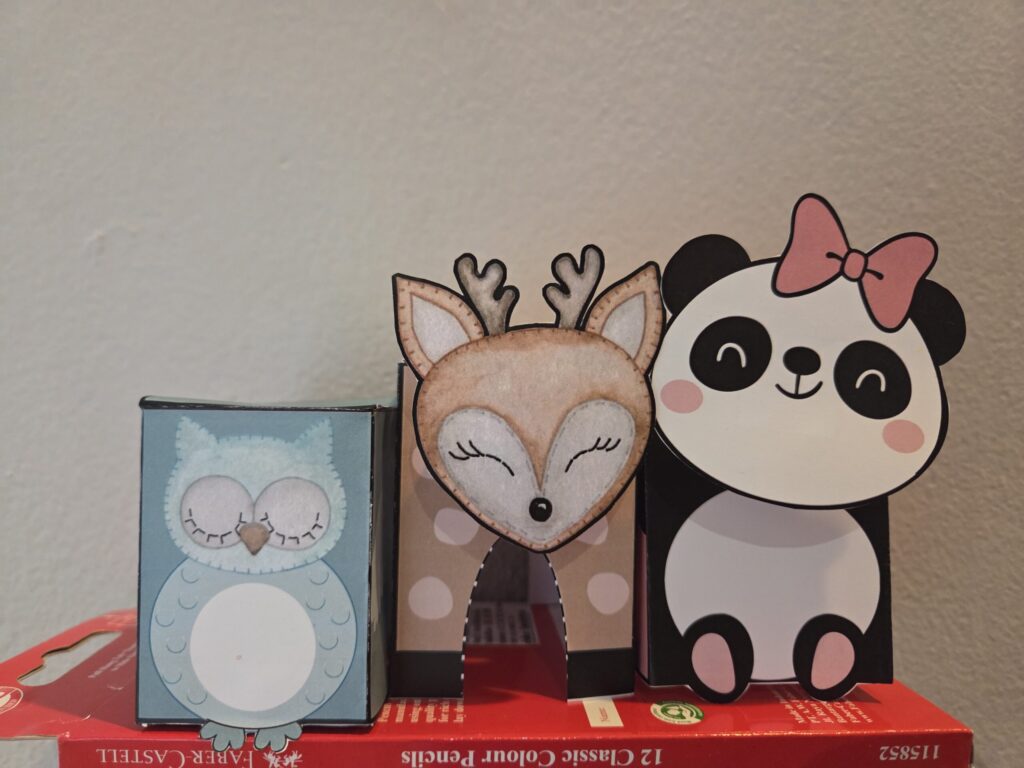
Stand the animal up and let it dry for five minutes. The boxes get sturdier as the glue sets.
Animal Facts to Share While You Craft
Talking about each animal turns the activity into a mini lesson. These quick facts spark conversation with school-age kids:
- Bear: Bears sleep all winter in a long nap called hibernation.
- Deer: A baby deer is a fawn, and its white spots help it hide in dappled sunlight.
- Fox: A fox hears a mouse squeak from across a football field.
- Owl: Owls turn their heads almost all the way around to look behind them.
- Rabbit: A rabbit’s front teeth never stop growing, so rabbits chew constantly.
- Raccoon: Raccoons dip their food in water before eating it.
- Mouse: A mouse uses its whiskers to feel through dark spaces.
- Koala: A koala sleeps up to 22 hours a day in eucalyptus trees.
- Panda: Pandas chew bamboo for twelve hours every day.
- Giraffe: A giraffe’s tongue is dark purple and twenty inches long.
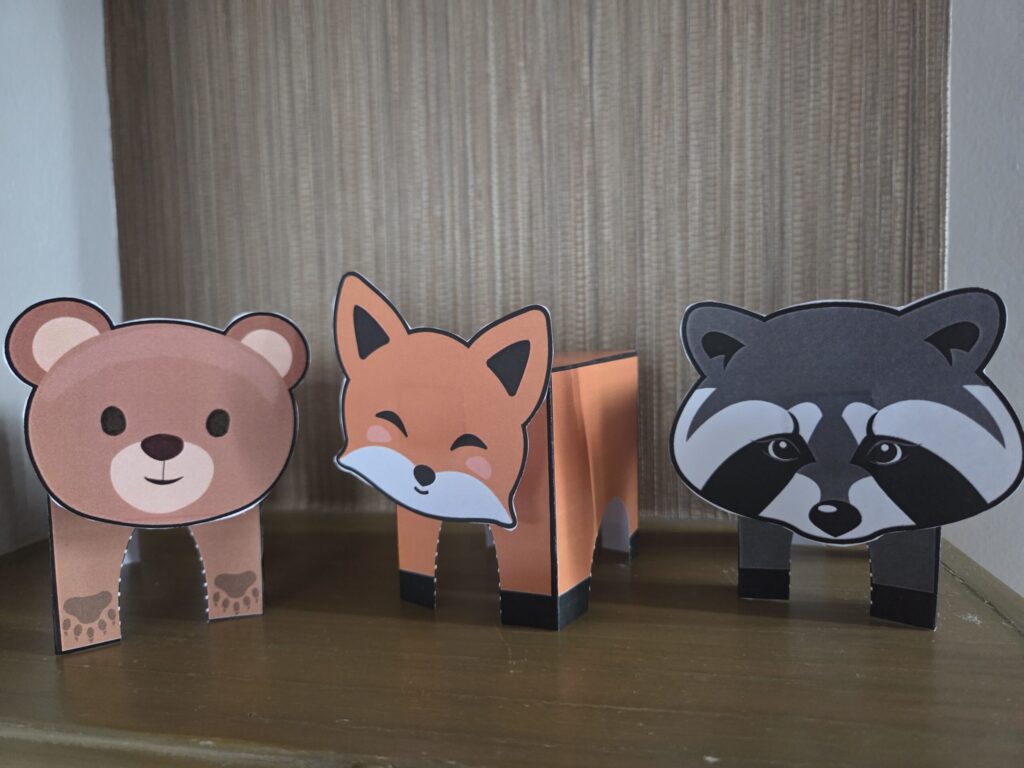
For preschoolers, skip the facts and talk about colors, patterns, and sounds. Ask which animal is the spottiest, which is the smallest, or which one says “hoot.”
Tips for Parents and Teachers
Sort the finished animals by habitat. Forest animals (bear, deer, fox, owl, rabbit, raccoon, mouse) go on one side. Koala goes to Australia, panda to China, giraffe to the African savanna. The craft becomes a geography lesson.
Use the boxes as story-time props. Kids invent voices and adventures once they have characters in hand.
Print extras for birthday parties or rainy-day kits. Ten paper animals cost almost nothing and keep a group of kids busy for an hour.
For animal learning beyond the craft, library picture books beat YouTube. Look for nonfiction titles with real photographs, or visit a nature center where kids see tracks, feathers, and pelts up close. If your kids love this format, our [ocean animals 3D paper crafts] and [summer camping crafts] use the same method.
Best Ages for This Craft
Ages 3 to 4 need a grown-up for all the cutting and most of the gluing. They press tabs and choose which animal comes next.
Ages 5 to 7 manage the outer cuts and most of the folding with supervision. An adult still handles the inner ovals.
Ages 8 and up build the whole animal on their own and often finish the full set of ten in one afternoon.
Download the Free Printable
Enter your email below and the 10-page 3D Woodland Animals printable PDF lands in your inbox.
Masha Eretnova, born in 1991, is a Chiang Mai-based certified teacher, artist, and blogger with 20+ years of personal painting journey.
She started painting and drawing very early and is now an international abstract artist and educator passionate about acrylic painting, gouache, and crafts.
Her works are part of international exhibitions and contests, including ArtlyMix (Brazil), Al-Tiba 9 (Spain), Exhibizone (Canada), Italy, and many more.
Besides her artistic pursuits, Masha holds a post-grad diploma in Teaching Film Photography and 2 music school diplomas: piano and opera singing.