Last Updated on May 29, 2026 by Masha Eretnova
Most travel journals aimed at teens fall into one of two traps. They’re either too babyish — little boxes, smiley face rating scales, “draw your favorite animal!” — or they’re so open-ended that a blank page just stares back. This free printable summer travel journal for teenagers lands somewhere more useful: structured enough to get started, open enough to actually say something real.
It’s 14 pages. Print it in color, grab a pen, and throw it in their bag.
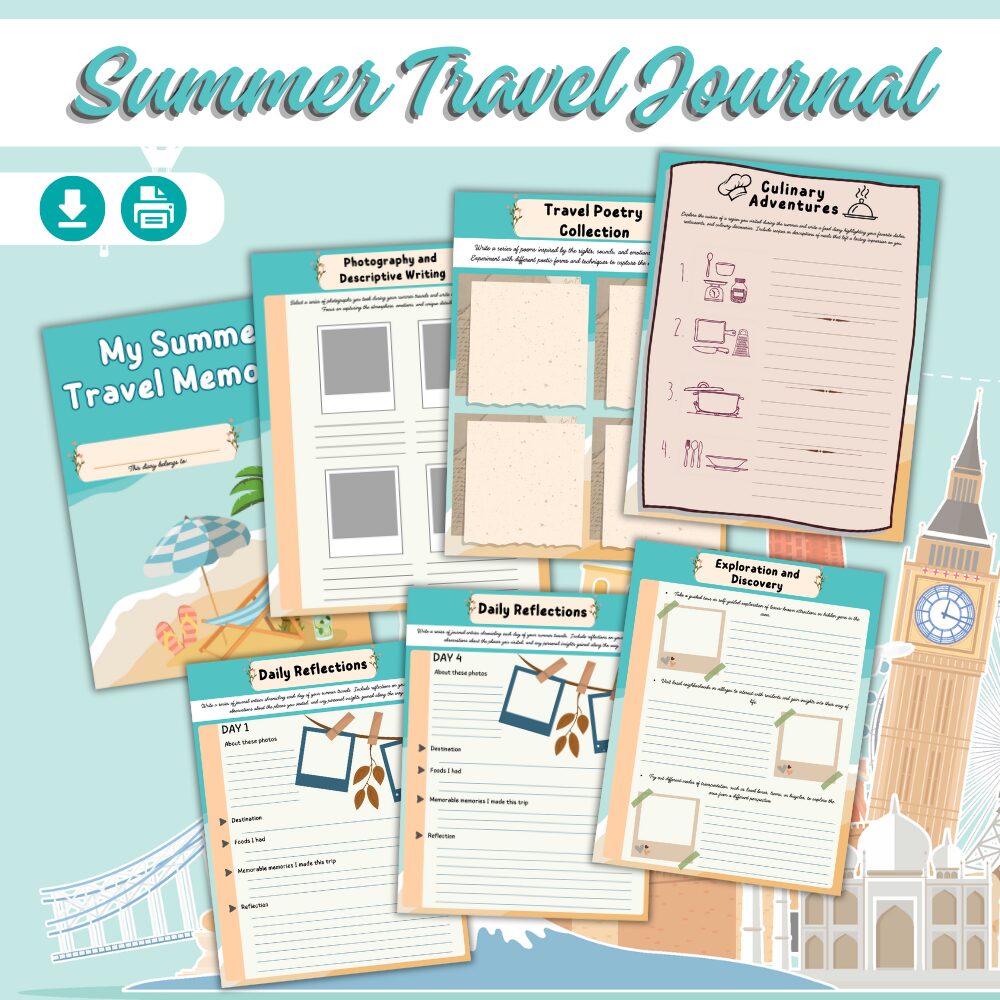
Built for How Teens Actually Travel
Teens on family trips often end up in a weird in-between space. Old enough to notice everything — the texture of a city, the gap between what a place looks like in photos versus real life, the exhaustion of being around family 24/7 — but without a way to process any of it.
This journal gives them that outlet without making it feel like a homework assignment.
The pages work across different types of travel: road trips, international flights, beach weeks, city stays. Nothing assumes you’re at a resort.
Related: 19 Summer Crafts For Teens
What the Pages Cover
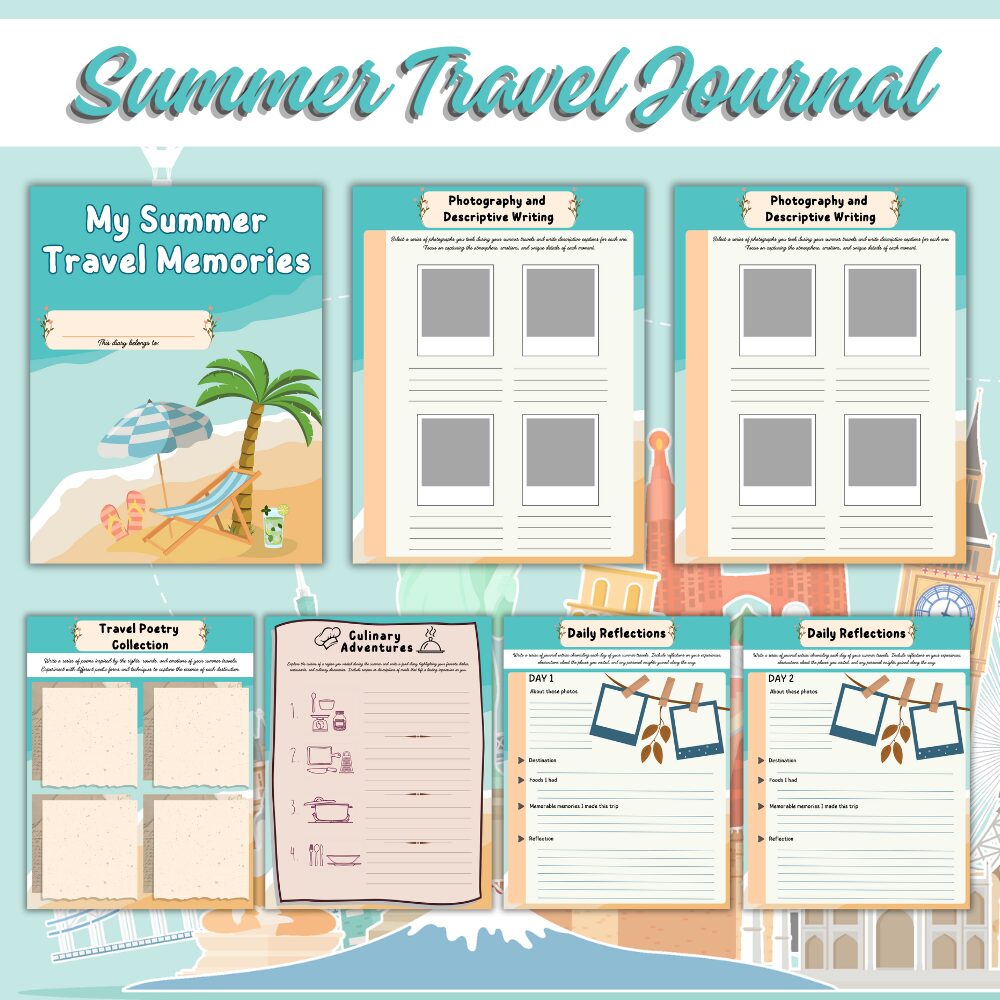
Photography and Descriptive Writing opens the journal with four polaroid-style layouts spread across two pages.
Each frame holds a photo or sketch, and the lines below ask for captions that go beyond just naming what’s in the picture. The prompt specifically asks for atmosphere, emotion, and detail — the things that distinguish a good travel photo caption from a location tag.
Travel Poetry Collection gives teens four textured journal cards for freeform writing. The prompts encourage experimenting with different poetic forms, but there’s no enforcement.
These pages work equally well for actual poems, song lyrics, overheard conversations worth keeping, or just fragments of thoughts from a long travel day.
Culinary Adventures tracks four food experiences with a numbered format and space for real notes. Teens who care about food will write paragraphs. Teens who don’t will jot a few words. Either way, they end up with a record of what they actually ate instead of just half-remembered meals.
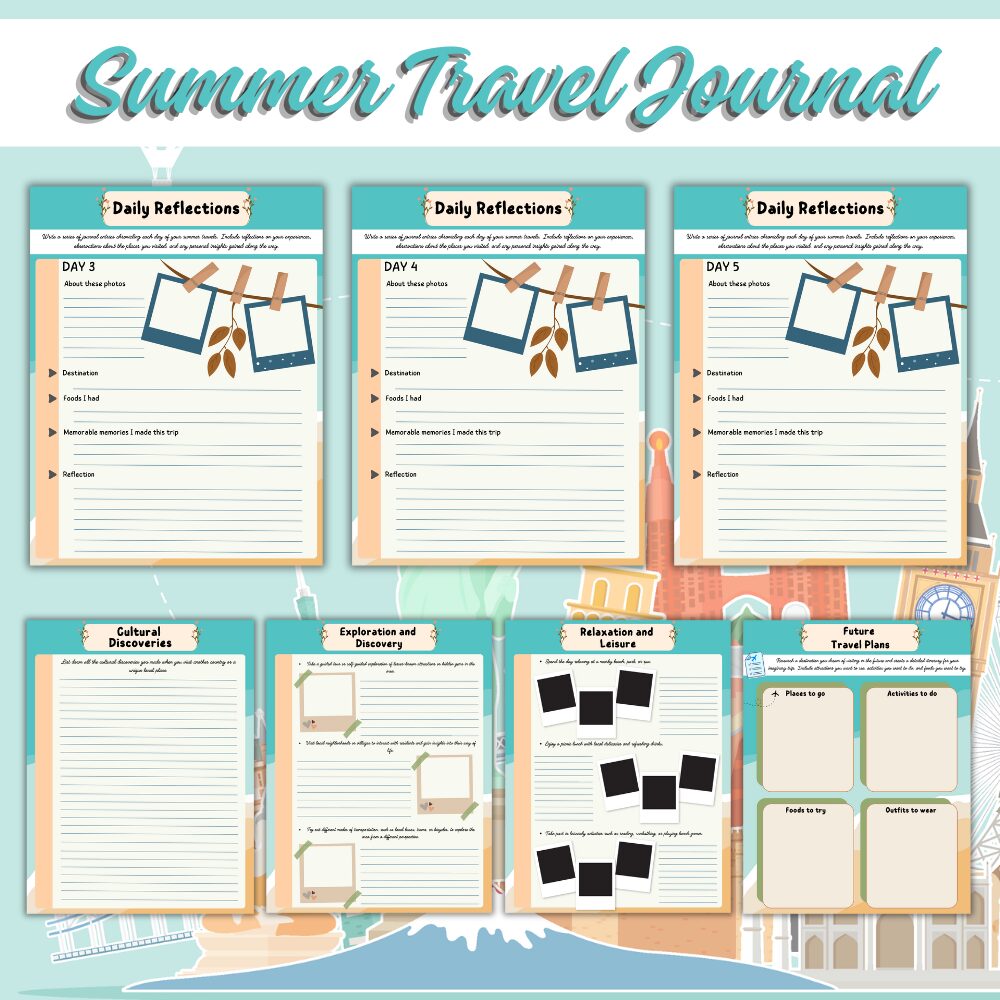
Daily Reflections runs five pages — one per day — each with sections for destination, foods, photo spots, memorable moments, and a longer reflection.
The reflection section has enough lines to write something substantial if you want to, but the prompts stay specific enough to avoid the paralysis of a totally blank page. You’re not asked to “describe your day.” You’re asked what you noticed, what surprised you, what you’d do differently.
Cultural Discoveries gives teens a full page to document anything that shifted their perspective about the place they visited.
This is the page that tends to get the most interesting entries: moments where expectations didn’t match reality, things that seemed normal to locals but totally strange from the outside, details that never made it into any travel guide.
Exploration and Discovery breaks down three specific types of exploration: finding a lesser-known attraction, visiting a local neighborhood, and trying an unfamiliar mode of transportation.
Each has photo space and writing lines. These prompts push teens off the main tourist path in a way that feels intentional rather than accidental.
Relaxation and Leisure documents the slower parts of the trip — beach days, picnics, low-key afternoons — with photo collage spots and writing space for each activity. Resting is part of travel, and this page treats it that way.
Future Travel Plans closes the journal with a four-quadrant page: places to go, activities to do, foods to try, outfits to wear. This last section gets filled in on the way home, when ideas are still fresh and the next trip feels both very far away and somehow already in planning.
Printing and Setup
Download the PDF and print all 14 pages on standard letter-size paper using a color printer.
The color matters here because the backgrounds, frames, and illustrated elements are what make each page feel worth filling in. A black-and-white print is functional but loses most of the visual personality.
Staple the pages together or use a binder clip.
Some teens add a cover layer with their name and the trip details before the first page. Packing a small glue stick lets you add physical mementos directly to the photo sections — ticket stubs, receipts, museum maps, anything small and flat.
Why It Works
The journal doesn’t ask teens to perform happiness about the trip or write a school-style summary. It asks them to pay attention — to food, to places, to people, to their own reactions.
Masha Eretnova, born in 1991, is a Chiang Mai-based certified teacher, artist, and blogger with 20+ years of personal painting journey.
She started painting and drawing very early and is now an international abstract artist and educator passionate about acrylic painting, gouache, and crafts.
Her works are part of international exhibitions and contests, including ArtlyMix (Brazil), Al-Tiba 9 (Spain), Exhibizone (Canada), Italy, and many more.
Besides her artistic pursuits, Masha holds a post-grad diploma in Teaching Film Photography and 2 music school diplomas: piano and opera singing.