Last Updated on June 25, 2026 by Masha Eretnova
Looking for a summer activity that keeps kids busy without a screen in sight? This beach sensory bin for toddlers and preschoolers is an amazing sand and shells play to build some skills and have fun.
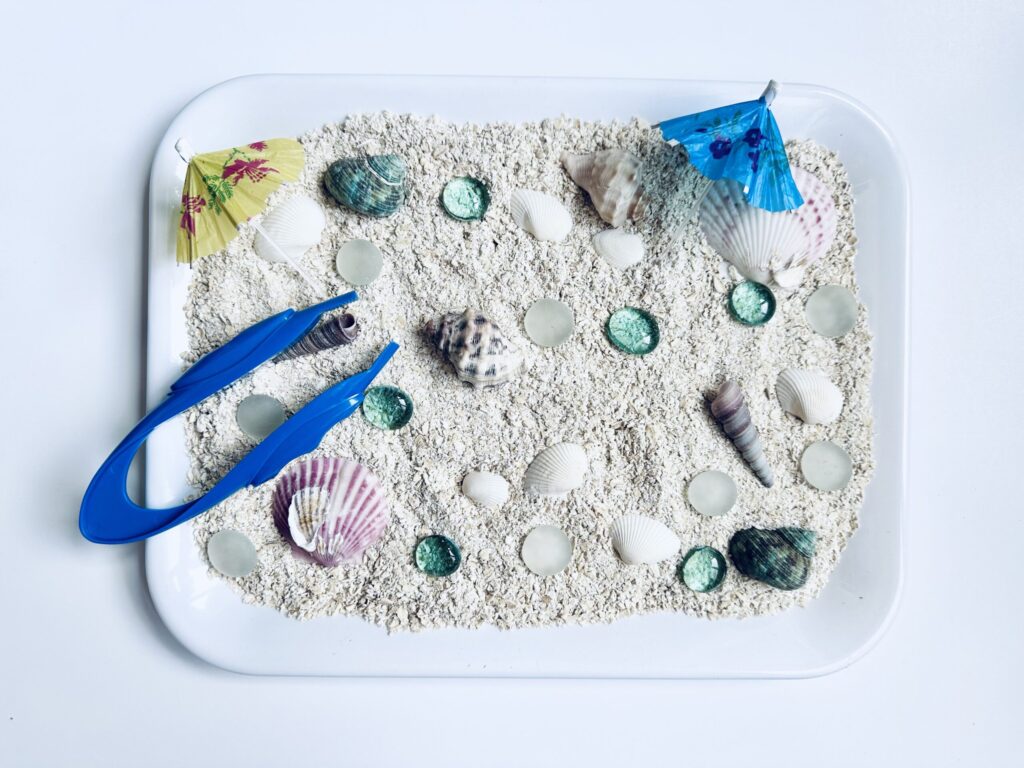
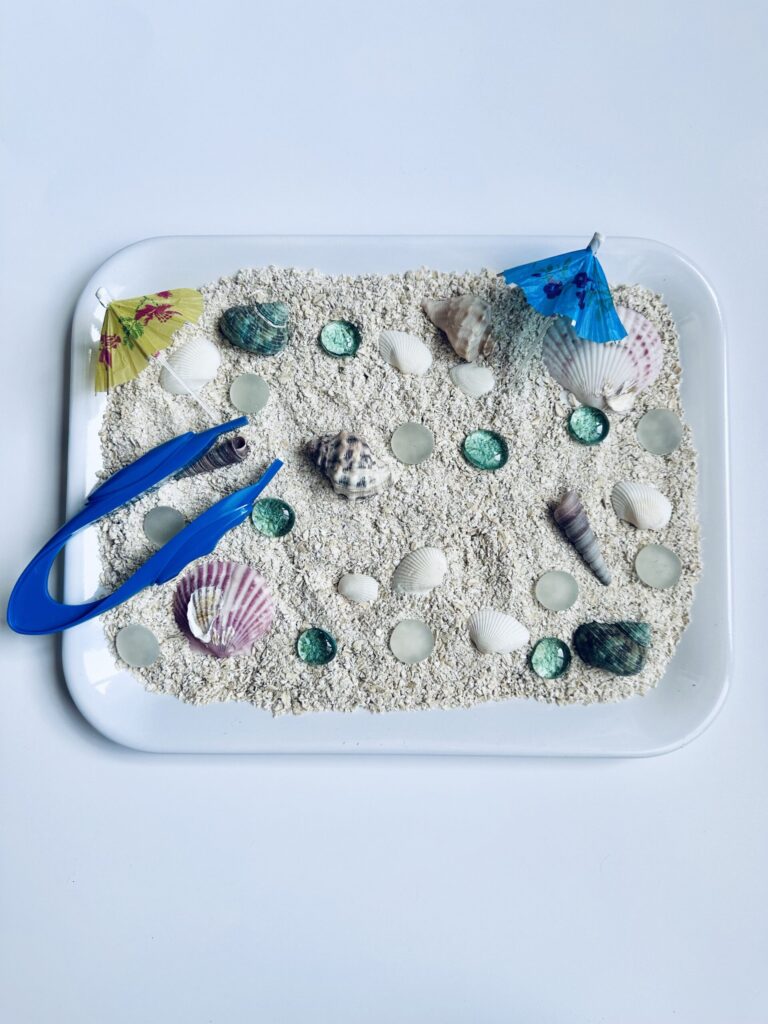
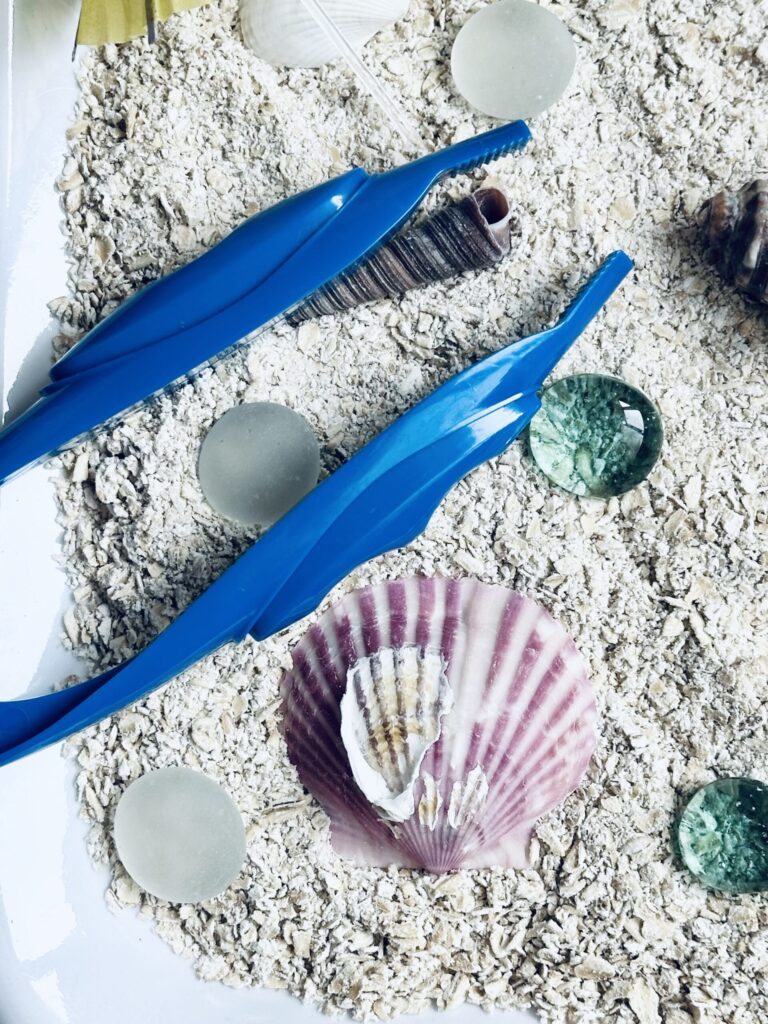
You make the “sand” right in your blender using old-fashioned oats, fill a tray with shells, sea glass, and sparkly gems, stick in a couple of cocktail umbrellas, and hand over the tweezers. Five minutes of setup!
It works as a summer activity, a rainy day reset, or an easy sensory station during a beach-themed week at home.
What Age Is This Activity For?
This beach sensory bin works best for kids aged 2 to 6, though older kids around 7 or 8 still enjoy it, especially if you add a small magnifying glass or a sorting challenge.
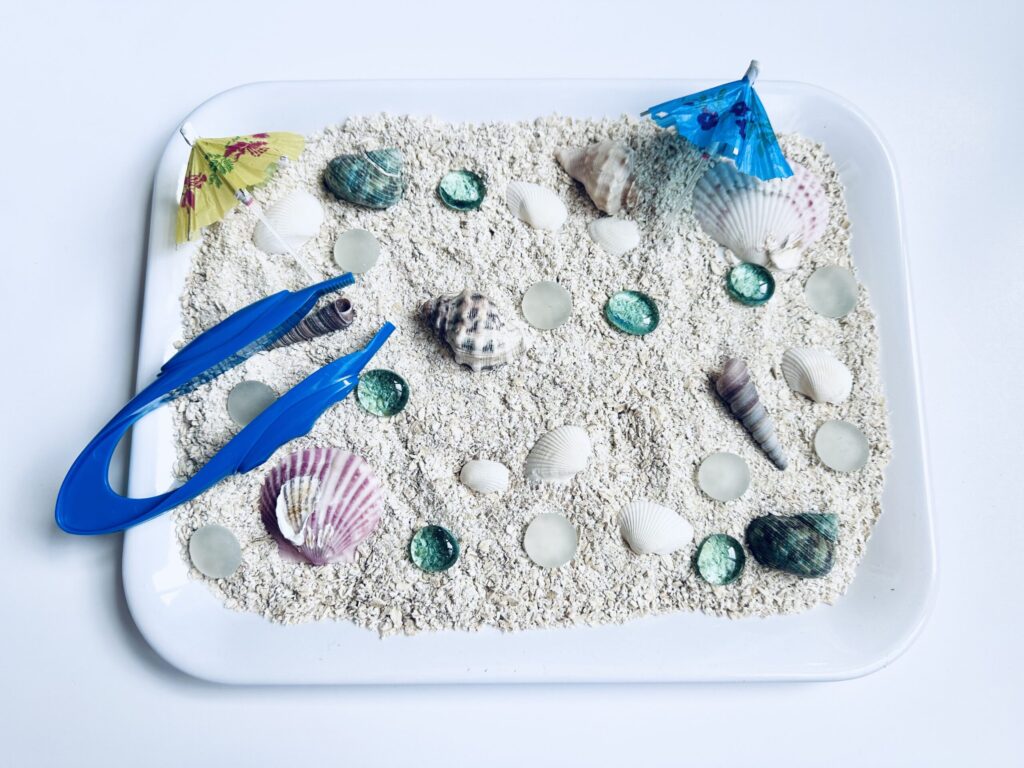
Toddlers (2–3) love running their hands through the oat sand and picking up the larger shells with their fingers. Plus, using oats makes it very safe for little ones.
Preschoolers (3–5) are ready for the tweezers and can start sorting shells by shape or color. Kids closer to 5 and 6 can do simple pretend play, setting up the umbrellas, arranging a “beach scene,” or using a scoop to fill a small cup.
Supplies
- Food processor or a blender.
- Old-fashioned oats
- Sensory bin tweezers and scoops
- Sea glass (or some large beads)
- Sea shells
- Mini umbrellas
- Sensory bin tray
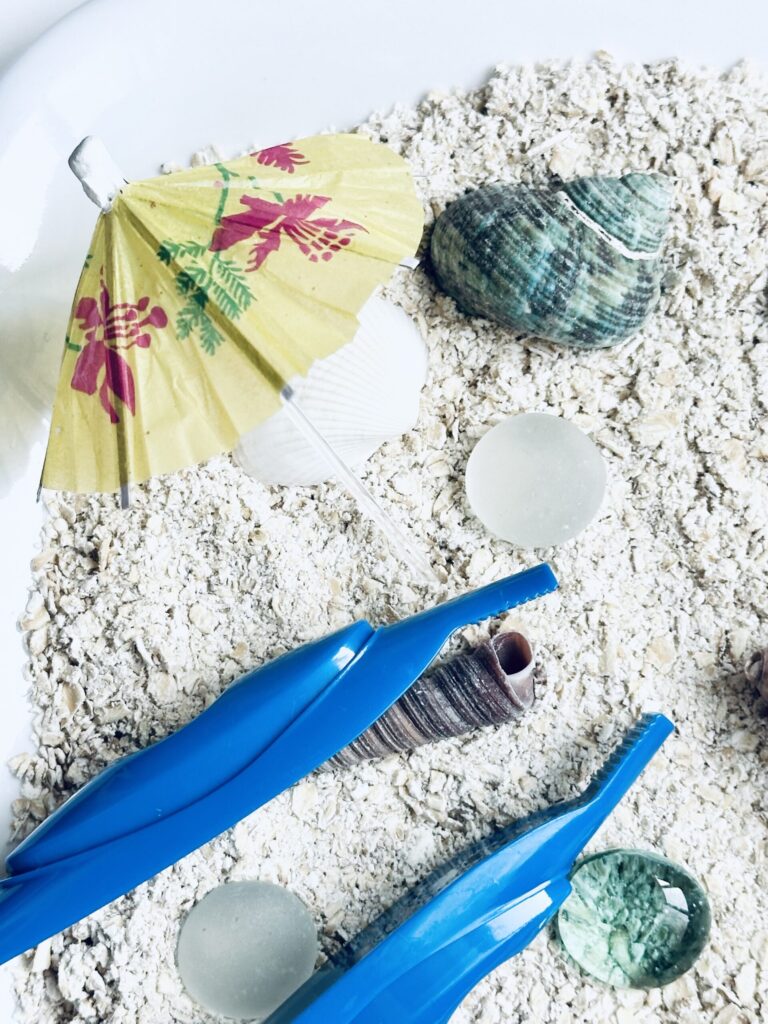
I used the shells I found at the beach but they can also be purchased at the local craft store along with the turquoise colored gems.
Most craft stores (as well as Amazon or Dollar Tree) will have mini umbrellas for cocktails, too. We can use them for our vacation-inspired sensory bin.
How To Build Shell & Sand Beach Sensory Bin
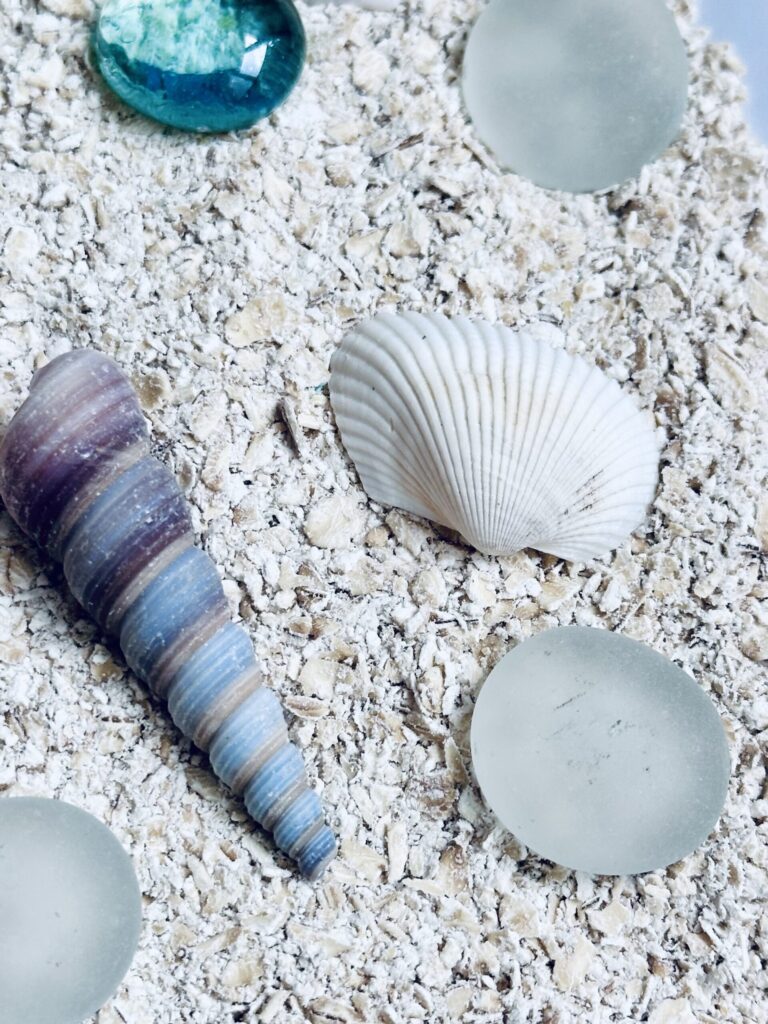
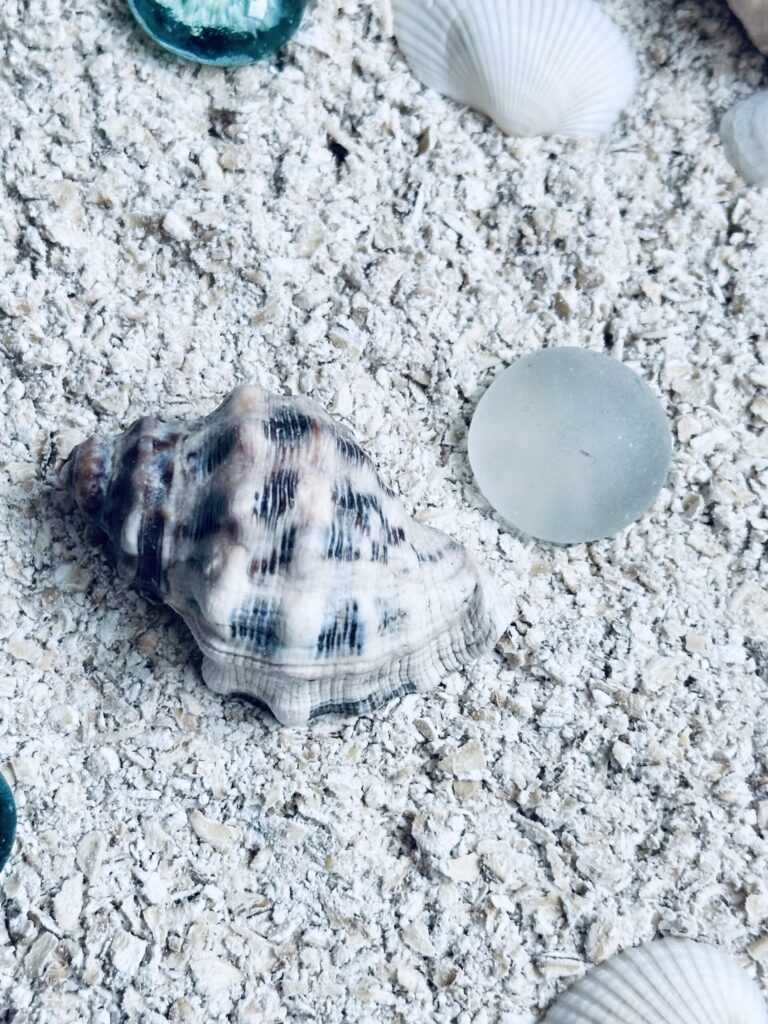
Set up your clean and dry sensory bin. Pulse oats in your food processor until they remind sand. A few larger chunks are totally fine.
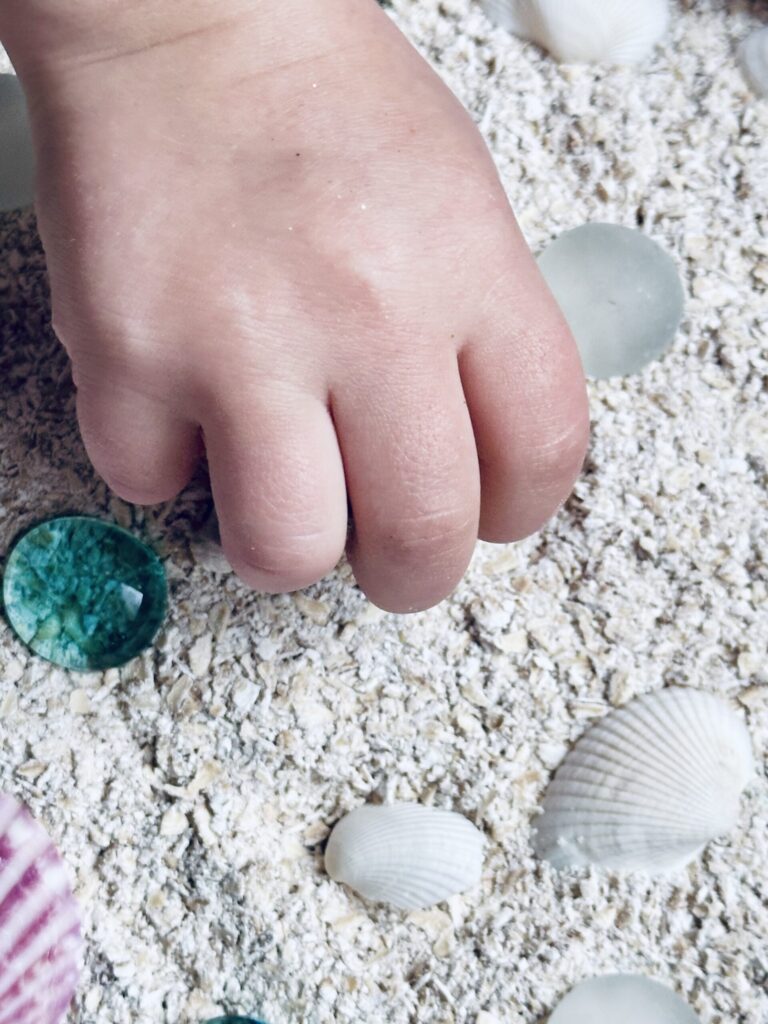
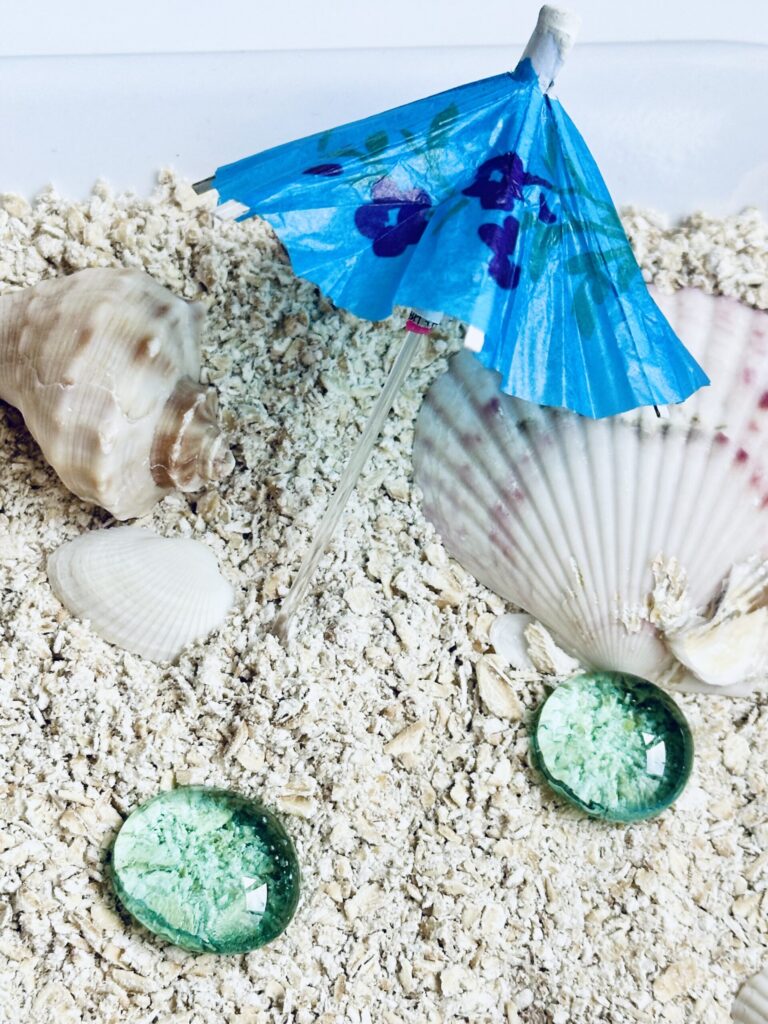
Set up shells and beads or gems kids can lay out on this imaginary beach, set aside a few umbrellas. With 3+ yo kids you can plave some LEGO figurines or toys under the umbrellas, too, for a sunbathing play.
Skills This Sensory Bins Help With
Fine motor skills for Handwriting
The tweezers are the real workhorse in this bin. Picking up smooth, round gems and small shells with tweezers requires the same pincer grip children use when holding a pencil. This kind of hand strengthening is a core part of Montessori practical life work and directly supports handwriting readiness.
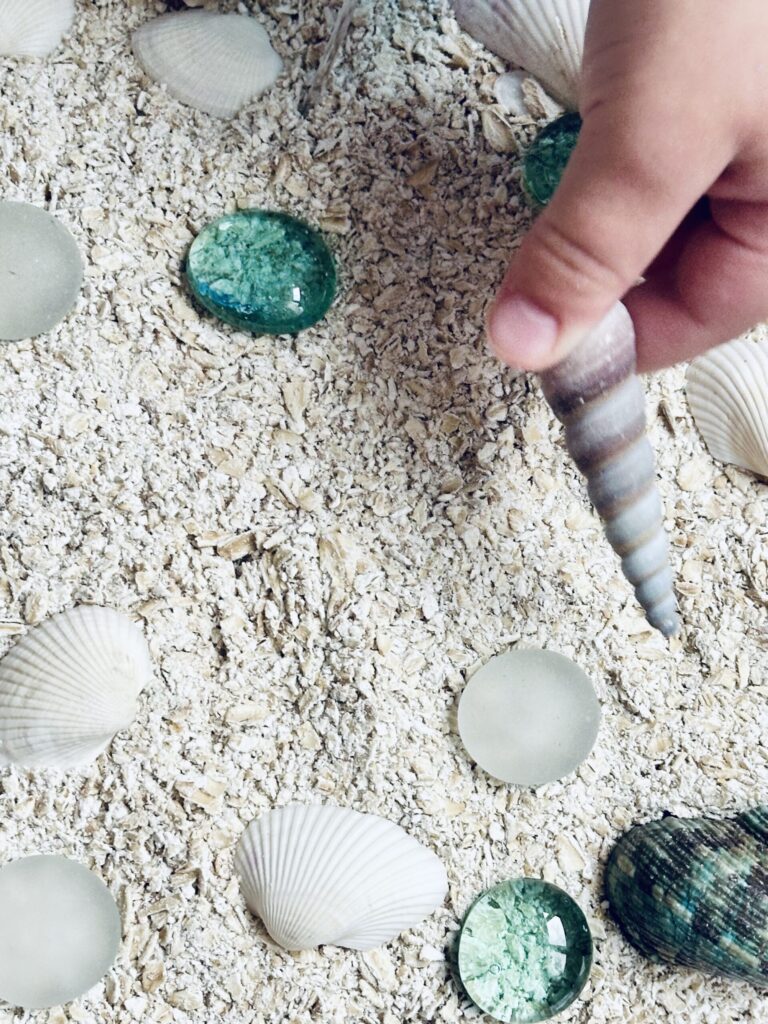
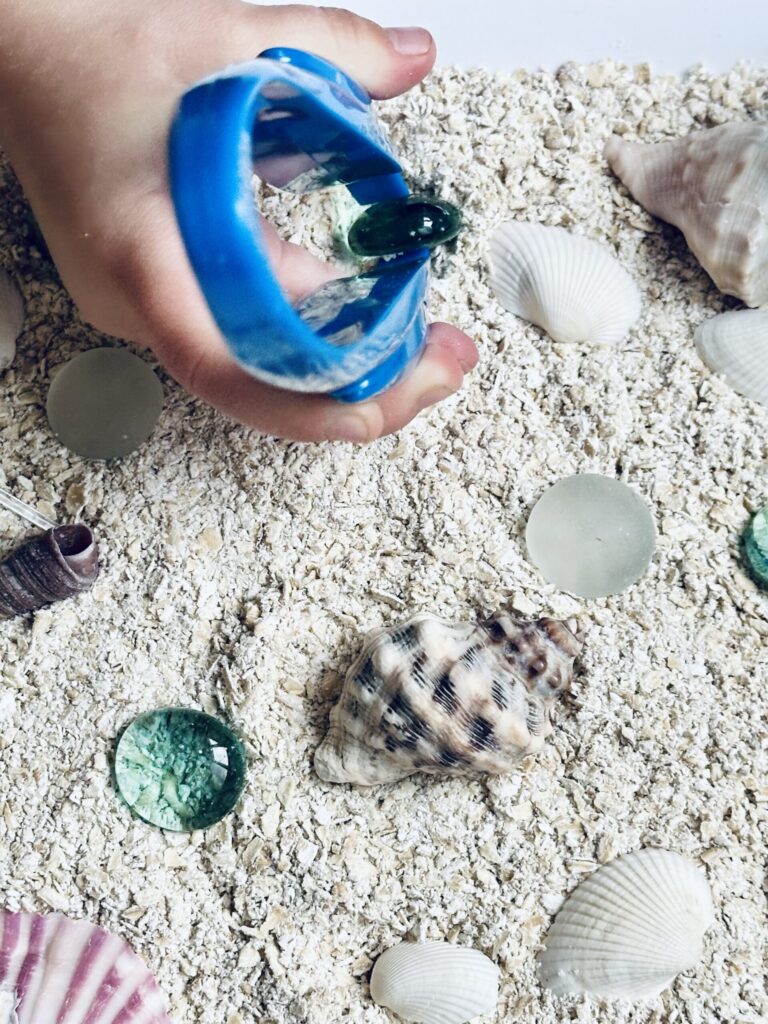
Using a small scoop to transfer oats from one spot to another builds hand control and teaches kids to regulate force not to spill the sand.
Sensory processing
Running fingers through processed oats gives kids a different tactile experience than actual sand as it is finer, softer, and easier to clean up (also much cleaner if they accidentaly taste it).
The contrast between smooth glass gems, ridged shells, and the loose oat base gives little hands a lot of information to process.
This kind of multi-texture exploration helps kids build a more organized sensory system and regulation.
Cognitive and sorting skills
Even without a formal sorting task, most kids naturally begin grouping by type, color, or size.
You can encourage this by asking simple questions:
- Can you find all the shells that feel bumpy?
- Where is the biggest and smallest shell? or
- How many gems can you pick up with the tweezers?
Focus and attention
Sensory bins are one of the most effective tools for settling an overstimulated or restless child thanks to the repetitive and calming motions.
Many occupational therapists recommend this kind of proprioceptive and tactile input before tasks that require sustained attention.
Imaginative play
The cocktail umbrellas and shells invite narrative play. Kids naturally create stories with a beach scene, a miniature vacation, a hiding spot for a tiny crab.
This type of open-ended imaginative play supports language development and creative thinking. It can help you relive best moments from your recent vacation, too.
Montessori Connection
In a Montessori environment, this type of bin falls under sensorial work or activities designed to refine the senses and give children concrete, hands-on experience with the physical world.
The shells serve as natural materials, and if you have access to the beach, I would encourage you to find a few uninhabited shells to make this activity close to nature. It is much better than plastic toys!
The tweezers function as a practical life transfer tool, similar to the tong and spoon activities found in most Montessori classrooms.
If you want to extend the Montessori element, set out a small tray with labeled shell outlines the child can match real shells to. Or offer a simple sorting mat with two sections: “smooth” and “bumpy.”
Tips for Setting Up the Bin
Keep the oat layer about an inch deep, it will be enough to bury the gems slightly so kids can “discover” them, but not so deep that everything disappears.
If your child mouths objects or in under 3, skip the small gems and use only larger shells. The oats themselves are non-toxic and food-safe.
For younger toddlers, set up the bin on the floor so they can kneel or sit beside it without the risk of pulling it off a table. A dollar-store shower curtain liner underneath makes cleanup faster (it is under 5 usd and can be used many times).
You can reuse the oat base several times. Store it in a sealed container between uses. It stays fresh for two to three weeks as long as it stays dry.
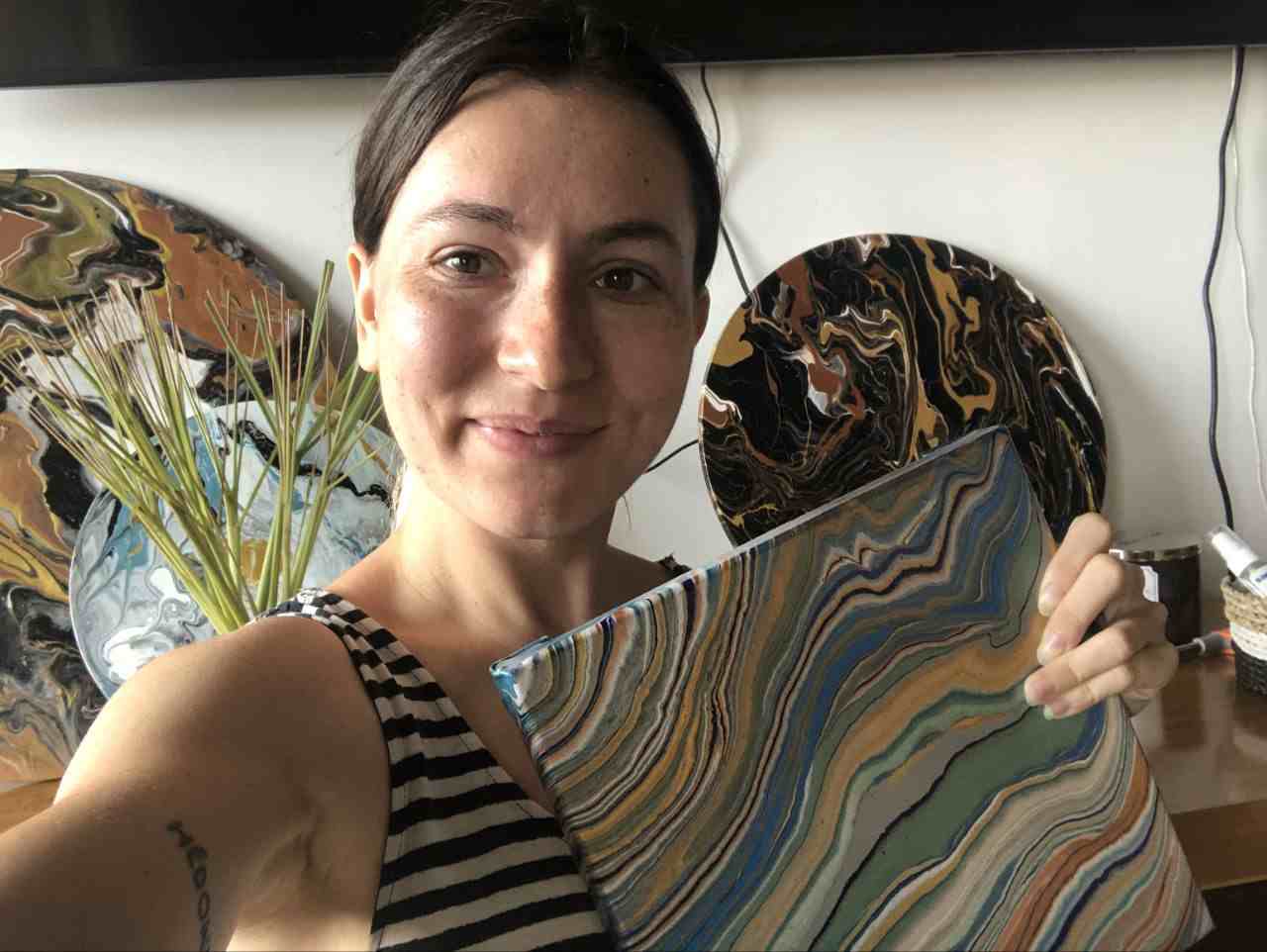
Masha Eretnova, born in 1991, is a Chiang Mai-based certified teacher, artist, and blogger with 20+ years of personal painting journey.
She started painting and drawing very early and is now an international abstract artist and educator passionate about acrylic painting, gouache, and crafts.
Her works are part of international exhibitions and contests, including ArtlyMix (Brazil), Al-Tiba 9 (Spain), Exhibizone (Canada), Italy, and many more.
Besides her artistic pursuits, Masha holds a post-grad diploma in Teaching Film Photography and 2 music school diplomas: piano and opera singing.