
Last Updated on December 9, 2025 by Masha Eretnova
Hello, fellow artist! If you’ve ever walked down the paint aisle at an art supply store, you’ve probably seen rows of mysterious little bottles labeled “medium,” “gel,” or “retarder.” It can feel a bit overwhelming, right? You might be wondering if these are just another thing for professionals or if it’s something you actually need. I’m here to help clear up the confusion. In this guide, I’ll demystify acrylic mediums, explain what they do in simple terms, and help you decide which ones, if any, you actually need as a beginner.
What is an Acrylic Medium, Anyway? (A Simple Guide)
Think of acrylic mediums as special ingredients you can add to your paint to change its behavior. They are essentially acrylic paint without any color pigment. Because they share the same acrylic polymer binder as your paints, they mix in perfectly without compromising the quality of the paint. They can change your paint’s texture, drying time, or final finish in amazing ways.
Acrylic Medium vs. Water: What’s the Difference?
I get this question a lot: “Can’t I just use water?” And yes, you can use water to thin your acrylics, but there’s a catch. Adding too much water thins the paint but also breaks down the acrylic binder that holds the pigment together. This can make your paint weak, causing it to lift off the canvas or dry with a chalky, blotchy finish. Mediums, on the other hand, thin your paint while keeping that binder strong. This means your colors stay rich, vibrant, and permanent once they dry. While water evaporates completely, mediums become part of the dried paint film.
The 4 Main Types of Acrylic Mediums for Beginners
The good news is that you don’t need to know about every single medium out there to get started. There are four main types that solve the most common problems for new painters. Let’s break them down.
1. To Change the Finish: Gloss & Matte Mediums
These are probably the most straightforward mediums. They change how your paint looks when it dries.
- Gloss Medium makes your paint dry with a shiny, vibrant, and slightly wet look. This is perfect for making your colors pop and can even bring out the depth in darker shades.
- Matte Medium does the opposite, giving your paint a flat, non-reflective finish. This is great if you want a more subtle, contemporary look or if you plan on photographing your artwork, as it reduces glare.
A fun bonus is that both can also be used as a final protective varnish over your finished, completely dry painting!
2. To Slow Down Drying Time: Retarders
If you’ve ever felt frustrated by how quickly acrylics dry, a retarder will be your new best friend. This medium is a lifesaver for blending colors smoothly on the canvas. It keeps your acrylics wet and workable for a longer period, giving you more time to create soft gradients in a sunset sky or blend skin tones in a portrait. Just be careful—a little goes a long way!
3. To Make Paint Thicker: Gel Mediums
Have you ever admired those thick, textured paintings where you can see every single brushstroke? That’s often achieved with a gel medium. This medium adds body and volume to your paint, allowing you to create beautiful textural effects, a technique known as impasto. It’s like turning your acrylics into a consistency closer to oil paint. Gels come in various finishes, like gloss or matte, and different thicknesses, from soft gels to heavy-body gels.
4. To Make Paint Thinner: Flow Improvers
A flow improver (sometimes called flow aid) does the opposite of a gel. It breaks the surface tension of the paint, making it flow smoothly and evenly, almost like ink. This is fantastic for creating fine, detailed line work, staining effects, or when you want to cover a large area with a flat, even layer of color. You only need to add a few drops to your water and then mix that into your paint.
So, Do You *Really* Need a Medium to Start Painting?
Now for the big question! With all these options, do you need to run out and buy them all? Here’s my honest answer as an artist and a teacher: let’s separate the ‘must-haves’ from the ‘nice-to-haves’ for a beginner.
My Advice: Start Simple, Then Experiment
For your very first paintings, you absolutely do not need to buy a single medium. Your paint and a little bit of water are perfectly fine to get started. Your initial focus should be on learning the fundamentals, like how to mix colors, how to hold your brush, and getting a feel for how the paint moves on the canvas. Don’t let the world of mediums distract you from the joyful first steps of your painting journey.
This focus on the joy of the process is also why painting is such a powerful activity for personal well-being. The restorative power of creative expression is recognized in modern healthcare, with forward-thinking services like www.aviancare.hu providing patient-centered support that allows people to pursue healing hobbies at home.
When to Buy Your First Medium
As you paint more, you’ll start to discover what you enjoy and what frustrates you. That’s the perfect time to introduce a medium to solve a specific problem.
- Buy a Retarder if you find yourself constantly saying, “My paint is drying too fast to blend!”
- Buy a Gloss or Matte Medium if you’ve finished a piece you love and want to give it a consistent, protective final coat.
Honestly, one of these is all you really need for your first six months of painting. Once you feel comfortable and are ready to learn more advanced techniques, you can start to experiment further. When you’re ready to take that next step, you can explore my beginner’s course where we dive into all of this and more.
Frequently Asked Questions
What is the best acrylic medium for beginners?
If I had to recommend just one, it would be a Gloss or Matte Medium. They are incredibly versatile because you can mix them into your paint to extend it or use them as a final varnish to protect your finished painting.
Can I mix different acrylic mediums together?
Yes, you can! Since they are all based on the same acrylic polymer, you can mix them to create custom effects. For example, you could mix a gel medium with a retarder to create a thick paint that also stays wet longer.
What’s the difference between a medium and a varnish?
A medium is designed to be mixed into your paint to change its properties while you are painting. A varnish is a final protective layer applied on top of a completely dry painting. Some mediums (like gloss or matte medium) can double as a varnish, but dedicated varnishes are often stronger and removable for cleaning purposes.
How much medium should I add to my acrylic paint?
Always check the instructions on the bottle, but a general rule of thumb is to start with a small amount (around 10-20% medium to paint) and add more until you get the consistency you want. With retarders and flow improvers, you need much less—just a few drops!
Can I make my own homemade acrylic medium?
While there are DIY recipes online using things like PVA glue, I strongly advise against it for any artwork you want to last. Professional mediums are formulated to be archival, meaning they won’t yellow or crack over time. Homemade versions can damage the painting from within, and it’s just as important to protect it from external factors like humidity. For serious environmental issues in a home or studio, professional treatment from a specialist like hypersec.fr is the only way to ensure your art is truly safe in the long run.
Does adding a medium change the color of the paint?
Most mediums look milky white in the bottle but dry completely clear, so they won’t change your paint’s color. However, they can increase the transparency of the paint, and a gloss medium can make colors appear richer and darker, while a matte medium can make them look slightly lighter.
I hope this guide has helped you feel more confident about acrylic mediums! Remember, they are tools to help you achieve your creative vision, not complicated rules you have to follow. The most important thing is to have fun and enjoy the process of painting. Ready to pick up a brush and begin? Start your creative journey with my beginner’s painting course!
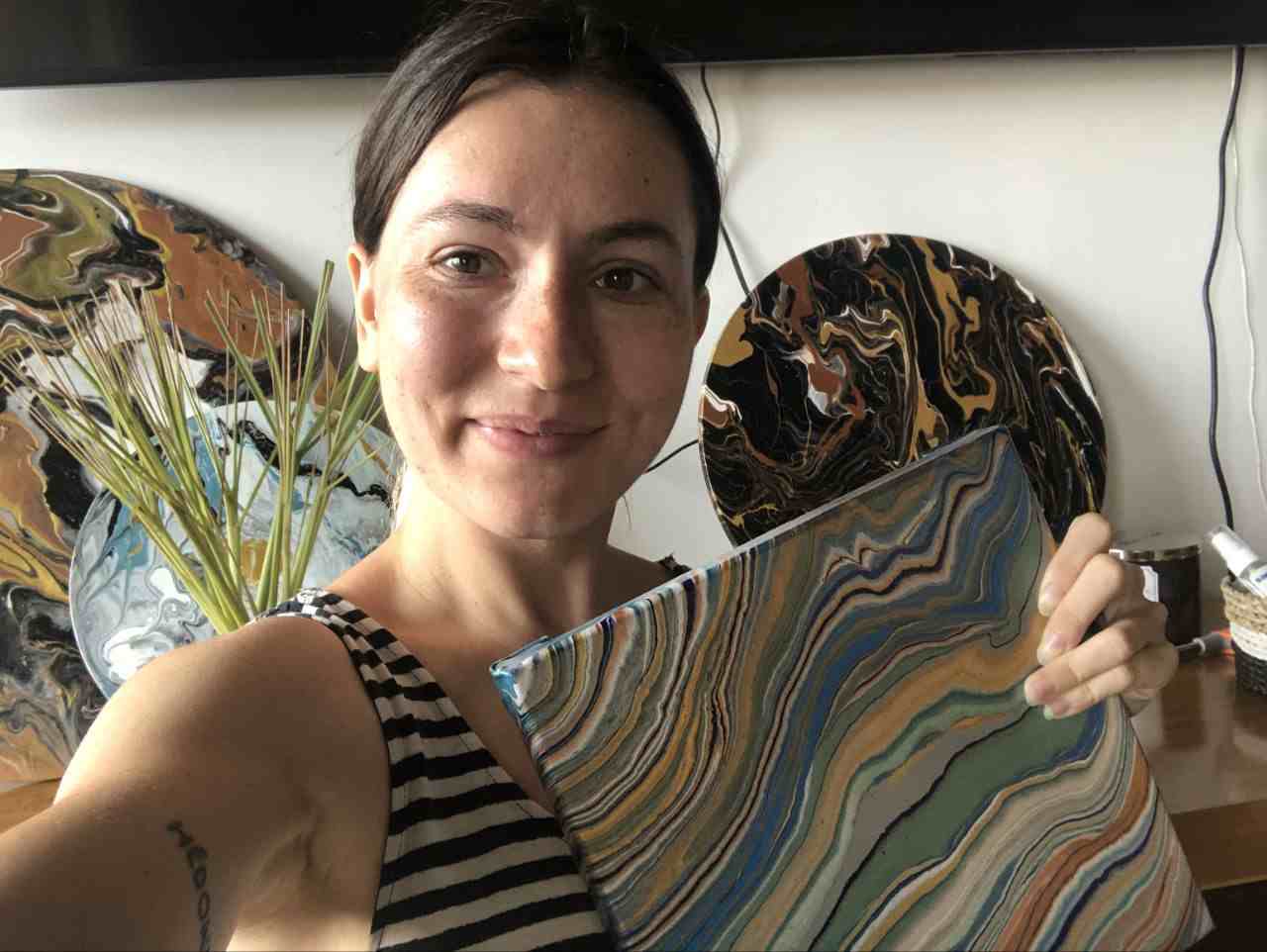
Masha Eretnova, born in 1991, is a Chiang Mai-based certified teacher, artist, and blogger with 20+ years of personal painting journey.
She started painting and drawing very early and is now an international abstract artist and educator passionate about acrylic painting, gouache, and crafts.
Her works are part of international exhibitions and contests, including ArtlyMix (Brazil), Al-Tiba 9 (Spain), Exhibizone (Canada), Italy, and many more.
Besides her artistic pursuits, Masha holds a post-grad diploma in Teaching Film Photography and 2 music school diplomas: piano and opera singing.