Last Updated on May 29, 2026 by Masha Eretnova
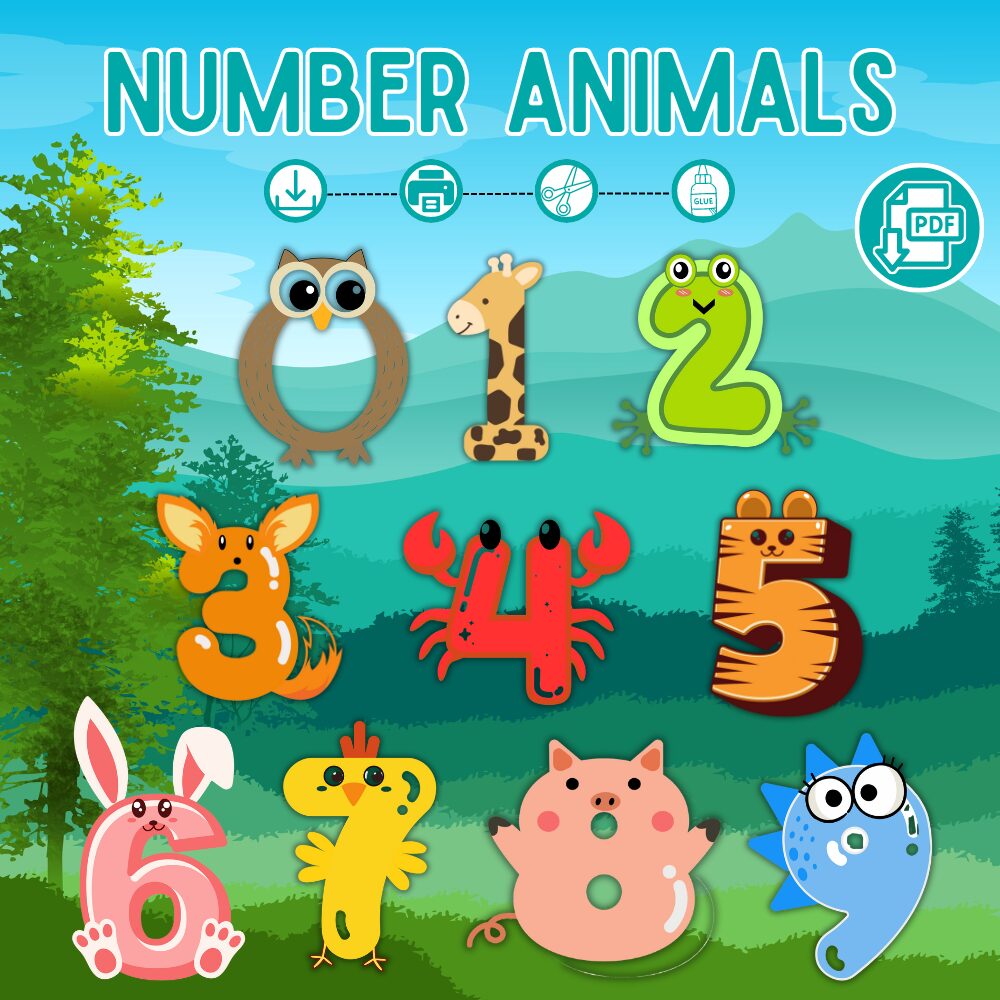
Numbers stop feeling abstractaand boring the moment they turn into animals. This free Number Animals printable pack walks kids through cutting and gluing each digit from 0 to 9 into a recognizable creature. The 0 becomes an owl, the 1 turns into a giraffe, the 5 transforms into a tiger.
By the end of the set, kids have practiced number recognition, fine motor skills, and met ten different animals along the way.
The pack fits perfectly as a summer craft, a preschool counting activity, a homeschool number unit, or a rainy-day screen break.
What’s Inside the Pack
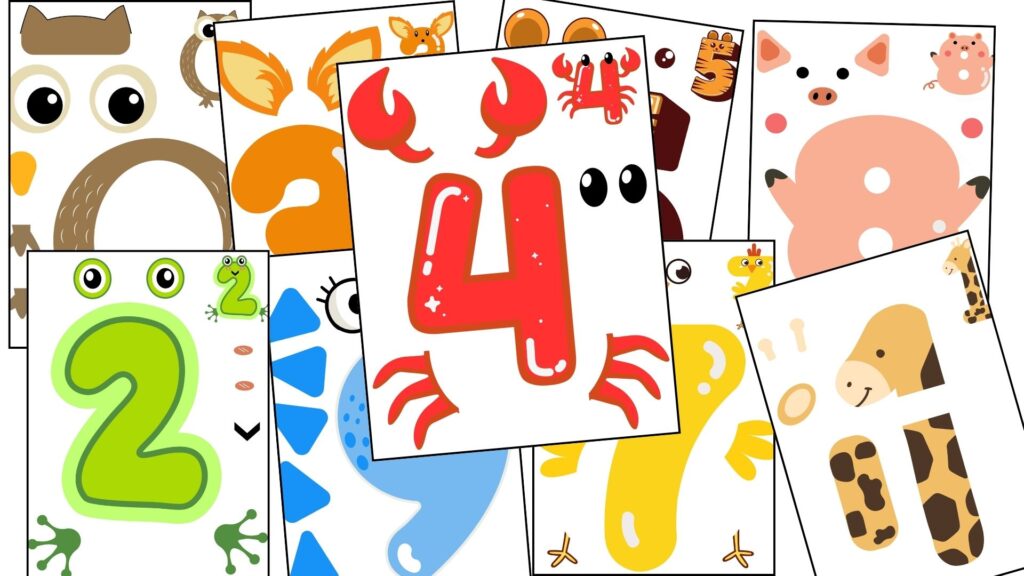
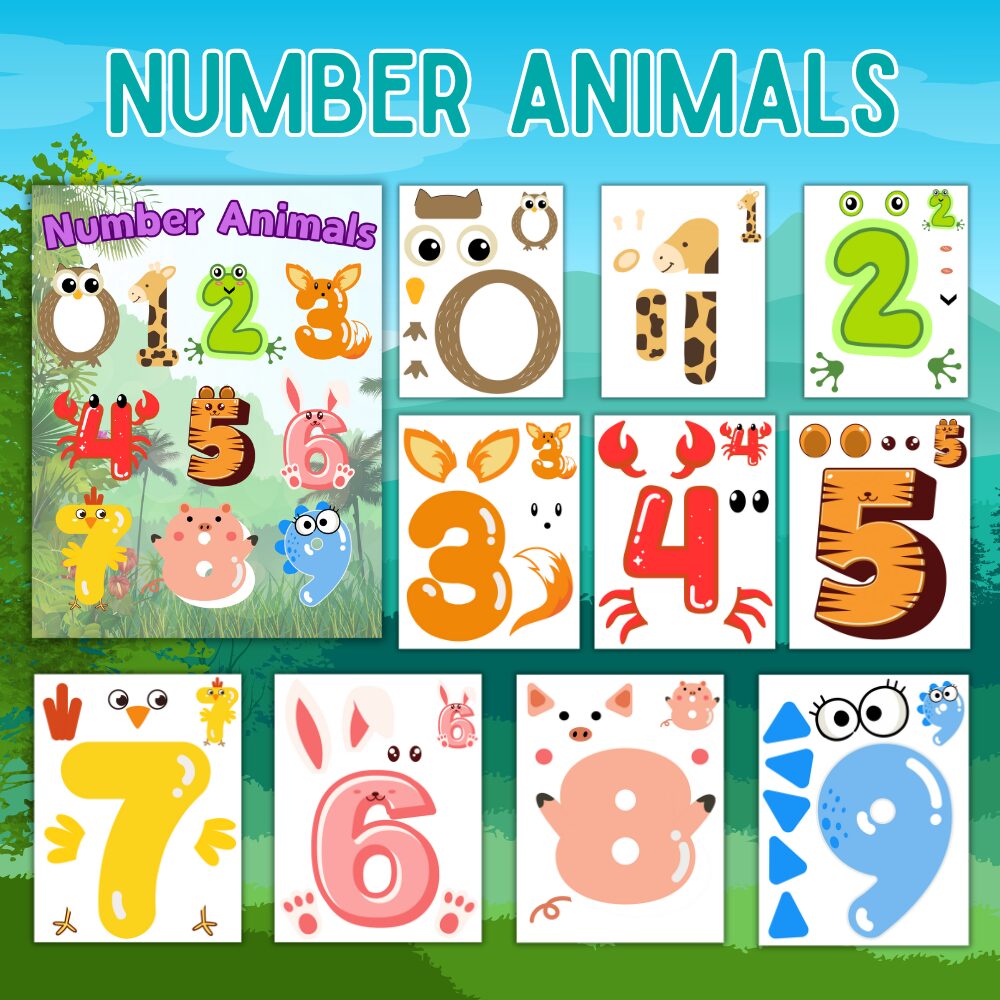
The set includes ten full-page printables, one for each number from 0 through 9. Each page contains the large number shape, the separate animal parts to cut out, and a small finished example in the corner that shows kids exactly where everything goes.
Here are the ten animal pairings:
- 0 is the owl
- 1 is the giraffe
- 2 is the frog
- 3 is the fox
- 4 is the crab
- 5 is the tiger
- 6 is the bunny
- 7 is the chick
- 8 is the pig
- 9 is the dinosaur
Some animals come together faster than others. The owl, frog, and crab have fewer pieces. The tiger, fox, and dinosaur include more parts and take a little longer to assemble.
Why This Activity Works for Young Kids
Pairing every number with an animal gives kids a memory hook. The digit 2 stops being a shape and becomes “the frog number.” Kids who finish the pack recognize the digits faster afterward because each one carries a character.
The craft also packs a lot of skill-building into one sitting. Scissors practice, glue control, color recognition, animal identification, and counting from zero all run in parallel. That’s strong value from a single set of printables.
Supplies You’ll Need
- A printer (color prints look best, but black-and-white works if kids want to color the parts themselves)
- Paper or cardstock
- Printed pages
- Kid-safe scissors
- Glue stick or white school glue
- Crayons or markers, optional, for extra detail
How to Make a Number Animal
Step 1: Print the Page
Choose a number and print that page. Cardstock holds up better than regular paper if you want the finished animals to last on the fridge.
Step 2: Cut Out Each Piece
Cut the big number shape first, then work through the smaller pieces. Younger children will need help with the tiny bits like eyes and feet.
Step 3: Lay Everything Out Before Gluing
Place every piece on the number without glue first. This step catches most mistakes before they happen because kids can see exactly where the ears, eyes, and feet belong using the corner reference image.
Step 4: Glue From the Back Forward
Start with pieces that sit behind others. Ears go on before faces, bodies before legs. The owl’s hat goes on first, then the eyes, then the beak.
Step 5: Press Firmly and Let Dry
Press each piece down and give it a few minutes. Glue sticks dry fast. White glue needs a little more time before the animal is ready to display.
Animal Facts to Talk About While You Craft
Crafting time doubles as conversation time. A few quick facts worth sharing as you work through the set:
- Owls turn their heads almost all the way around because their eyes can’t move
- Giraffes have a tongue almost two feet long
- Frogs start life as tadpoles and breathe through their skin
- Foxes make over twenty different sounds to communicate
- Crabs walk sideways because of how their legs bend
- Tigers have stripes on their skin, not just their fur
- Bunnies can jump three feet straight up in the air
- Chicks hear their mother’s voice through the eggshell before they hatch
- Pigs roll in mud to stay cool because they can’t sweat
- Birds are the closest living relatives of dinosaurs
For preschoolers who don’t need facts yet, ask color questions instead. “What color is the tiger?” “How many ears does the bunny have?” Both keep little hands and brains busy at the same time.
Tips for Learning Numbers Alongside the Craft
Slow the activity down to turn it into a real number lesson. Before cutting each page, ask your child to say the number out loud and count that many objects from around the room. Five blocks for the tiger, three crayons for the fox.
When an animal is finished, hang it on the fridge in number order. The whole pack becomes a counting wall, and pointing through 0 to 9 every morning takes thirty seconds. Repetition like that builds the sequence into long-term memory faster than flashcards.
For older preschoolers, slip in early addition. “If we put the 2 frog and the 3 fox together, how many is that?” The physical animals make the abstract math easier to picture.
What Age Is This For
The craft suits kids ages 3 and up. Three- and four-year-olds need help with cutting and placement. Five- and six-year-olds handle most animals on their own, especially the simpler ones. Older kids finish the whole set independently and often add their own details with markers.
If your kids love this style of cut-and-paste craft, the Ocean Animals Paper Crafts pack follows the same assembly format with ten ocean creatures, and the free habitats color by number printables work as a quieter follow-up activity once the gluing is done.
More animals-themed crafts:
- 3D Woodland Animals Craft
- How to Draw Wild Animals for Kids
- Woodland Animals Finger Puppets Craft For Kids
- 18 Winter Animal Crafts For Kids
- DIY Summer Corner Bookmarks (Printable 10 Designs)
- Free Habitats Color by Number Printables
Get the Free Printable
Download all 10 Number Animals printable pages free by entering your email below.
Masha Eretnova, born in 1991, is a Chiang Mai-based certified teacher, artist, and blogger with 20+ years of personal painting journey.
She started painting and drawing very early and is now an international abstract artist and educator passionate about acrylic painting, gouache, and crafts.
Her works are part of international exhibitions and contests, including ArtlyMix (Brazil), Al-Tiba 9 (Spain), Exhibizone (Canada), Italy, and many more.
Besides her artistic pursuits, Masha holds a post-grad diploma in Teaching Film Photography and 2 music school diplomas: piano and opera singing.