Last Updated on October 5, 2025 by Masha Eretnova
Want to paint a beautiful long-necked giraffe with spots without learning the tricks of oils or acrylics? Gouache is the easiest medium to use for beginners!
My step-by-step tutorial uses gouache to make a simple giraffe face in about 25 minutes. Gouache is cool because it’s like thick watercolor you can layer and fix easily.
Hi, I’m Masha! I am a self-taught artist painting since the age of 6. I love gouache, acrylic, oil pastels, and sometimes I draw, too.
Table of Contents
Supplies
- Paint. You can use gouache, acrylic gouache, acrylics, or poster paints. The steps to painting giraffe with acrylics will be exactly the same.
This tutorial is using Himi Jelly Gouache, you can also use acrylic or poster paints to paint a sunflower.
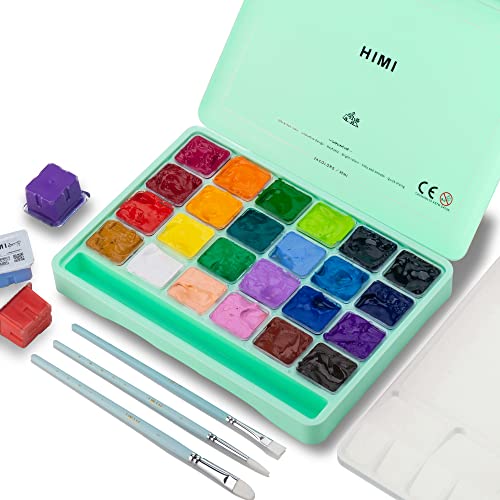
- Sketchbook for water-based paints or specifically gouache or paper (watercolor paper)
- Pencil
- Round brushes (thicker and smaller for details)
Why Gouache and Not Acrylics?
Gouache works great for giraffes because it’s thick and covers mistakes easy. But here’s how to make it smoother than acrylics or watercolors.
- Gouache dries matte and you can wet it again to fix spots—acrylics stay put once dry. Win for gouache.
- Dip brush tip in water (not soak) in water, then paint—keeps it from getting too thick. For spots, use a dry brush to tap on color.
- If colors look dull, add a drop of water or white. Spots bleeding? Let one layer dry before the next or quickly use a piece of paper towel to collect water.
My Easy Giraffe Painting Tutorial
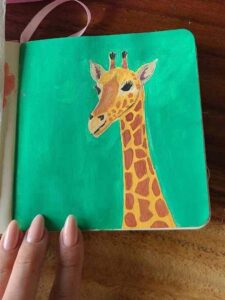
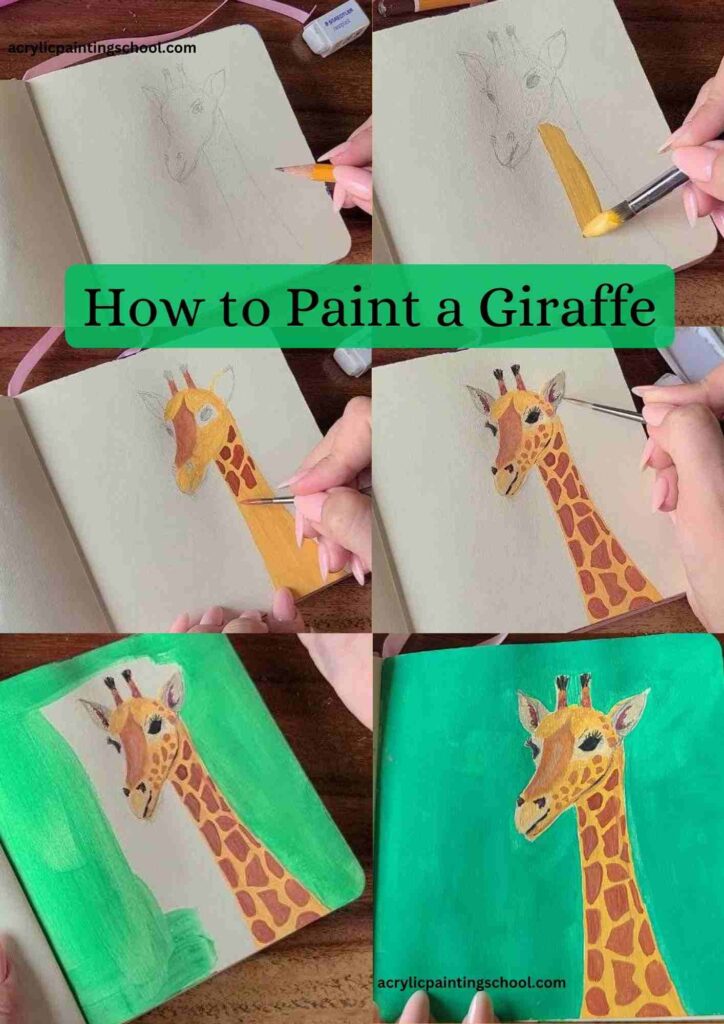
To paint a giraffe starts with a simple sketch and then coloring it with gouache or acrylic.
Level – easy,
Medium: gouache
Total Time: 30 minutes
Step 1 – Sketch the head
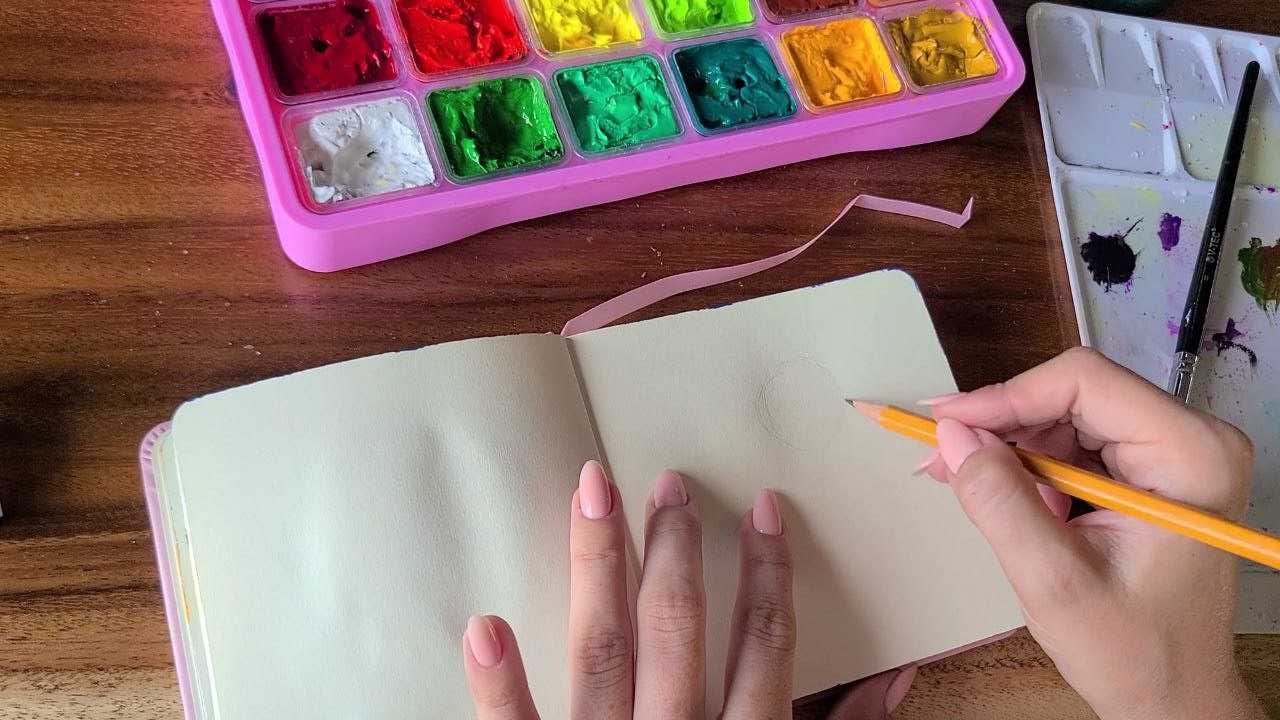
Draw a small circle that will be the head
Step 2 – Add ossicones (giraffes’ horns)
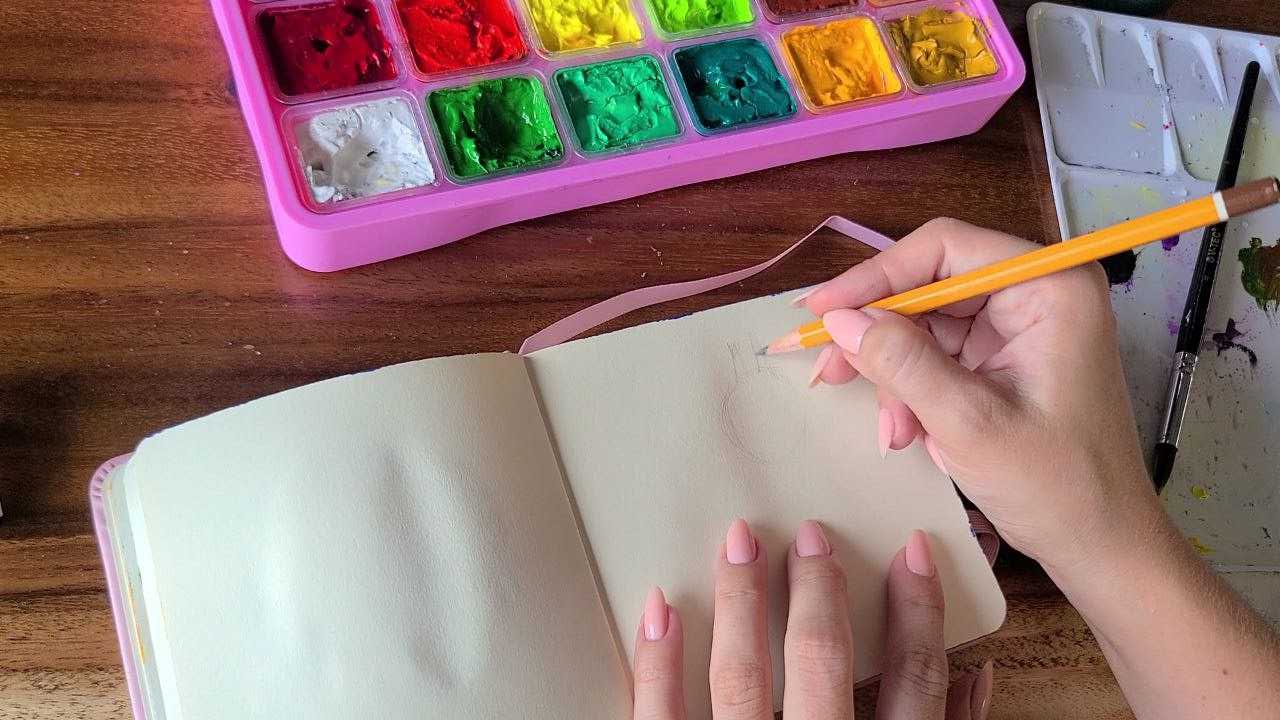
Add two ossicones with little “hairs” on the ends.
Step 3 – Add big ears
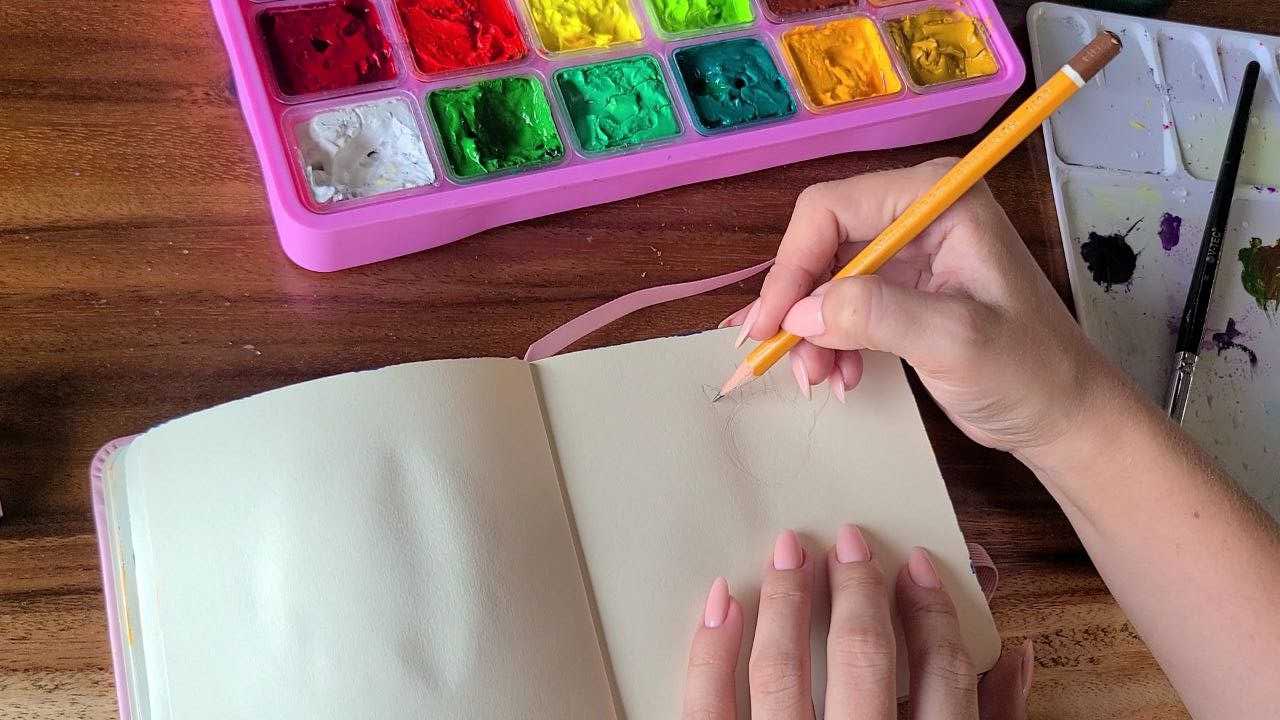
Giraffes have big ears, the shape is quite open, and they have a large base where the ears are connected to the head.
Step 4 – Add nose and mouth shapes
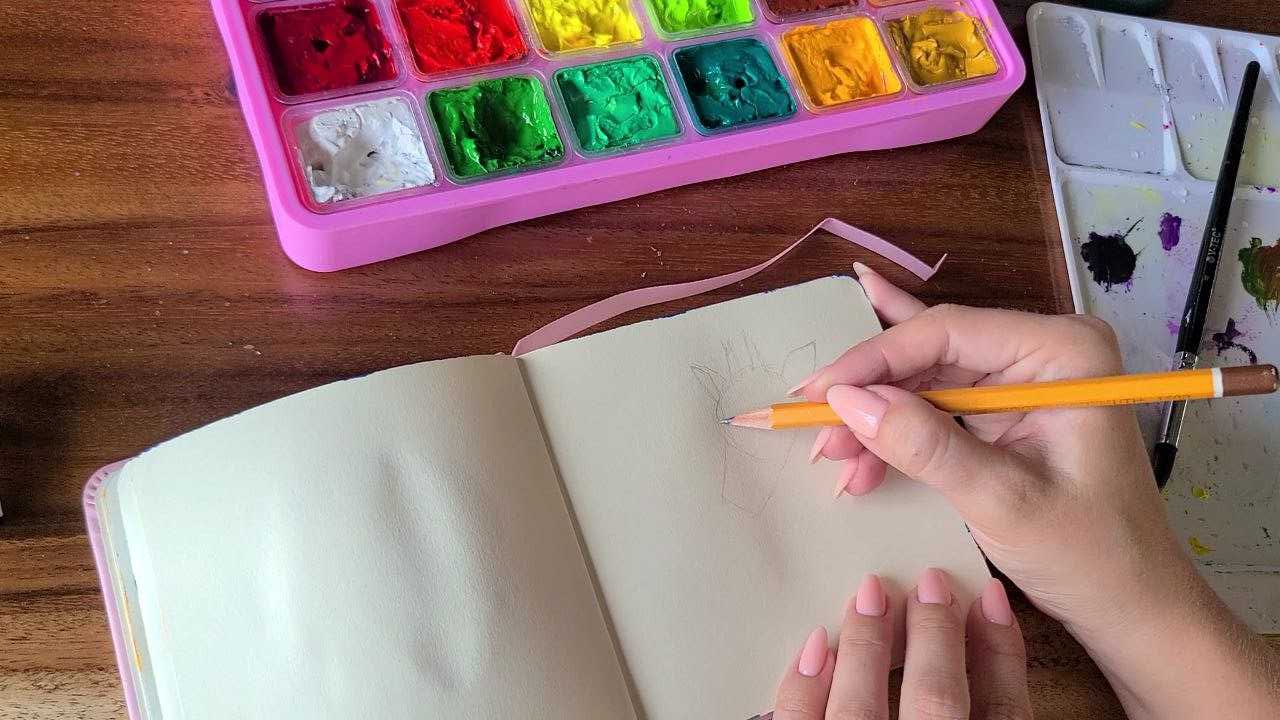
Giraffes’ noses and mouths are elongated. We have our circle for the head, add to it rectangle-alike shape.
Step 5 – Define the face
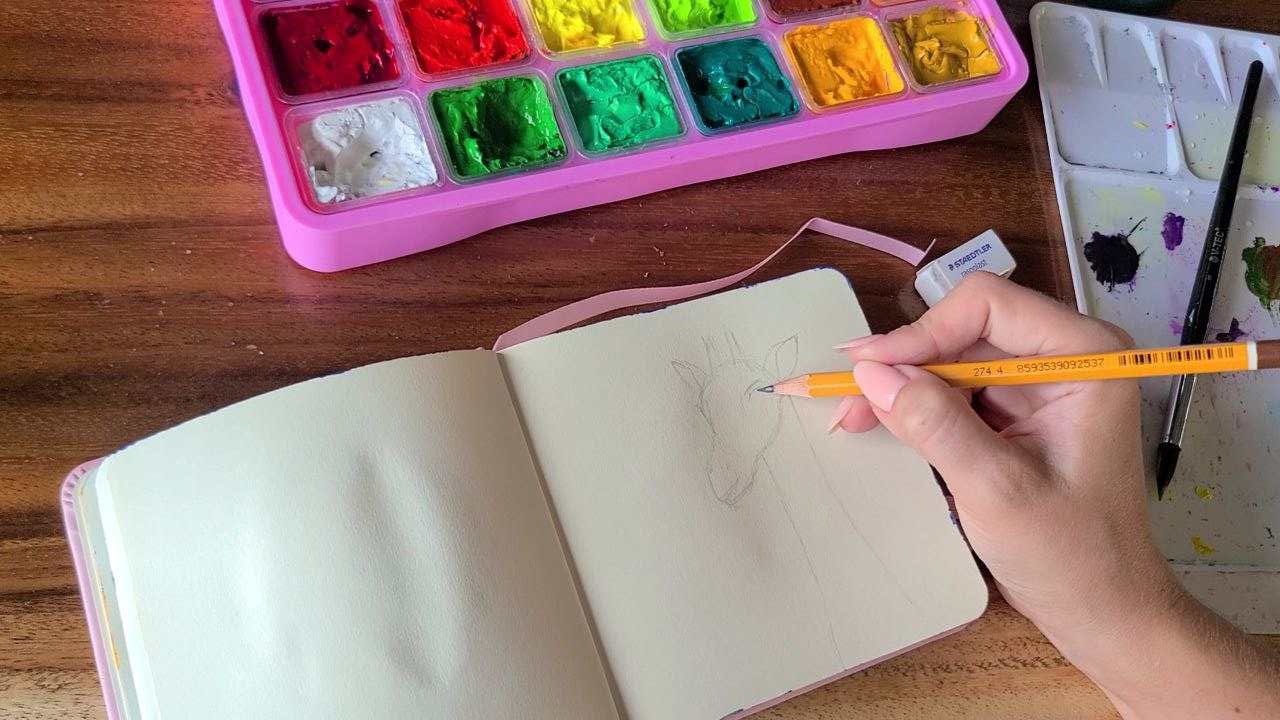
Add nostrils, mouthline, eyebrows lines, and big eyes.
Step 6 – Sketch the pattern
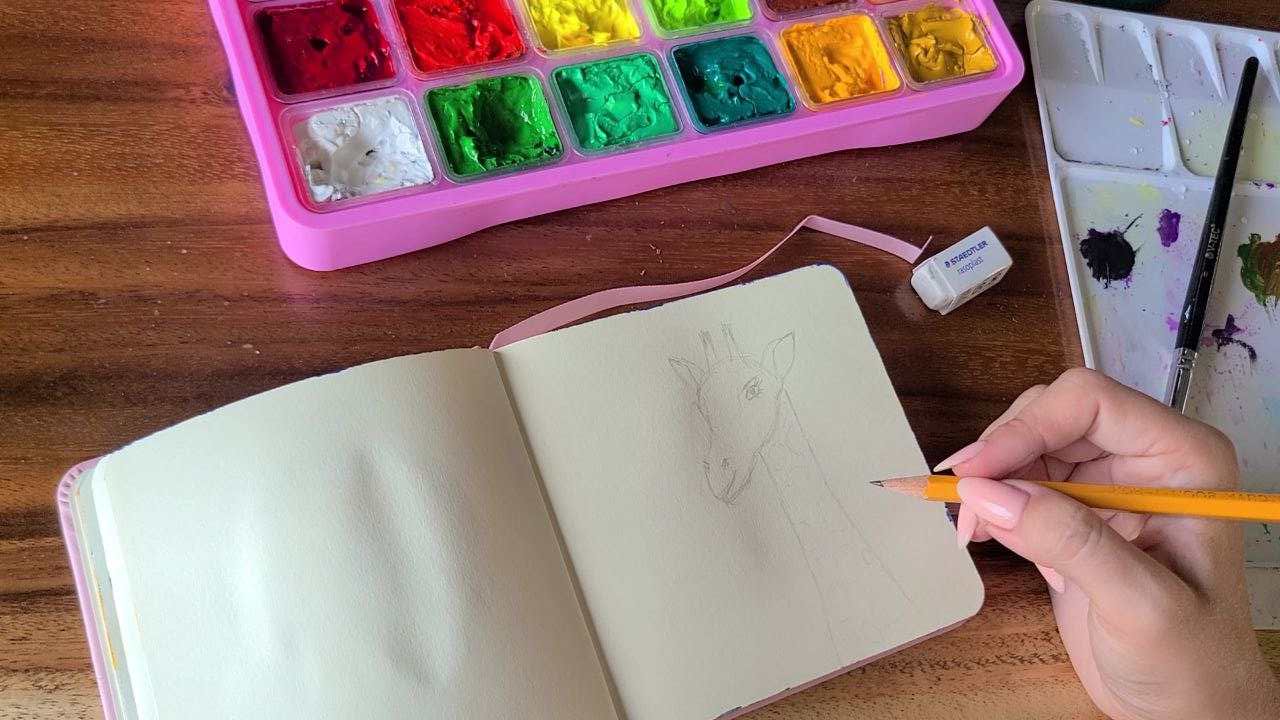
You can sketch the pattern if you are not comfortable painting it free-hand. Mark where you will add larger spots, and remember that spots on giraffe’s faces are much smaller.
Step 7 – Paint Giraffe with the main color
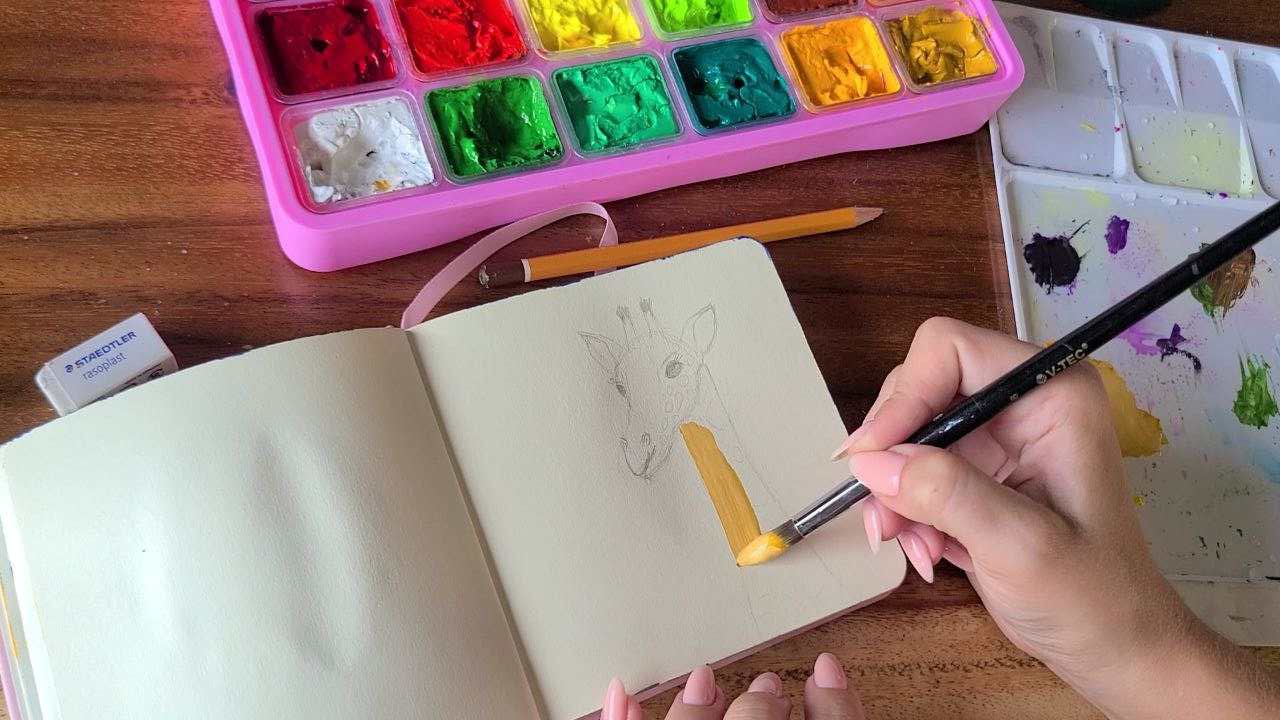
The main color is something in between orange and yellow ochre. The neck and sides of the head will have that color.
Don’t have exact colors? Mix these with your Himi set—keeps it cheap.
Main Body (Ochre)
Yellow + touch of red/orange
For neck and head—warm like savanna sun.
Spots (Dark Brown)
Ochre + black or burnt sienna
Face spots small; body ones bigger and irregular.
Ears (Beige Base)
White + yellow + bit of brown
Add purple inside for shadow—makes it pop.
Eyes/Black Details
Pure black
Background
Light blue or green or any other complementary color
Step 8 – Add pattern
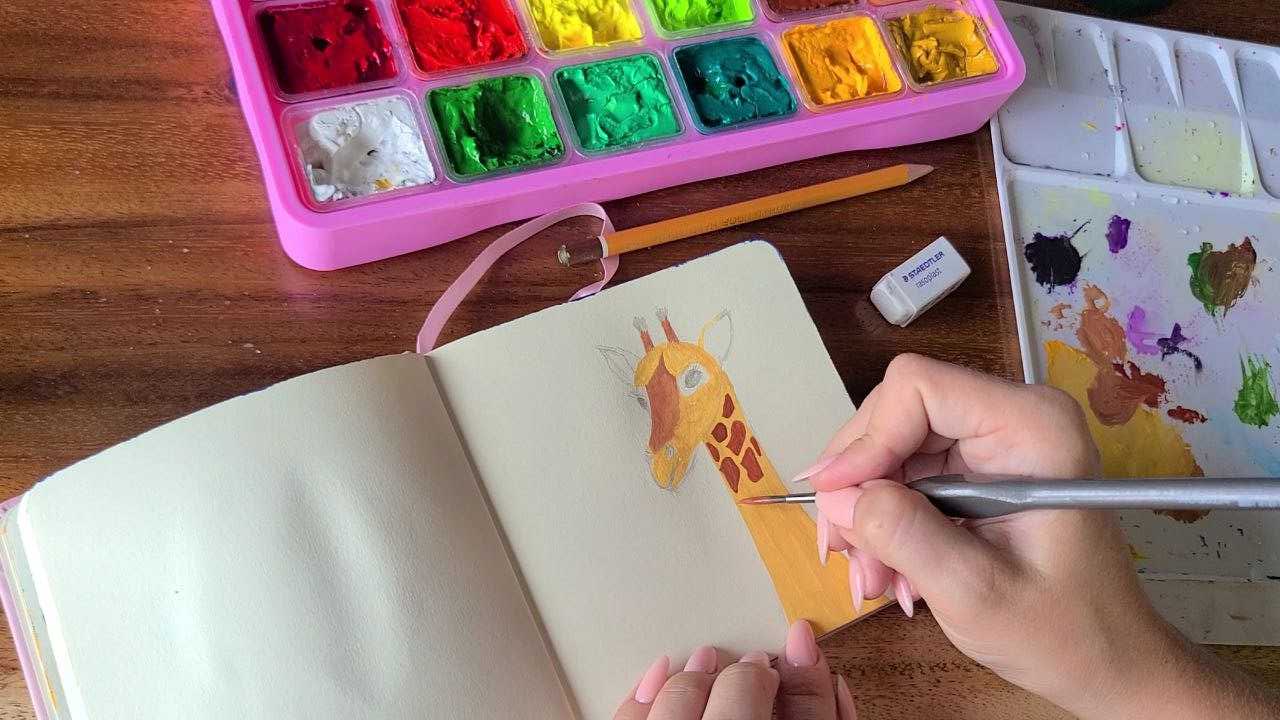
Add pattern spots on the neck and head, and paint darker areas on the forehead and cones
Step 9 – Add details with black
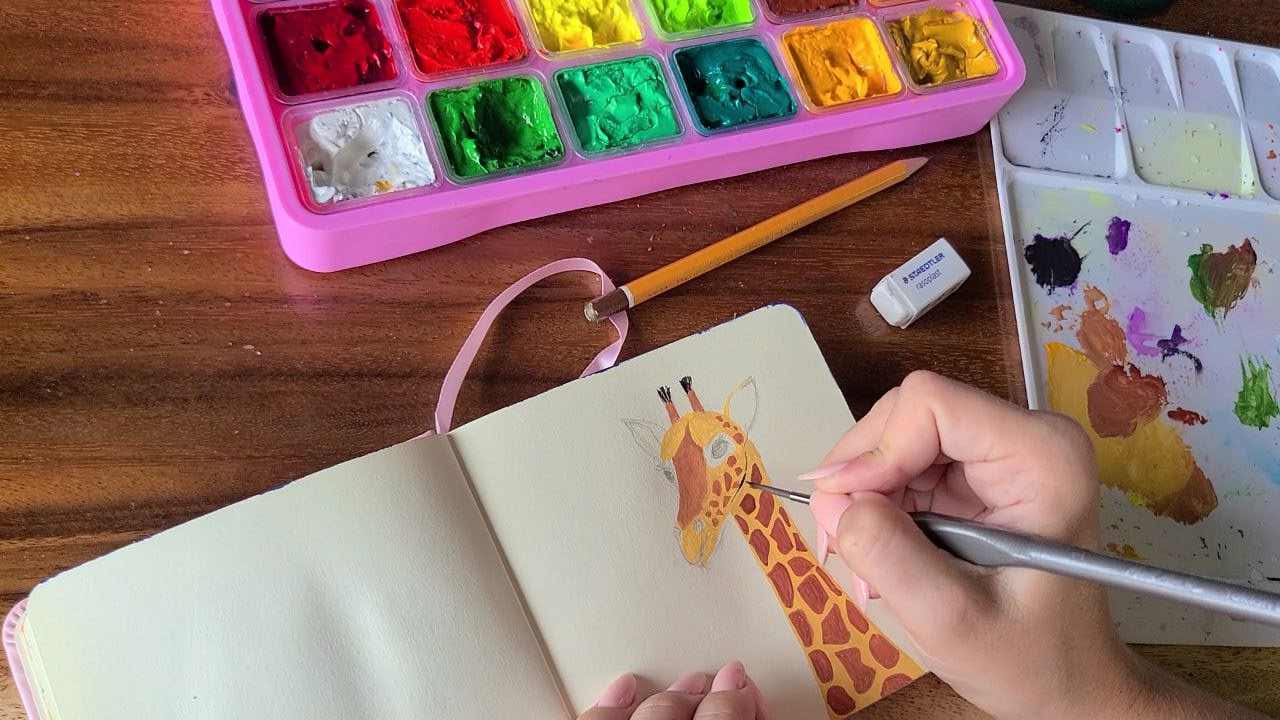
Underline the chin (slightly), paint the eyes and eyelashes, nostrils, cones’ hairs, and mouth lines with black. Use a detailed round brush.
Step 10 – Paint ears
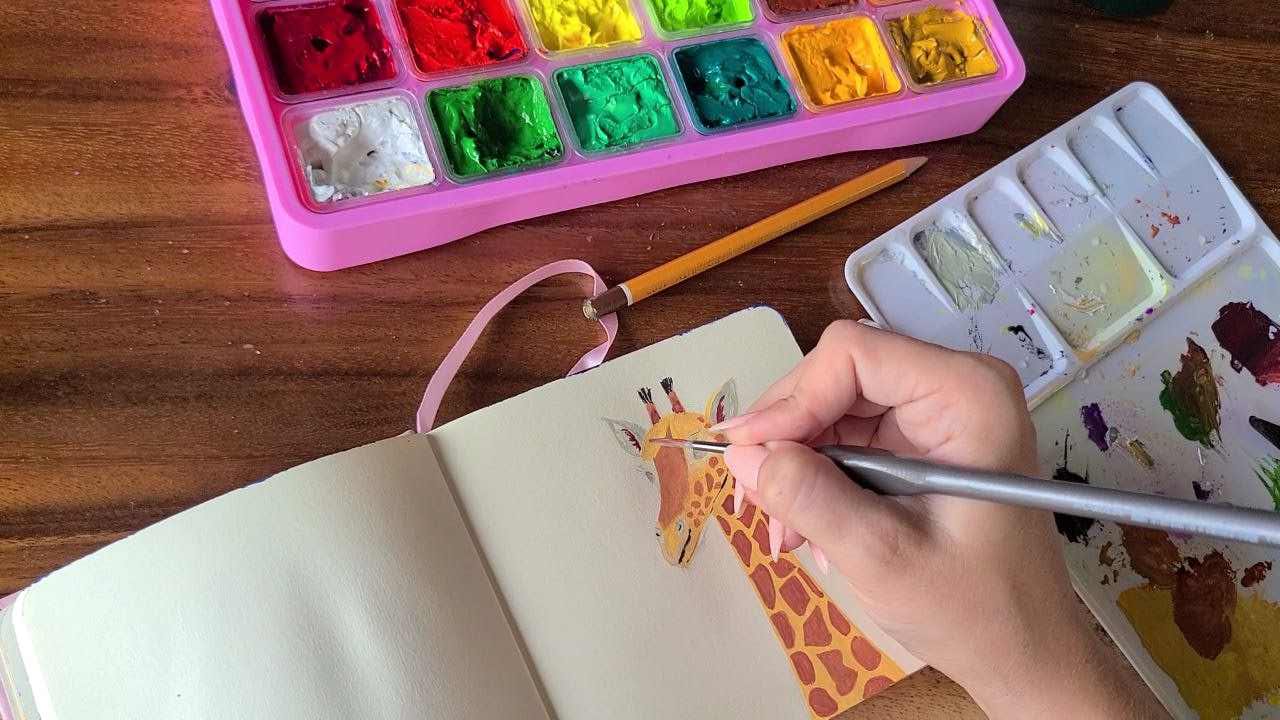
The base color for ears is greyish beige. In the inner center add some dark red or purple and some light beige on the outside part of the ears.
Step 11 – Finishing touches
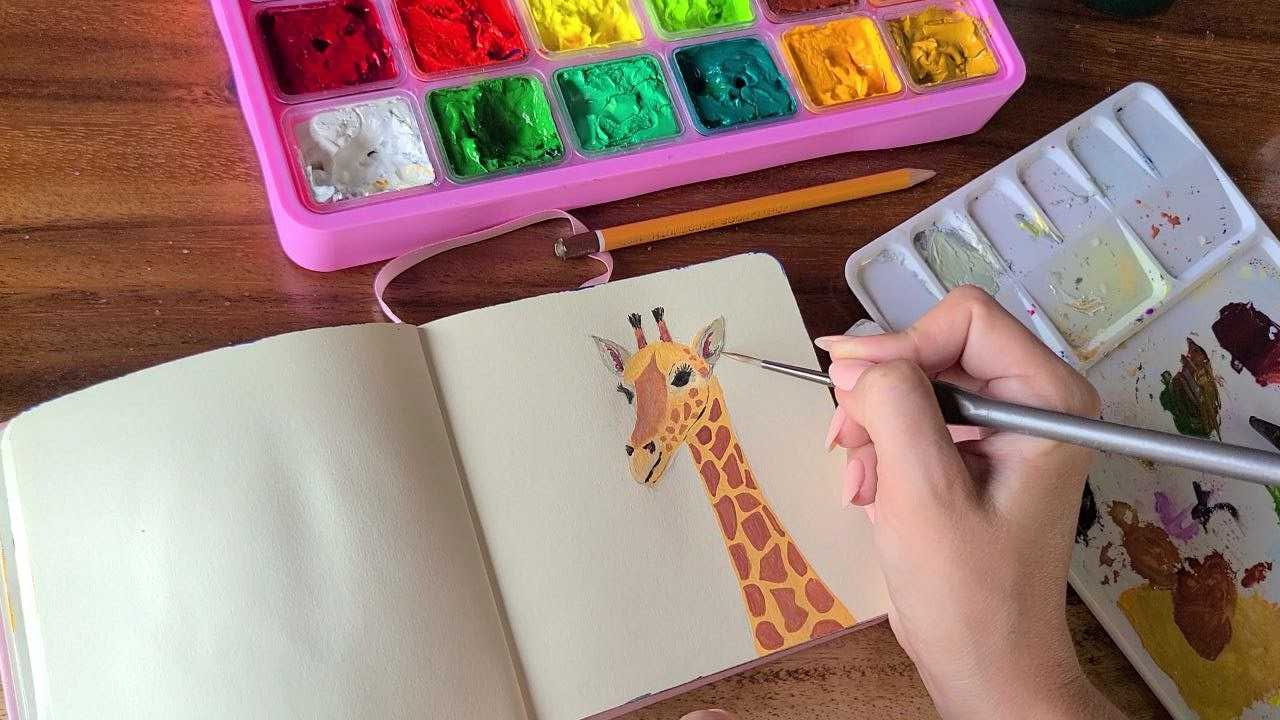
Just make sure you like how it looks, add details, more beige or grey in ears, or correct mistakes if any.
Step 12 – Background
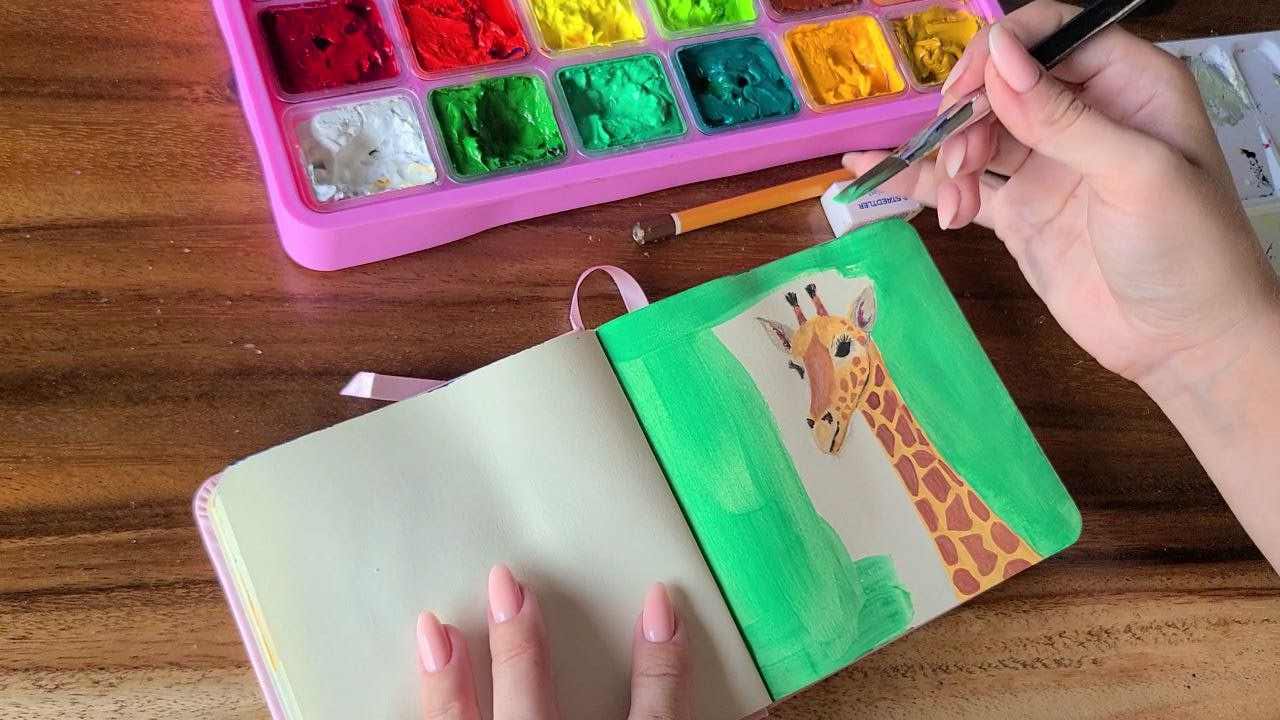
Add background color to make the giraffe pop out and stand out. It will make the sketch look complete.
Done!
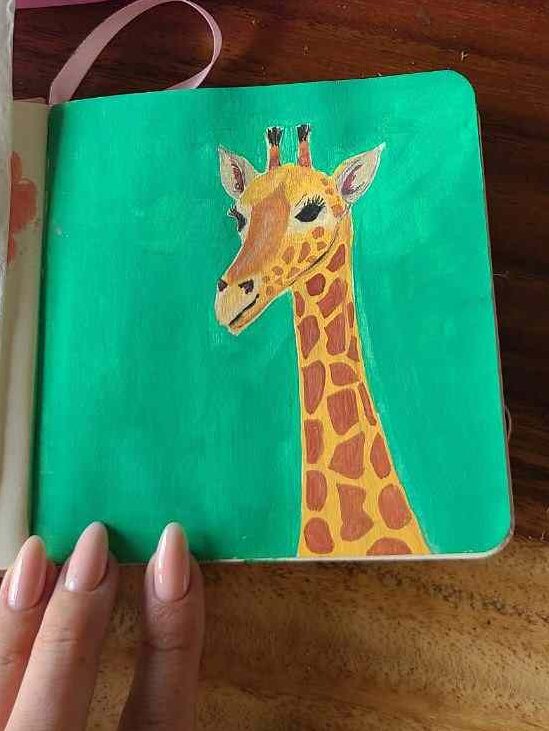
Easy Variations
Your giraffe face is done—try these tweaks without starting over.
- Full Body: Add a long neck below (rectangle shape) and legs—same ochre color, bigger spots.
- Kids’ Version: use fingers for spots.
- Silhouette: the easiest way to paint a giraffe with a background on paper or canvas would be by skipping colors and spots and only making a dark silhouette (with black or very dark blue color).
Youtube Video Tutorial
Follow along my painting process here:
Pin For Later
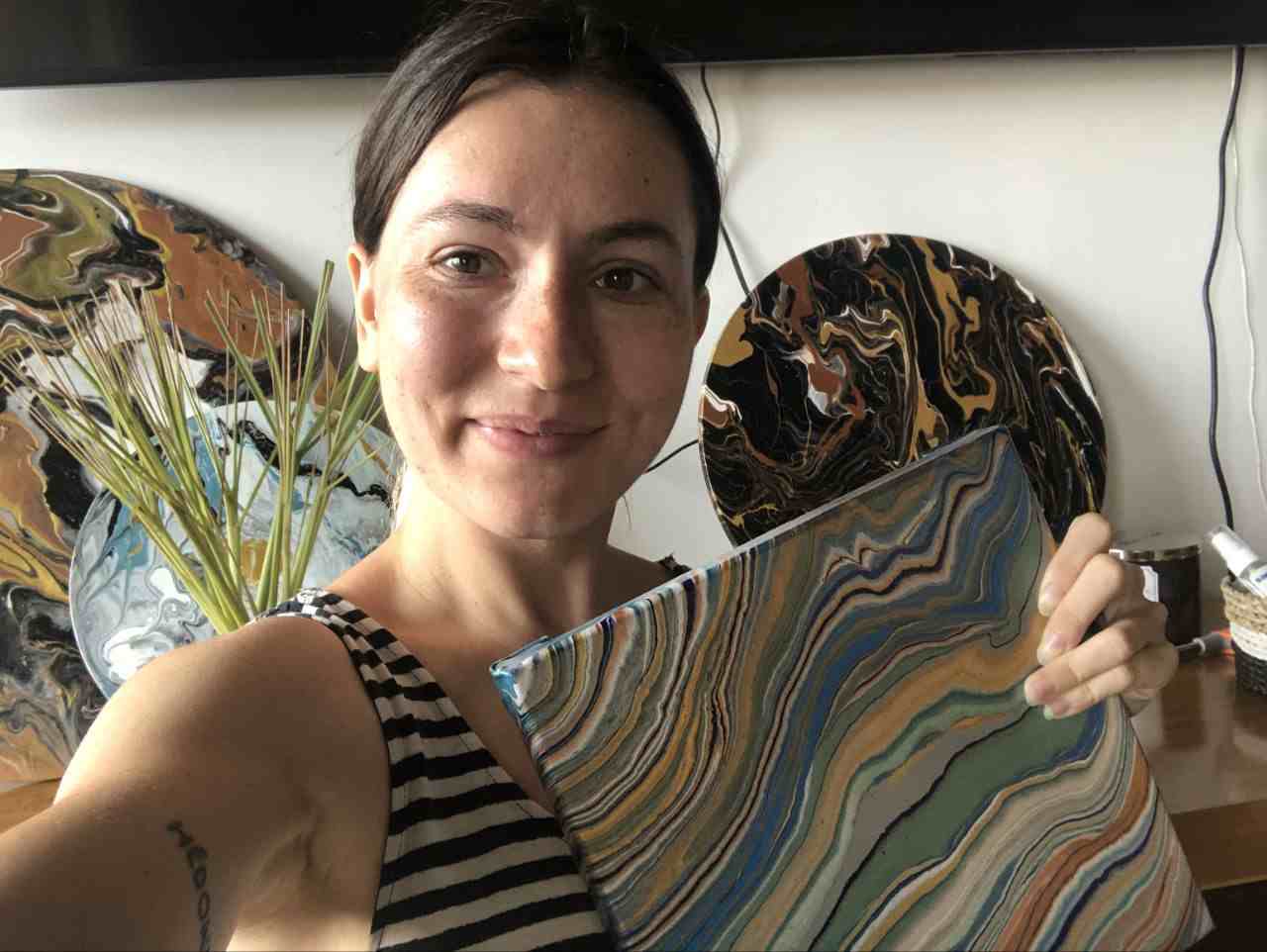
Masha Eretnova, born in 1991, is a Chiang Mai-based certified teacher, artist, and blogger with 20+ years of personal painting journey.
She started painting and drawing very early and is now an international abstract artist and educator passionate about acrylic painting, gouache, and crafts.
Her works are part of international exhibitions and contests, including ArtlyMix (Brazil), Al-Tiba 9 (Spain), Exhibizone (Canada), Italy, and many more.
Besides her artistic pursuits, Masha holds a post-grad diploma in Teaching Film Photography and 2 music school diplomas: piano and opera singing.
Last update on 2026-10-17 / Affiliate links / Images from Amazon Product Advertising API