Last Updated on October 5, 2025 by Masha Eretnova
Ready to paint vibrant sunflowers in just 15 minutes?
My beginner-friendly gouache tutorial guides you step-by-step to create a stunning sunflower without a sketch.
Hi, I’m Masha! I am a self-taught artist painting since the age of 6. I love gouache, acrylic, oil pastels, and sometimes I draw, too.
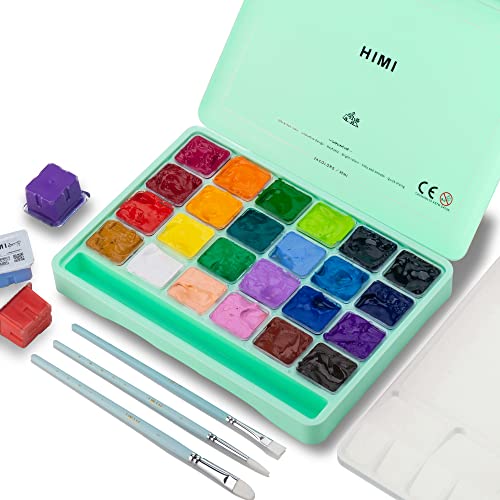
This tutorial is using Himi Jelly Gouache, you can also use acrylic or poster paints to paint a sunflower.
Table of Contents
Gouache Painting Basics for Flowers
Before diving into sunflowers, let’s cover gouache fundamentals—especially if you’re new to this medium. Gouache is an opaque, water-based paint (like a matte watercolor-acrylic hybrid) that’s perfect for flowers due to its vibrant layers and easy corrections.
Unlike acrylics (which dry permanent), gouache reactivates with water, allowing fixes mid-painting.
- Use tube or pan gouache (Himi Jelly is beginner-friendly for its jelly-like consistency). Add a palette knife for mixing and watercolor paper (140lb+ cold-press) to prevent buckling.
- Build from light to dark (opaque layers hide mistakes). For petals, use “wet-on-dry” for crisp edges or drybrush for texture (drag a semi-dry brush for fuzzy blooms).
- Gouache dries darker—test swatches first. If it cracks, add a drop of honey/glycerin to your mix for flexibility.
What colors do you use to paint a sunflower?
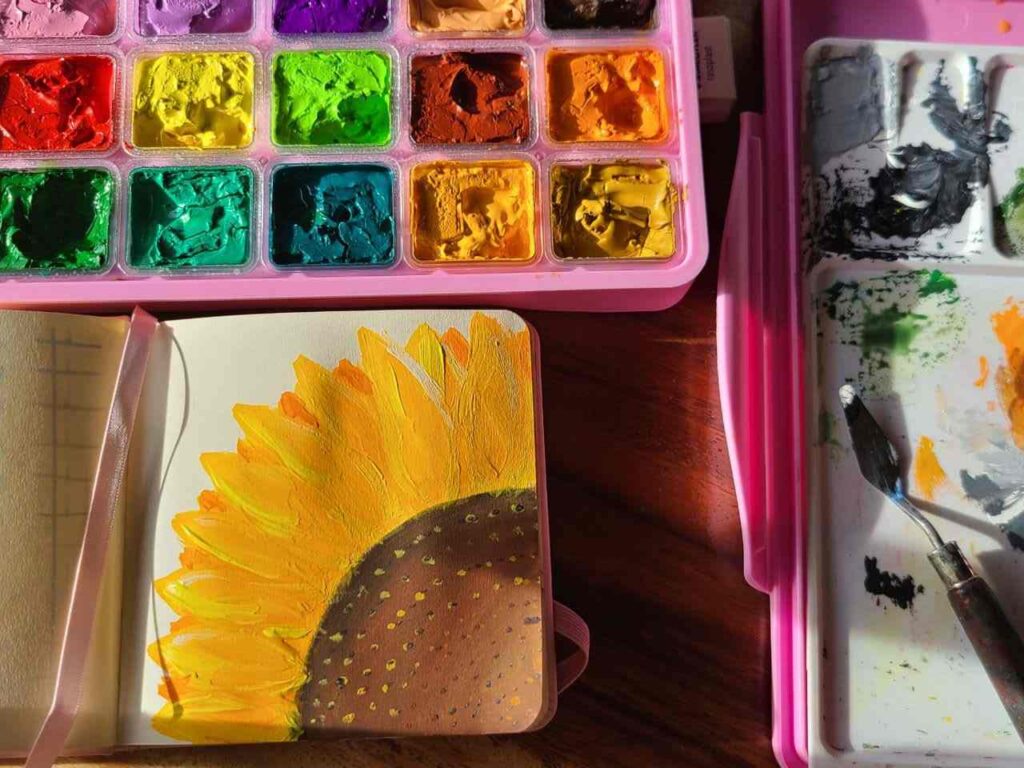
Yellow, orange, green, and brown are the traditional colors used to paint a sunflower.
While a bright yellow and deep orange combination is often the most popular choice for painting a sunflower, you can mix various shades of red, brown, pink, and green for an even more unique and interesting look. Choose your palette wisely.
Here are some links to where you can buy the supplies needed to paint the following tutorials in sunflower colors:
- Titanium White
- Cadmium Yellow
- Pale Green
- Raw Umber (Brown)
- Mars Black
Gouache Color Mixing for Sunflowers
Traditional sunflower palettes use yellow/orange for petals, brown/black for centers, and green for stems/leaves. For gouache’s opacity, mix on-palette for custom shades:
| Color Component | Gouache Mix Recipe | Why It Works |
|---|---|---|
| Petal Base (Orange) | Cadmium Yellow + touch of Cadmium Red | Creates warm underlayer; visible tips add realism (as in Step 2). |
| Petal Top (Yellow) | Cadmium Yellow + Titanium White (1:1) Or straight yellow | Brightens for light-facing petals; layer over orange for depth. Create several yellow shades to make more petal layers (going lighter and lighter with more white in the mix) |
| Center (Brown-Black) | Raw Umber + Mars Black (2:1), + yellow flecks for seeds | Mimics disk flower’s texture and seeds; add white dots for highlights. |
| Stem/Leaves (Green) | Pale Green + Raw Umber (for shadow) | Vary tones for natural curve—dark at base, light at tips. |
| Highlights/Accents | Pure Titanium White + drop of yellow (optional) | For dew-like sparkle; gouache’s matte finish keeps it subtle. |
Pro Tip: Gouache mixes stay workable longer than acrylics—experiment with reds/pinks for “sunset” sunflowers.
How to Paint a Sunflower Without a Sketch: Step-by-step
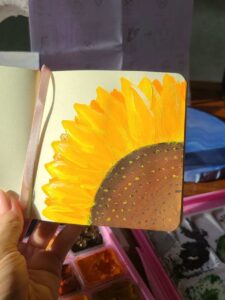
Using gouache you can paint a sunflower in 15 minutes! You need brown, green, yellow, and orange gouache paint, a sketchbook, and a round brush. You don’t even
Total Time: 15 minutes
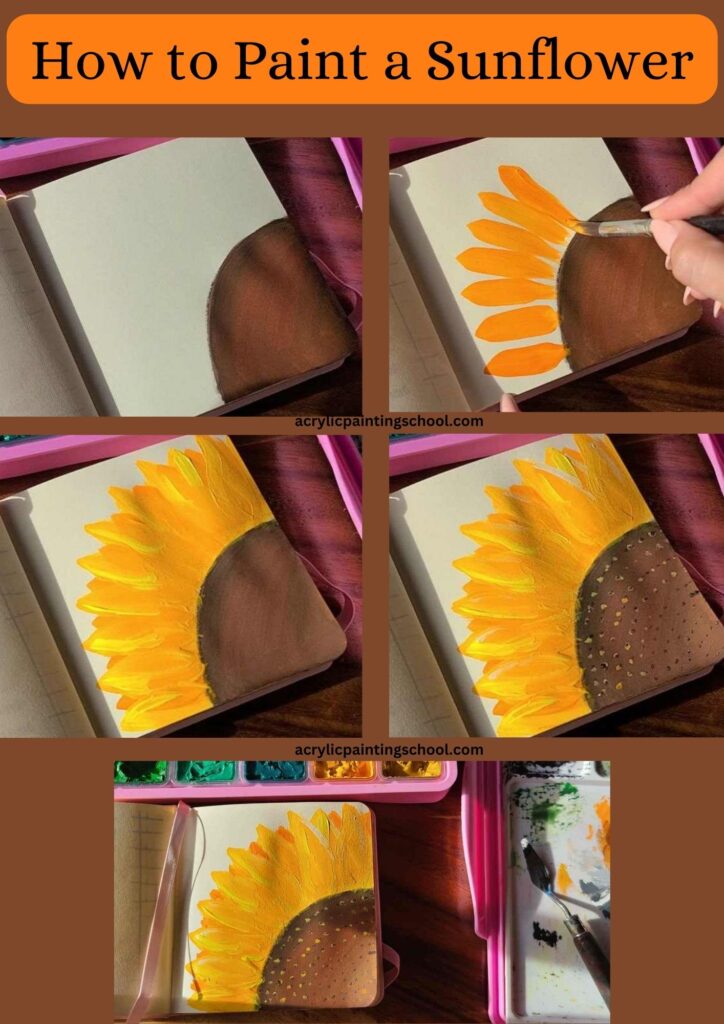
Step 1 – Paint the center (disk flower)
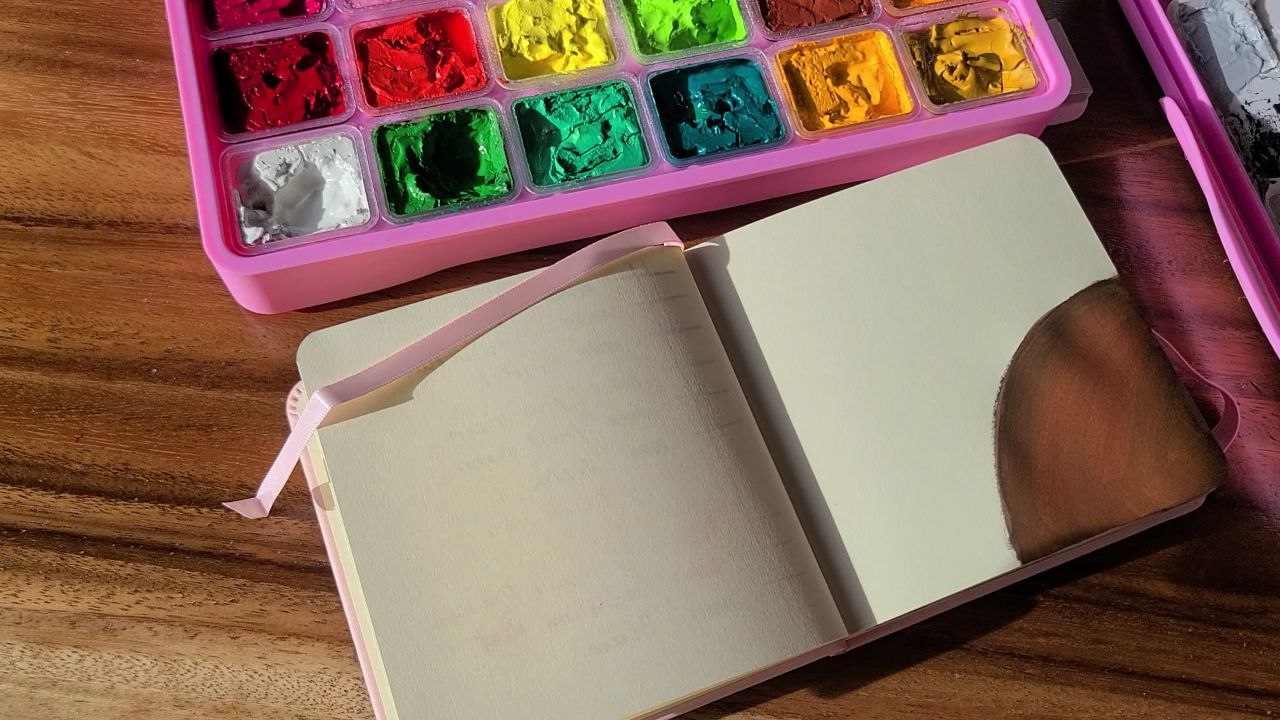
The center of the sunflowers is called the disk flower and is normally black-brown with some lighter spots if under the light. We start with making a half circle (doesn’t have to be perfect) and paint it brown.
Step 2 – Paint the First layer of petals
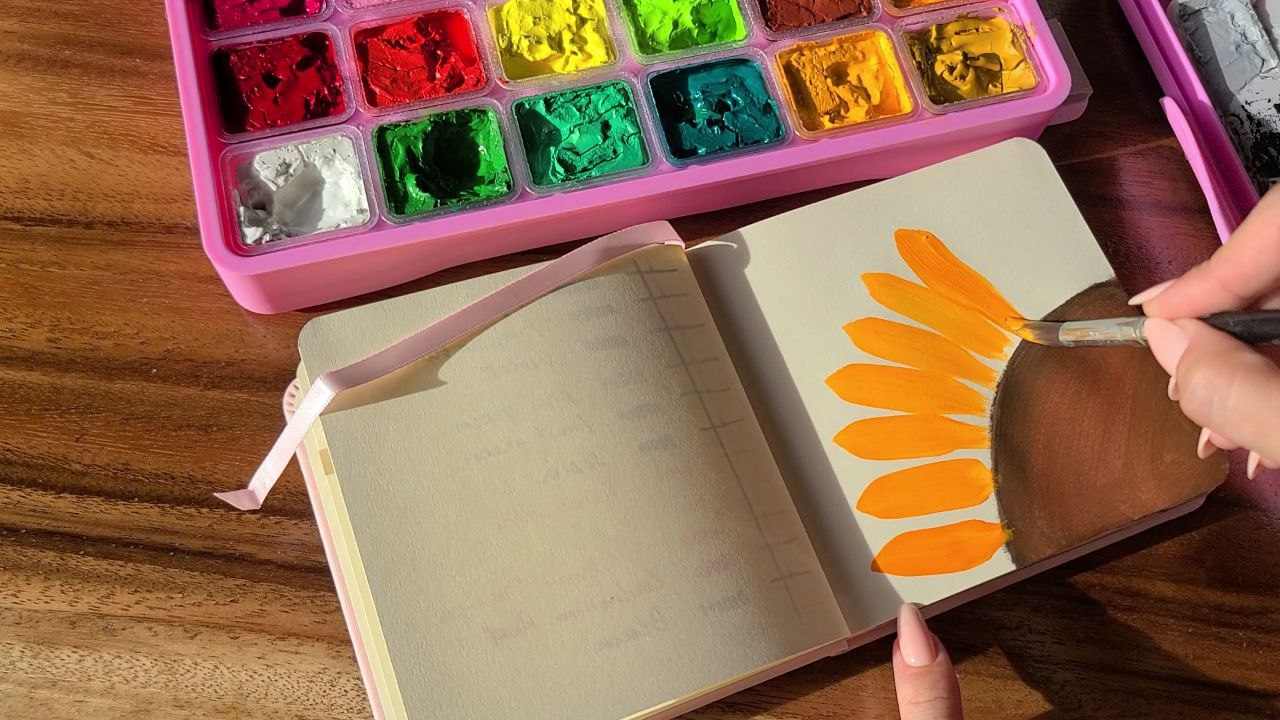
The first layer of petals will be orange. Use a round brush – place it on the paper, pull it, in the middle of the petal flatten the brush to use its body, then pull back only using the tip to finish painting a petal.
Step 3 – Second layer of petals

The second layer of petals will be yellow. And each yellow petal will be in between orange petals to make sure we can see the tips of the underlying orange petals. It will create depth to our painting and make the flower more realistic.
Step 4 – Add details to the disk flower
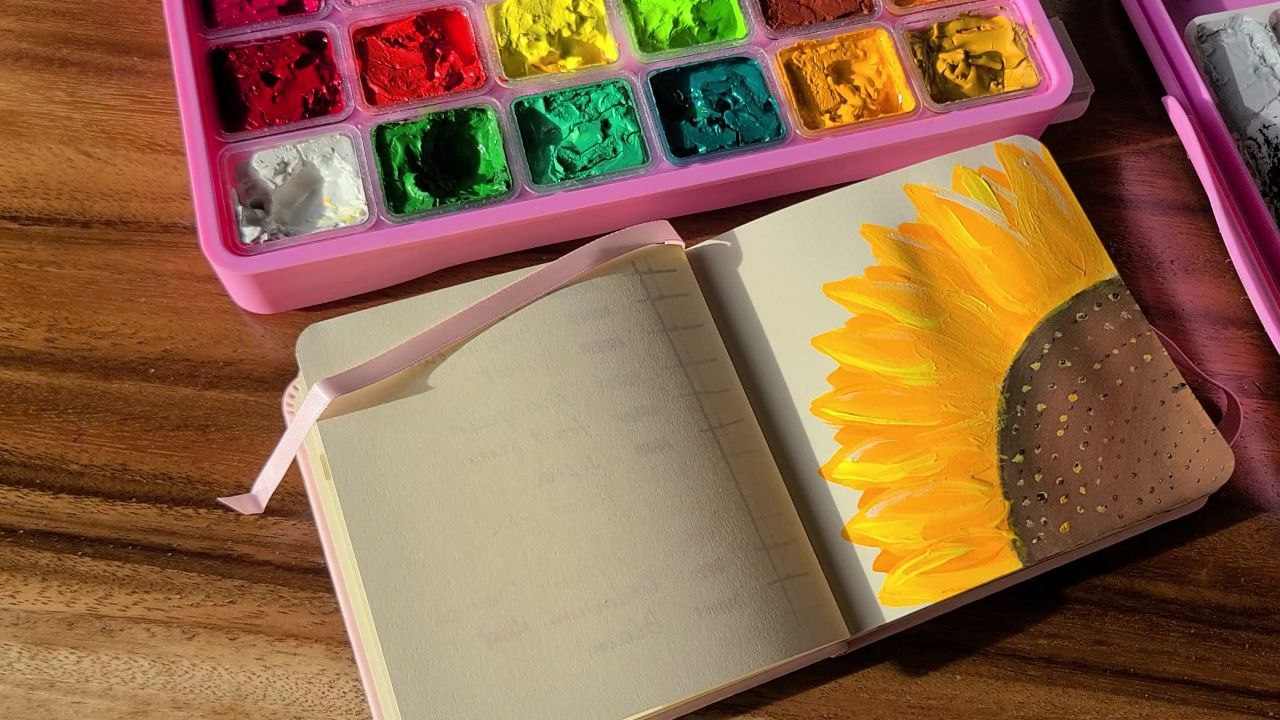
You can add some light and dark dots or try to paint some more detailed seeds.
Step 5 – Add highlights and correct mistakes
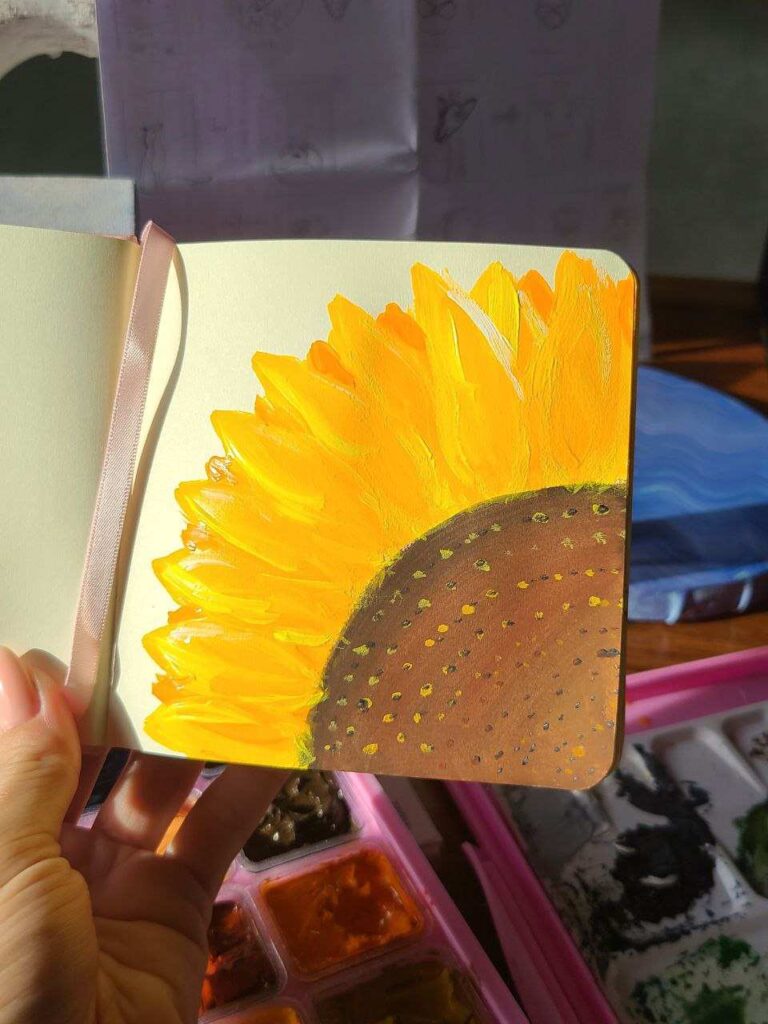
Correct mistakes if any, and add white highlights to the petals. You can easily skip this step if you are satisfied with your sunflower.
Done!
Video Tutorial
If it is easier for you to follow along with a video tutorial, I have a straightforward process recorded:
New Section: Variations and Extending to Other Flowers (Insert After Step 5, Before Video)
To compete with multi-flower gouache results (, ) and sunflower clusters (), add adaptability:
Your single sunflower is a great starter—now scale it!
- Cluster Composition: Paint 3-5 sunflowers in a vase: Sketch loose circles first (optional), layer largest in back. Add filler greens for balance.
- Surface Swaps: On canvas, double-load brushes for bolder strokes ( acrylic inspo, adapted for gouache). For rocks (), thin paint with water for stone grip.
- Gouache Flowers Beyond Sunflowers: Use the same petal technique for daisies (white petals + yellow centers; ) or tulips (elongate strokes, add red tips; ). For ranunculus (), layer 5+ petal rows in pinks/whites.
Bonus: Download our free sunflower stencil here for tracing beginners.
This fills the “other flowers” gap, encouraging longer sessions and backlinks.
Reference
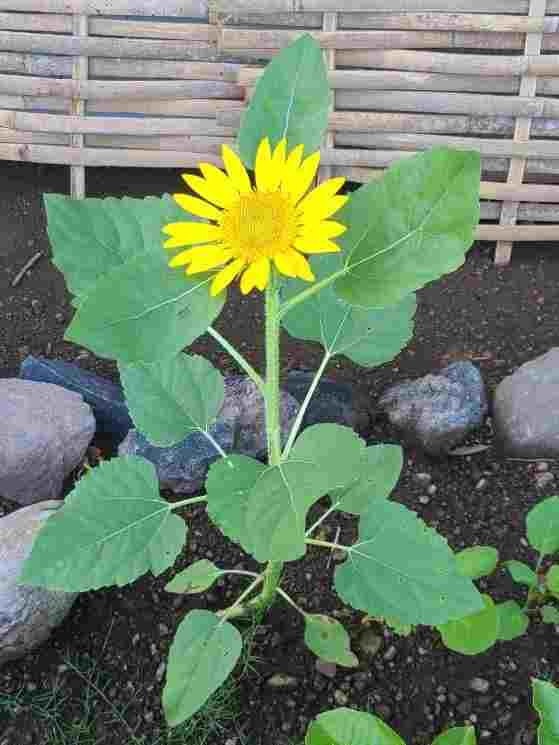
It is always a great idea to have a reference photo – from stock images/Internet or take a photo of a real sunflower in your garden or park if the season allows.
FAQs
Can I use acrylics instead of gouache for sunflowers?
Yes! Thin acrylics with water for gouache-like opacity, but they won’t reactivate—follow steps 1-3 as-is.
What if my petals look flat? Layer colors (orange under yellow) and add white veins for dimension—practice on scrap paper.
Pin For Later!
Masha Eretnova, born in 1991, is a Chiang Mai-based certified teacher, artist, and blogger with 20+ years of personal painting journey.
She started painting and drawing very early and is now an international abstract artist and educator passionate about acrylic painting, gouache, and crafts.
Her works are part of international exhibitions and contests, including ArtlyMix (Brazil), Al-Tiba 9 (Spain), Exhibizone (Canada), Italy, and many more.
Besides her artistic pursuits, Masha holds a post-grad diploma in Teaching Film Photography and 2 music school diplomas: piano and opera singing.
Last update on 2026-10-17 / Affiliate links / Images from Amazon Product Advertising API